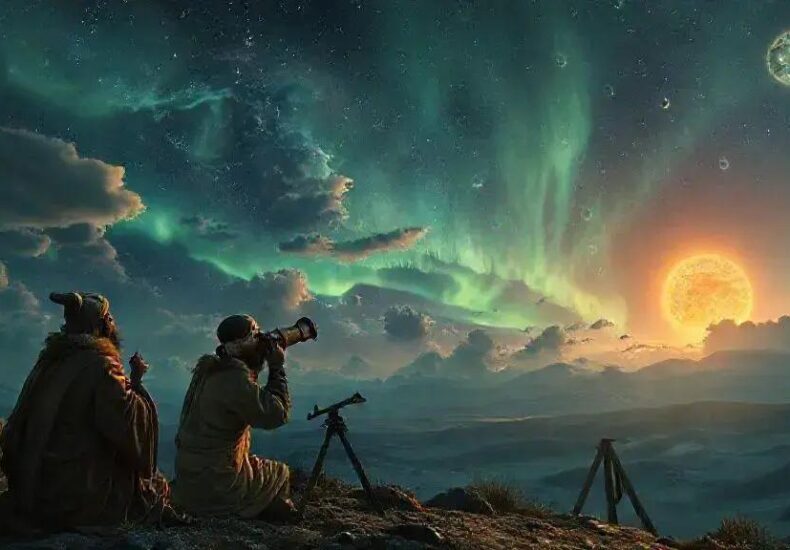
Tracing Solar Storms Through History: Ancient Records and Observations
Ancient records document solar storms through observations of auroras, sunspots, and unusual skies, providing crucial historical data that helps modern science understand and predict solar activity’s impact on Earth.
Ancient Records offer us a rare glimpse into how solar storms have affected our planet long before modern science. Ever wondered how people centuries ago noticed and documented such cosmic events? Let’s uncover those stories together.
understanding solar storms: basics and effects
Solar storms are disturbances on the Sun that can affect space weather and Earth’s environment. These storms often involve bursts of solar energy, including solar flares and coronal mass ejections, which release charged particles into space.
Solar flares are sudden flashes of brightness caused by magnetic energy release on the Sun’s surface. They can disrupt satellite communications and power grids on Earth. Meanwhile, coronal mass ejections (CMEs) are large expulsions of plasma and magnetic fields that travel through space, sometimes colliding with Earth’s magnetosphere.
Effects on Earth and Technology
When solar storms hit Earth, they can produce spectacular auroras near the poles by interacting with the atmosphere. However, they can also cause geomagnetic storms, which may impact navigation systems, radio communications, and even electrical power infrastructure.
Understanding these storms is critical to prepare and protect technology-dependent societies. Scientists monitor solar activity to predict potential impacts and minimize disruptions caused by these powerful solar events.
In summary, solar storms are natural solar events with significant effects on Earth’s environment and human technology. Learning their basics helps us better protect our modern world.
how ancient civilizations recorded solar activity
Ancient civilizations observed the sky carefully, recording solar activity through various means. They noted unusual events such as bright spots, colorful skies, and strange lights, which we now understand as signs of solar storms.
Chinese astronomers documented solar phenomena as early as 200 BC, describing “guest stars” and unusual solar flares in detailed records. These observations were often linked to political or natural events, reflecting the importance of sky-watchers in society.
In ancient Europe, cultures like the Greeks and Romans also recorded auroras and solar-related phenomena in their chronicles. For example, some ancient Roman texts describe unusual red skies that correspond to strong solar storms.
Methods and Tools Used
Without telescopes, early observers relied on naked-eye observations, using careful note-taking and drawings to track changes over time. Some societies also used symbolic art and carvings to represent solar activity, preserving information for future generations.
Ancient Egyptian records mention solar cycles tied to their calendar, highlighting an early understanding of the Sun’s behavior. In many cases, solar activity was linked with mythology and religion, connecting natural events with the divine.
These ancient records provide modern scientists with valuable data, allowing us to understand long-term patterns of solar storms and their historical impact on Earth.
key historical events linked to solar storms
Throughout history, several significant events have been linked to powerful solar storms. These events sometimes disrupted human activities and left marks in historical records.
The Carrington Event of 1859 is one of the most famous solar storms. It caused widespread electrical disturbances, including telegraph system failures and brilliant auroras seen as far south as the Caribbean. This event showed how vulnerable early electrical infrastructure could be to solar activity.
In 774-775 AD, tree ring data and ice cores revealed a sudden spike in carbon-14 levels. Scientists believe this was caused by an intense solar storm, suggesting a massive burst of solar activity impacted Earth at that time. This event is important for understanding the Sun’s potential power over centuries.
Other Notable Events
Historical chronicles from Europe and Asia describe unusual skies and auroras during the medieval period, including the 993-994 AD solar storm. These records help researchers link natural phenomena with solar activity and better estimate how often such storms occur.
In 1989, a powerful solar storm caused a blackout in Quebec, Canada, affecting millions of people. This modern example demonstrates that even today, solar storms can disrupt technology and infrastructure.
Studying these key events allows us to prepare for future solar storms and reduce their impact on society and technology.
methods to interpret and validate ancient observations
Interpreting ancient observations of solar storms requires combining history, science, and modern technology. Scholars analyze historical texts, artifacts, and natural records to understand past solar activity accurately.
Using Historical Documents
Ancient writings provide valuable clues but must be carefully translated and contextualized. Researchers look for descriptions of unusual sky colors, lights, or “fires” which may indicate solar phenomena. Cross-referencing records from different cultures helps confirm events.
Examining Natural Proxies
Tree rings and ice cores store evidence of solar storms through increased levels of isotopes like carbon-14 or beryllium-10. These natural archives act as time capsules revealing spikes in solar activity when analyzed with precise dating methods.
Scientific techniques like radiocarbon dating and isotope analysis validate historical narratives by providing measurable evidence of solar events.
Modern Tools and Data Integration
Combining ancient records with satellite data and space weather models enhances our understanding. Scientists use computer simulations to reconstruct solar storm impacts on Earth, matching them with times recorded in history.
This multidisciplinary approach allows for accurate validation of ancient observations, deepening our knowledge of solar cycles and their effects on the planet.
the role of astronomy history in solar storm research
The history of astronomy plays a crucial role in studying solar storms. Early astronomers laid the foundation for understanding the Sun’s behavior by making detailed observations and recording notable solar activity.
Historical Astronomical Observations
From ancient sky watchers to Renaissance scientists, observations of sunspots, eclipses, and auroras helped track solar cycles. These records were essential to connect solar phenomena with weather and magnetic effects on Earth.
For example, Galileo’s use of the telescope in the 17th century allowed for systematic sunspot monitoring, marking a key advancement in solar research. Historical records reveal patterns and frequencies of solar activity over centuries, providing context for modern studies.
Impact on Modern Solar Storm Research
Modern scientists use historical data to improve solar storm prediction models. Understanding long-term solar cycles helps forecast potential solar events and their impact on technology and society.
Historical astronomy also aids in calibrating satellite and space weather data by comparing patterns observed in the past. This ongoing research bridges centuries of knowledge, from ancient records to today’s space missions.
Overall, astronomy history enriches solar storm research, offering valuable insights that guide how we prepare for and respond to solar activity.
impact of solar storms on ancient societies and technologies
Solar storms have affected ancient societies in ways that went beyond the skies. These powerful solar events often influenced technology, culture, and even the daily lives of people.
Ancient communication systems, such as early metal telegraph-like methods and signal fires, could have been disrupted by geomagnetic storms. While primitive compared to today, these methods relied on consistent conditions, which solar storms sometimes disturbed.
Cultural and Religious Impact
Bright auroras and strange sky colors caused by solar storms were often seen as omens or messages from the gods. Many cultures recorded these visual phenomena in myths, legends, and rituals, linking solar activity with natural disasters or political changes.
For example, ancient Chinese and Nordic societies documented red skies and ghostly lights, integrating these observations into their cultural beliefs. This shows how solar storms shaped worldviews and traditions.
Technological Effects and Records
In terms of technology, solar storms could have disrupted early metalworking processes or affected magnetic compasses used for navigation. Such disturbances might have caused confusion in navigation or craftsmanship, subtly influencing trade and exploration.
Ancient records from various civilizations often capture the timing of these events, helping modern researchers understand the historical frequency and impact of solar storms.
recent scientific findings from historical data
Recent scientific studies using ancient records have uncovered new insights into solar storm activity over centuries. Researchers analyze historical texts, tree rings, and ice core samples to understand past solar events in detail.
Discoveries from Natural Archives
Carbon-14 and beryllium-10 isotopes found in tree rings and ice cores show spikes that correspond with powerful solar storms. These findings help to identify events that occurred before modern observations existed.
Such data reveal the frequency and intensity of solar storms throughout history, improving our understanding of the Sun’s long-term behavior.
Integrating Ancient and Modern Data
Combining ancient records with modern satellite data and computer models allows scientists to test and refine predictions about solar storms. This blend of old and new knowledge offers a clearer global picture of solar activity patterns.
Recent findings also suggest that some past solar storms were stronger than those recorded in the space age, emphasizing the importance of historic data in preparing for future space weather events.
Impact on Technology and Society
Understanding solar storms’ history helps design better technology and safeguards for modern infrastructure like power grids and communications. It also aids policymakers in readiness planning to reduce risks from future solar storms.
These scientific advances demonstrate how studying history enriches our knowledge and resilience against natural cosmic threats.
lessons from the past to predict future solar storms
Studying ancient records teaches us valuable lessons about predicting future solar storms. These records show how solar activity varies over time and reveal patterns that help scientists forecast upcoming events.
Learning from Historical Patterns
Past solar storms often follow cycles lasting about 11 years, known as the solar cycle. By examining centuries of data, scientists can identify when storm activity might peak or decrease.
Historical events like the Carrington Event help us understand the potential strength and impact of extreme solar storms. This knowledge guides modern preparedness and risk management.
Improving Forecast Models
Ancient data combined with satellite observations improves computer models that predict solar storm impacts. These models are vital for protecting power grids, communication networks, and satellites from solar damage.
Researchers also study how past societies responded to solar storms, helping to develop effective communication and response strategies today.
Preparing for the Future
By learning from the past, we can design stronger technology and infrastructure to withstand solar events. Public awareness campaigns and emergency plans are improved using insights gained from historical solar storms.
The continuous study of ancient records, paired with modern science, forms the backbone of solar storm prediction and preparedness.
Understanding Solar Storms Through History
Exploring ancient records helps us grasp the power and impact of solar storms over time. These historical insights deepen our knowledge about the Sun’s behavior and its effects on Earth.
By learning from past events and combining old observations with modern science, we can better predict future solar storms and protect our technology and society.
Continuing to study ancient data is key to preparing for and minimizing the risks of solar storms in our modern world.
FAQ – Understanding Solar Storms Through History
What are solar storms and how do they affect Earth?
Solar storms are bursts of energy from the sun that can disrupt Earth’s magnetic field, causing auroras and impacting technology.
How did ancient civilizations record solar storms?
They documented unusual sky events like auroras and sunspots in writings, drawings, and myths, which help us understand past solar activity.
Why are ancient records important for studying solar storms?
Ancient records provide historical data that reveal patterns and frequency of solar storms before modern instruments existed.
How do scientists validate ancient observations of solar storms?
They use methods like analyzing tree rings and ice cores for isotopes, cross-checking with historical texts and modern data.
What lessons do we learn from past solar storms?
Studying past storms helps improve prediction models and prepares us to protect technology and infrastructure from future solar events.
Can solar storms impact modern technology?
Yes, strong solar storms can disrupt satellites, communication systems, and power grids, making preparedness essential.
You may also like



Leave a Reply