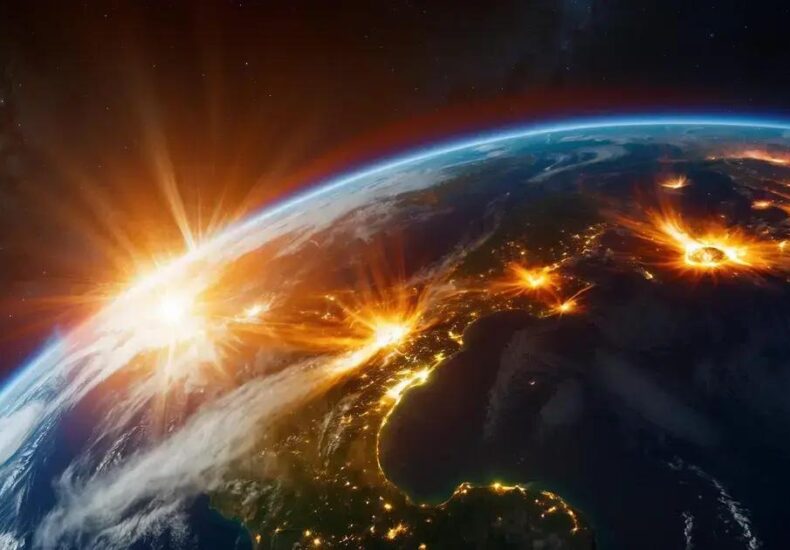
The Carrington Event: Revisiting the Most Infamous Solar Superstorm
The Carrington Event was the most powerful solar storm recorded in 1859, causing widespread telegraph failures and vivid auroras, and it remains a key reference for understanding the impact of solar superstorms on Earth’s technology and infrastructure.
Have you ever wondered what happens when the sun throws a massive tantrum? The Carrington Event is our most famous example — a solar superstorm from 1859 that shook the world in ways still relevant. Curious about what really went down and why it still matters? Let’s dive in.
what was the carrington event?
The Carrington Event was a massive solar storm that occurred in 1859 and is considered the most powerful geomagnetic storm recorded in history. It began with a huge coronal mass ejection (CME) from the sun, which sent charged particles hurtling toward Earth at incredible speeds. When these particles reached our planet, they interacted with the Earth’s magnetic field and atmosphere, causing dazzling auroras visible as far south as the Caribbean.
This powerful storm also triggered widespread disruptions. Telegraph systems across Europe and North America failed or even caught fire due to the induced electric currents. The event demonstrated how closely linked our technology and daily life are to solar activity.
Key facts about the Carrington Event
- Occurred on September 1-2, 1859
- Produced the largest solar flare ever recorded
- Caused bright auroras seen worldwide
- Interrupted telegraph communication systems
Understanding the Carrington Event helps scientists prepare for future solar storms that could have even greater consequences, given today’s reliance on electricity and satellites.
how solar storms impact earth today
Solar storms continue to have a significant impact on Earth today, especially because our technology relies heavily on electronics and satellites. When a solar storm, such as a coronal mass ejection (CME), interacts with Earth’s magnetic field, it can cause powerful geomagnetic disturbances.
These disturbances can disrupt satellite operations, causing GPS inaccuracies and communication failures. Power grids are also vulnerable; strong solar storms can induce currents that overload transformers and lead to widespread blackouts.
Effects on technology and daily life
- Disruption of radio communications and GPS signals
- Damage to satellites and space equipment
- Power grid failures leading to blackouts
- Increased radiation risk for astronauts and high-altitude flights
Solar storms also produce beautiful auroras, but they serve as a reminder that space weather can have real, sometimes dangerous effects on modern infrastructure.
Scientists monitor solar activity closely to provide warnings ahead of severe storms, helping to mitigate some risks. Still, the possibility of a major solar storm impacting Earth remains a critical concern for technology and safety today.
lessons learned from historical solar superstorms
Historical solar superstorms like the Carrington Event taught us valuable lessons about the power of space weather and its impact on modern society. By studying these events, scientists have learned how solar activity can disrupt electrical systems and communication networks on Earth.
Understanding vulnerability
One major lesson is the vulnerability of our technological infrastructure. The Carrington Event showed how telegraph lines were dangerously affected by induced electric currents. Today, similar storms could threaten power grids, satellites, and communication systems.
Improving monitoring and forecasting
Scientists have developed advanced space weather monitoring tools to detect solar flares and CMEs early. This helps provide warnings, allowing power companies and satellite operators time to prepare and protect their systems.
The importance of preparedness
Governments and industries now focus on preparedness plans and technological solutions to reduce damage during solar storms. These include hardening infrastructure, creating backup systems, and raising public awareness about solar storm risks.
Lessons from past solar superstorms emphasize the need to balance our technological growth with effective protection against natural cosmic events.
predicting future solar superstorms
Predicting future solar superstorms is a complex but vital task. Scientists use satellites and ground-based observatories to monitor the sun’s activity continuously. This helps track solar flares and coronal mass ejections (CMEs) that can lead to powerful geomagnetic storms.
Tools for solar storm prediction
Advanced instruments like the Solar and Heliospheric Observatory (SOHO) and the Parker Solar Probe provide real-time data on solar conditions. These tools allow experts to identify potential threats hours or even days before the solar storm reaches Earth.
Challenges in forecasting
Despite technological advances, predicting the exact strength and impact of a solar event remains difficult. Factors such as the speed, direction, and magnetic properties of CMEs affect how storms develop and interact with Earth’s magnetosphere.
Early warning systems aim to reduce damage by alerting power grids, satellites, and airlines to take protective measures. Continued research is essential to improve forecast accuracy and prepare for possible severe space weather events.
technologies to protect against solar storms
Various technologies have been developed to protect against the damaging effects of solar storms on Earth’s infrastructure. These solutions focus on safeguarding power grids, satellites, and communication systems from geomagnetic disturbances caused by solar activity.
Power grid protection
One key technology is the installation of geomagnetic monitoring systems that detect solar storm activity and allow operators to adjust power flows. Advanced circuit breakers and transformers with enhanced shielding also help reduce damage from induced currents.
Satellite and communication safeguards
Satellites are equipped with radiation-hardened components to withstand solar radiation bursts. Operators can also power down or place satellites in safe modes during severe solar events to minimize risk.
Early warning and forecasting systems
Real-time space weather monitoring networks provide crucial alerts that enable preventative measures. These include shutting down sensitive equipment and rerouting air traffic to avoid increased radiation exposure at high altitudes.
Innovation continues to improve these technologies as our reliance on electrical and space-based systems grows.
the carrington event in popular culture
The Carrington Event has captured the imagination of many and appeared in various forms of popular culture. It is often referenced as a dramatic example of a solar superstorm with the potential to disrupt modern life.
In films and TV
Several documentaries and science fiction movies have depicted events inspired by the Carrington Event, illustrating the possible chaos a similar solar storm could cause today. These portrayals often highlight the fragility of our technology-dependent society.
Books and literature
Authors have used the Carrington Event as a backdrop or inspiration for stories exploring natural disasters, survival, and the impact of space weather on humanity. It serves to raise awareness and spark curiosity about solar storms.
Video games and other media
The event has influenced post-apocalyptic and science fiction games, incorporating solar storms as a gameplay mechanic or storyline element, adding realism and tension to the experience.
The Carrington Event continues to be a powerful symbol of the sun’s influence on Earth, bridging science and entertainment.
Understanding the lasting impact of the Carrington Event
The Carrington Event remains a crucial lesson about the power of the sun and its effects on our technology and daily lives. It reminds us that solar storms are not just historical events but real dangers we must prepare for.
Advances in technology and space weather monitoring help us detect and protect against these storms, but vigilance and innovation are essential. By learning from the past and investing in protection, we can reduce the risks posed by future solar superstorms.
Being aware of the Carrington Event and its influence helps us appreciate both the wonders and challenges of living on a planet so closely tied to the sun.
FAQ – Understanding the Carrington Event and Solar Storms
What was the Carrington Event?
The Carrington Event was the most powerful solar storm recorded in 1859, which caused major disruptions to telegraph systems and produced vivid auroras worldwide.
How do solar storms affect Earth today?
Solar storms can disrupt satellite communications, GPS, radio signals, and power grids, potentially causing blackouts and damage to sensitive electronics.
Can we predict solar superstorms before they hit?
Yes, scientists use satellites and observatories to monitor solar activity and provide early warnings, though forecasting exact impacts remains challenging.
What technologies protect us from solar storms?
Power grids have monitoring and protection systems, satellites have radiation-hardened components, and early warning alerts help operators take preventative actions.
Why is the Carrington Event important in popular culture?
The event symbolizes the power of the sun and has inspired movies, books, and games exploring the impact of massive solar storms on society.
How can learning about past solar superstorms help us?
Studying past solar storms helps improve monitoring, forecasting, and preparedness, reducing risks to our technology and infrastructure in the future.
You may also like

Leave a Reply