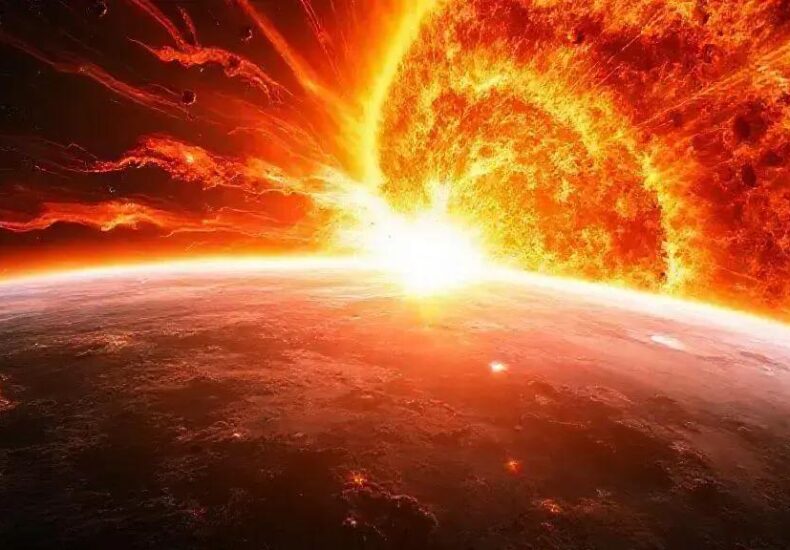
Coronal Mass Ejections 101: The Driving Force Behind Major Storms
CME Basics cover the formation, prediction, and impact of coronal mass ejections—massive solar eruptions that can disrupt Earth’s magnetosphere, satellites, power grids, and communications, emphasizing the importance of monitoring and mitigation strategies to protect technology and infrastructure.
CME Basics can seem pretty complex, but understanding these solar eruptions is key to grasping how giant storms in space happen. Ever wondered what really causes those big disruptions in the sky and on our tech here on Earth?
what are coronal mass ejections?
Coronal mass ejections, or CMEs, are huge bursts of solar wind and magnetic fields rising above the solar corona or being released into space. These powerful eruptions consist of billions of tons of plasma traveling at millions of miles per hour. When a CME is launched from the Sun, it carries charged particles and magnetic fields that can affect the entire solar system.
CMEs often occur following solar flares but are distinct phenomena. While solar flares are bursts of light and energy, CMEs involve massive clouds of solar material. They originate from regions on the Sun known as active regions, where the magnetic field is especially strong and tangled.
The Nature of CMEs
The structure of a CME includes a leading shock wave, dense plasma, and tangled magnetic fields. The shockwave ahead of the CME can accelerate particles, and the magnetic cloud can interact with Earth’s magnetic field in complex ways.
Understanding what CMEs are is vital because when they impact Earth, they can trigger geomagnetic storms, which may disrupt satellite communications, GPS systems, and even power grids.
Scientists monitor CMEs using satellites and solar observatories equipped with specialized instruments. This allows them to track the speed, direction, and size of the ejection to predict its effects on Earth.
how do cmEs form on the sun?
Coronal mass ejections form on the Sun through a complex process driven by the Sun’s magnetic field. The Sun’s outer atmosphere, called the corona, is filled with plasma and magnetic fields that constantly shift and twist. When magnetic field lines become twisted and store a large amount of energy, they can suddenly snap and reorganize, releasing that energy as a CME.
Magnetic Field Lines and Energy Build-Up
The Sun’s magnetic field lines often loop and bend through the corona. These loops can become tangled due to the Sun’s rotation and convection currents beneath its surface. The tension created by these tangled magnetic fields stores energy in the corona, much like a slingshot ready to release.
Triggering a Coronal Mass Ejection
When the magnetic field lines suddenly break and reconnect—a process called magnetic reconnection—this releases a vast amount of energy. This violent event ejects plasma and magnetic fields outward, creating a CME that bursts into space at millions of miles per hour. These events can be tied to sunspots and solar flares, as all relate to magnetic activity on the Sun.
Scientists study solar observations to better understand the timing and conditions that cause these eruptions. This knowledge helps in predicting space weather that affects Earth.
the impact of cmEs on Earth’s magnetosphere
When a coronal mass ejection reaches Earth, it can have a significant impact on our planet’s magnetosphere, which is the magnetic shield that protects us from harmful solar radiation. The magnetosphere deflects charged particles from the Sun, but a strong CME can compress this shield and disturb its protective function.
How CMEs Interact with the Magnetosphere
CMEs carry their own magnetic fields, and when these fields align with Earth’s magnetic field in opposite directions, they can cause a magnetic reconnection. This process opens a pathway for solar particles to enter the magnetosphere and trigger geomagnetic storms.
These storms can energize particles trapped in the magnetosphere, creating spectacular auroras near the poles. However, they also create currents and fluctuations that may disturb satellite operations and navigation systems.
Effects on Technology and Daily Life
Strong geomagnetic storms caused by CMEs can affect power grids by inducing electrical currents that disrupt transformers and cause outages. Communication systems that rely on satellites, such as GPS and radio signals, may experience interruptions or degradation.
Scientists continuously monitor solar activity to forecast these events and prepare for their potential impact on modern infrastructure.
predicting cmEs: current methods and challenges
Predicting coronal mass ejections (CMEs) is key to protecting Earth’s technology from solar storms. Scientists use a combination of satellites, ground-based observatories, and computer models to monitor solar activity and forecast CMEs. However, prediction remains challenging due to the complex nature of the Sun’s magnetic field.
Current Methods for CME Prediction
Satellites like the Solar and Heliospheric Observatory (SOHO) and the Solar Dynamics Observatory (SDO) provide real-time images of the Sun’s corona. They detect early signs of eruptions such as sunspots and solar flares. Scientists also use magnetic field data to model potential CME launches.
Computer simulations play a crucial role by predicting the speed, direction, and shape of CMEs based on solar observations. These models help estimate if and when a CME might impact Earth.
Challenges in Forecasting CMEs
The Sun’s magnetic field is highly dynamic and not fully understood, making it hard to predict exactly when and where a CME will occur. In addition, predicting the impact on Earth requires precise data on the CME’s magnetic structure, which is difficult to gather before the event.
Delays in detection can mean warnings come with limited time to prepare for geomagnetic storms. Scientists continue working to improve instruments and models to provide earlier and more accurate forecasts.
effects of cmEs on satellites and communications
Coronal mass ejections (CMEs) pose significant risks to satellites and communication systems in space. When a CME releases a massive cloud of charged particles, these can penetrate and damage the sensitive electronics onboard satellites. This can lead to temporary malfunctions or permanent failures, affecting services such as GPS, television, and internet.
Impact on Satellite Operations
High-energy particles from CMEs can cause short circuits and increase radiation exposure, which may degrade satellite components over time. Operators may notice anomalies or loss of control during strong solar storms, which can interrupt satellite functions and lead to costly repairs or replacements.
Disruptions in Communications
Satellite signals can be disrupted by the ionospheric disturbances caused by CMEs. Radio communications, especially in high-frequency bands, may experience fading or complete blackout. This also affects airplane navigation and maritime communication that rely on satellite links.
Communication networks on Earth that depend on satellites also suffer delays or data loss during intense geomagnetic storms. This highlights the importance of monitoring space weather to safeguard technology.
Scientists and engineers work together to design radiation-hardened satellites and develop strategies to temporarily shut down vulnerable systems during solar events. Despite these efforts, CMEs remain a serious threat to global communications infrastructure.
cmEs and power grid vulnerabilities
Coronal mass ejections (CMEs) can severely impact power grids on Earth by inducing electrical currents in long conductors like power lines. These currents, known as geomagnetically induced currents (GICs), can overload transformers and other equipment, causing damage or failures.
How CMEs Affect Power Grids
When a CME-triggered geomagnetic storm hits Earth, it compresses and disturbs the magnetosphere, leading to rapid changes in Earth’s magnetic field. These changes create GICs that flow through power grids. Such currents are dangerous because they can heat and damage transformers, leading to widespread power outages.
Modern power grids are extensive and interconnected, which can make them vulnerable to cascading failures during strong solar storms. In 1989, a famous geomagnetic storm caused a blackout in Quebec, Canada, affecting millions of people.
Protecting Power Grids from CMEs
Utilities are developing strategies to mitigate CME effects, such as installing devices to block harmful currents and improving monitoring systems for early warnings. Grid operators may also temporarily reduce loads or shut down vulnerable equipment to avoid damage during severe solar events.
Understanding CME impacts is essential for maintaining reliable power supply and minimizing disruption during solar storms.
space weather forecasting and why it matters
Space weather forecasting involves monitoring the Sun’s activity and predicting solar events like coronal mass ejections (CMEs) that may affect Earth. This forecasting is essential to protect satellites, power grids, and communication systems from solar storms. Accurate forecasts allow industries and governments to prepare and minimize damage.
How Space Weather Forecasting Works
Scientists use space-based observatories to observe the Sun in real-time. Instruments measure solar flares, sunspots, and magnetic fields to detect possible eruptions. Models simulate how solar events travel through space and interact with Earth’s environment.
Early warnings from these forecasts can provide hours to days of lead time before a CME hits. This lets operators take protective actions, such as adjusting satellite orbits or temporarily shutting down vulnerable power grid components.
The Importance of Space Weather Forecasting
Without space weather forecasting, unexpected solar storms could cause widespread disruption to critical infrastructure. For example, GPS navigation, aviation communication, and even financial systems rely heavily on space-based technologies that are vulnerable to solar activity.
Investing in better forecasting technology improves our resilience and helps avoid costly outages and service interruptions. It also supports long-term planning for space missions and helps ensure astronaut safety.
historical major cmE events and their consequences
Several major coronal mass ejection (CME) events throughout history have shown the power and potential danger of solar storms. The Carrington Event of 1859 is the most famous, causing widespread telegraph failures and bright auroras visible near the equator. This massive CME is considered the strongest on record.
The Carrington Event
During this event, a huge solar storm hit Earth, disrupting electrical systems. Telegraph systems, the main communication method at the time, experienced sparks and outages. Many operators were shocked, and some telegraph lines continued to operate without power due to induced currents.
Modern CME Impacts
In March 1989, a strong CME caused a geomagnetic storm that led to a blackout in Quebec, Canada. About six million people lost power for nine hours. Satellites and communication systems were also affected, highlighting the vulnerability of modern technology.
Smaller but still significant events have interrupted GPS and radio signals and caused issues with satellite operations. These historical events underline the importance of monitoring space weather and preparing for future CMEs to avoid severe consequences.
mitigation strategies for cmE-related disruptions
Mitigation strategies for coronal mass ejection (CME) disruptions focus on reducing the impact of solar storms on Earth’s technology and infrastructure. Because CMEs can damage satellites, power grids, and communication systems, it is vital to have effective plans in place.
Early Warning Systems
One key strategy is improving early warning systems using space-based observatories that monitor solar activity in real-time. This allows operators to prepare and protect sensitive equipment before a CME reaches Earth.
Protecting Power Grids
Power companies install devices to detect and block geomagnetically induced currents (GICs) caused by CMEs. Additionally, grid operators can temporarily shut down vulnerable transformers and redistribute loads to prevent damage during solar storms.
Hardening Satellites and Technology
Satellites and spacecraft are being designed with radiation-hardened components to better withstand charged particles from CMEs. Operators can also place critical satellites into safe modes during intense solar activity to reduce risk.
Regular updates to protocols and international cooperation help improve responses to space weather events, minimizing the overall effects of CMEs on society.
the future of cmE research and space weather studies
The future of coronal mass ejection (CME) research and space weather studies focuses on improving our ability to predict and understand solar storms. Advances in technology and collaborative space missions are driving new discoveries about the Sun’s behavior and its effects on Earth.
Next-Generation Solar Observatories
Upcoming solar observatories will have more sensitive instruments to capture detailed images and magnetic data. These improvements will help scientists monitor the Sun’s magnetic fields and detect early signs of CMEs with greater accuracy.
Enhanced Space Weather Modeling
Better computer models are crucial for simulating how CMEs travel through space and interact with Earth’s magnetic field. Researchers are developing more precise models that incorporate real-time data to improve forecasting and warning systems.
International Collaboration
Space weather research increasingly involves partnerships between agencies worldwide. Sharing data and resources accelerates progress, enabling a global response to space weather threats.
As our reliance on technology grows, advancing CME research and space weather studies is vital for protecting satellites, power grids, and communication systems from solar storms.
Understanding CMEs and Their Importance
Coronal mass ejections are powerful solar events that can greatly impact our planet and technology. Learning about CMEs helps us prepare for space weather and protect vital systems like power grids and satellites.
Thanks to advances in research and forecasting, we are better equipped to predict these solar storms and reduce their effects. Continued studies and international cooperation will improve our defenses against future solar events.
Staying informed and investing in technology are key steps to living safely with the Sun’s dynamic activity. As our world becomes more connected, understanding CMEs becomes more important than ever.
FAQ – Common Questions About Coronal Mass Ejections (CMEs)
What is a coronal mass ejection (CME)?
A CME is a large burst of solar wind and magnetic fields released from the Sun’s corona into space, carrying plasma and charged particles.
How do CMEs affect Earth?
CMEs can disturb Earth’s magnetosphere, causing geomagnetic storms that may disrupt satellites, power grids, and communication systems.
Can we predict when a CME will happen?
Scientists use satellites and computer models to monitor the Sun and predict CMEs, but forecasting their exact timing and impact remains challenging.
What damage can CMEs cause to satellites?
CMEs can expose satellites to high radiation and charged particles that may cause failures or malfunctions in their electronic systems.
How do CMEs impact power grids on Earth?
CMEs induce electrical currents in power lines that can overload transformers, potentially causing power outages and equipment damage.
What strategies help reduce the impact of CMEs?
Mitigation strategies include early warning systems, shielding sensitive equipment, temporarily shutting down vulnerable systems, and hardening satellites against radiation.
You may also like


Leave a Reply