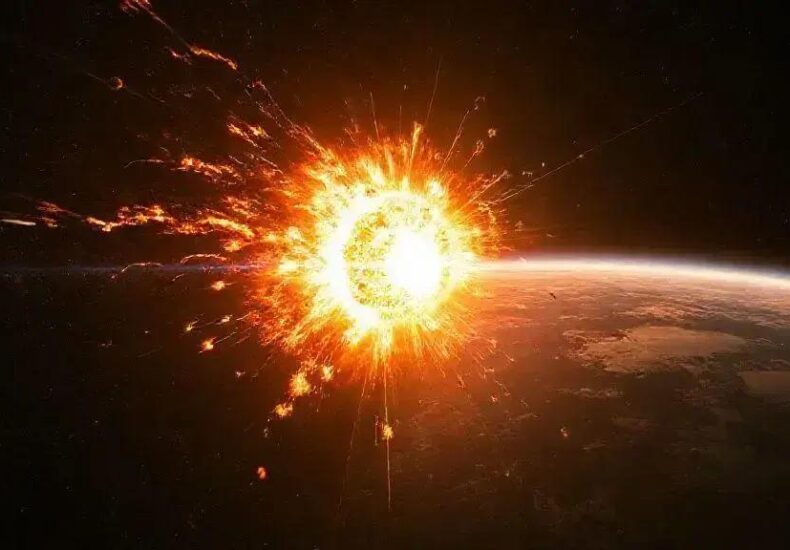
Breaking News: Unusual Coronal Mass Ejection Detected
CME Detected refers to a significant solar event where massive bursts of solar plasma and magnetic fields are released, potentially impacting Earth’s magnetic field, satellites, and communication systems, while scientists use advanced tools to monitor and predict these space weather disturbances.
You know when you hear about a CME detected causing a stir up there? This recent unusual coronal mass ejection grabbed attention worldwide, raising questions about what it really means to us here on Earth. Curious? Let’s dive in together.
what is a coronal mass ejection and why it matters
A coronal mass ejection (CME) is a massive burst of solar wind and magnetic fields rising above the solar corona or being released into space. These giant explosions from the sun release billions of tons of plasma and charged particles into space at millions of miles per hour. When directed toward Earth, a CME can interact with our planet’s magnetic field, causing geomagnetic storms.
Why It Matters
CMEs are important because they can impact various technologies and systems on Earth. For instance, they may disrupt satellite operations, GPS signals, and power grids, posing risks to communication and navigation networks. Additionally, intense geomagnetic storms can enhance the beautiful auroras near polar regions, but they can also interfere with aviation and space missions.
Understanding what a CME is helps scientists predict space weather and prepare for its effects. This knowledge is vital for protecting our technology-dependent society and maintaining the safety of astronauts and satellites in orbit.
how this unusual cme differs from typical solar events
This unusual coronal mass ejection (CME) stands out from typical solar events due to its size, speed, and magnetic complexity. While most CMEs eject solar material gradually, this event released a huge cloud of charged particles at an exceptionally high velocity. The strong magnetic fields carried within this CME have a unique orientation, which can cause more intense geomagnetic storms when interacting with Earth’s magnetic field.
Key differences in this CME
Unlike average solar events, this CME’s rapid expansion and unpredictable path make it harder for scientists to forecast its exact impact. Its magnetic alignment is also unusual, increasing the chance of stronger disruptions to satellite communications, power grids, and spacecraft.
Understanding these distinct properties helps meteorologists and space weather experts prepare better warnings and protect technological infrastructures that are vulnerable to space weather effects.
methods used to detect and monitor cmes
Detecting and monitoring coronal mass ejections (CMEs) involves several advanced technologies and methods. One of the primary tools is the use of space-based observatories such as the Solar and Heliospheric Observatory (SOHO) and the Solar Dynamics Observatory (SDO). These satellites provide real-time images and data on solar activity, allowing scientists to spot CMEs as they occur.
Key detection techniques
Specialized instruments called coronagraphs block out the sun’s bright surface to capture the faint light of the CME moving away from the sun’s corona. These images help track the size, speed, and direction of the plasma cloud.
Additionally, satellites equipped with magnetometers and particle detectors measure changes in solar wind and magnetic fields, offering clues about incoming CMEs. Ground-based observatories also contribute to monitoring space weather conditions by measuring geomagnetic activity.
Combining data from these tools enables experts to provide forecasts and alerts for possible impacts on Earth, helping to minimize disruptions to technology and infrastructure.
potential impacts of the cme on earth’s magnetic field
When a coronal mass ejection (CME) reaches Earth, it can strongly interact with our planet’s magnetic field, causing what is known as a geomagnetic storm. These storms occur when the CME’s charged particles disturb the magnetic field lines, leading to fluctuations and temporary changes.
Effects on Earth’s magnetic field
These disruptions can cause magnetic storms that affect navigation systems and compass readings. Power grids may experience voltage fluctuations, which can overload transformers and sometimes cause blackouts in severe cases. The magnetic field changes also induce electrical currents in pipelines and railways, affecting their operation.
Changes in the magnetic field can also enhance natural phenomena like the aurora borealis and australis, creating stunning light displays near the poles. Scientists monitor these magnetic effects closely to forecast space weather hazards and protect critical infrastructure.
effects on satellite and communication systems
Coronal mass ejections (CMEs) can have significant effects on satellites and communication systems. When a CME reaches Earth, the charged particles and magnetic disturbances can interfere with the operation of satellites in orbit.
Impacts on satellites
The influx of radiation can damage satellite electronics, cause temporary malfunctions, or degrade their sensors. This interference may lead to signal loss or delays in satellite communication, impacting GPS navigation, weather forecasting, and data transmission.
Communication systems on Earth can also be affected. Radio signals, especially those using high-frequency (HF) bands, can be disrupted due to ionospheric disturbances caused by geomagnetic storms linked to CMEs. This leads to degraded performance or complete blackouts in certain areas.
Operators of satellites and communication networks monitor space weather closely to mitigate risks by adjusting satellite operations or switching communication frequencies during intense solar activity.
steps to prepare for space weather disturbances
Preparing for space weather disturbances caused by coronal mass ejections (CMEs) requires a combination of monitoring, planning, and technological safeguards. Governments and space agencies use advanced forecasting models to predict solar activity so that warnings can be issued in time.
Key steps to prepare
1. Monitoring space weather through satellite data and observatories helps detect incoming CMEs early. This gives operators time to activate protective measures.
2. Protecting critical infrastructure such as power grids by implementing surge protectors and backup systems reduces the risk of blackouts caused by geomagnetic storms. Utilities often have protocols to reduce load during high-risk periods.
3. Securing satellites and spacecraft involves switching satellites to safe modes, adjusting orbits if possible, and shielding sensitive electronics to minimize damage.
4. Public communication and coordination ensure that industries and emergency services are aware of potential disruptions and can respond quickly.
These proactive strategies help minimize the impact of space weather events on our technology and daily lives.
scientists’ insights on this specific cme event
Scientists studying this specific coronal mass ejection (CME) have noted several unusual features that set it apart from typical solar storms. Its rapid speed and strong, complex magnetic fields have captured the attention of solar physicists worldwide.
Research focus
Experts emphasize the importance of analyzing the CME’s magnetic structure to understand how it might affect Earth’s space environment. This event offers a valuable opportunity to improve forecasting models and predict impacts more accurately in the future.
Researchers are also examining data on the CME’s source region on the sun, looking for clues about how such intense ejections form and evolve. These insights could help in developing early warning systems for severe space weather.
Collaboration among international space agencies is ongoing to share observations and coordinate studies, aiming to protect satellites, astronauts, and technological infrastructure.
tools and technology predicting future cmes
Predicting future coronal mass ejections (CMEs) relies on a combination of advanced tools and cutting-edge technology. Space agencies use satellites equipped with specialized instruments to continuously observe the sun’s surface and atmosphere.
Key tools and technologies
Solar observatories like NASA’s Solar Dynamics Observatory (SDO) and the Solar and Heliospheric Observatory (SOHO) provide detailed imagery and data on solar activity. These help scientists identify active regions on the sun that could produce CMEs.
Space weather models use this data to simulate solar conditions and forecast when and where CMEs might occur. Machine learning algorithms increasingly assist in analyzing vast amounts of solar data to improve prediction accuracy.
Ground-based radio telescopes and magnetometers support these efforts by detecting solar bursts and magnetic field changes. Together, these tools enable early warnings that help protect satellites, power grids, and communication networks from potential damage.
how cmes influence daily life and technology
Coronal mass ejections (CMEs) can subtly and significantly influence our daily life and technology. When a CME impacts Earth, it can disrupt electronics and communication systems that many of us rely on, from GPS to power grids.
Everyday technology impacts
For example, CMEs can cause fluctuations in power supply, leading to brief blackouts or damage to electrical equipment. Satellite-based technologies such as GPS navigation and internet services may experience signal loss or delays, affecting smartphones, airplanes, and even financial systems.
In addition, radio communications used in aviation, maritime, and emergency services can be interrupted by the ionospheric disturbances triggered by CMEs. This poses challenges to safety and coordination in critical situations.
On the positive side, CMEs create spectacular auroras visible near the poles, which many enjoy as natural light shows. Scientists continue to study CMEs to improve our ability to predict these events and safeguard sensitive technology that underpins modern life.
Understanding and Preparing for CMEs
Coronal mass ejections are powerful solar events with the ability to impact technology and daily life on Earth. By studying and monitoring CMEs, scientists provide early warnings to help protect our communication systems, power grids, and satellites.
Knowing how CMEs affect Earth and the tools used to predict them allows us to prepare and reduce risks linked to space weather. Staying informed and supporting research in this field ensures that we can better handle these natural phenomena in the future.
Awareness and readiness are key to minimizing disruptions and safely enjoying the amazing natural effects CMEs can bring, like the dazzling auroras.
FAQ – Common Questions About Coronal Mass Ejections (CMEs)
What is a coronal mass ejection (CME)?
A CME is a large burst of solar wind and magnetic fields released from the sun’s corona into space.
How can CMEs affect Earth?
CMEs can disturb Earth’s magnetic field, causing geomagnetic storms that impact satellites, power grids, and communication systems.
How are CMEs detected and monitored?
CMEs are detected using space-based observatories like SOHO and SDO, which use coronagraphs and other instruments to track solar activity.
What technologies help predict future CMEs?
Satellites, solar observatories, machine learning models, and ground-based instruments help forecast and analyze solar events.
Can CMEs disrupt daily life?
Yes, CMEs can cause power outages, GPS signal disruptions, and affect radio communications, impacting many technologies we use daily.
How can we prepare for space weather events like CMEs?
Preparation involves monitoring space weather, protecting critical infrastructure, securing satellites, and public communication to reduce impact risks.
You may also like


Leave a Reply