
Coronal Mass Ejections: New Research on Their Formation and Impact
CME Formation involves the release of twisted magnetic fields and plasma from the Sun’s corona through magnetic reconnection, driving powerful solar eruptions that impact space weather and Earth’s technology systems.
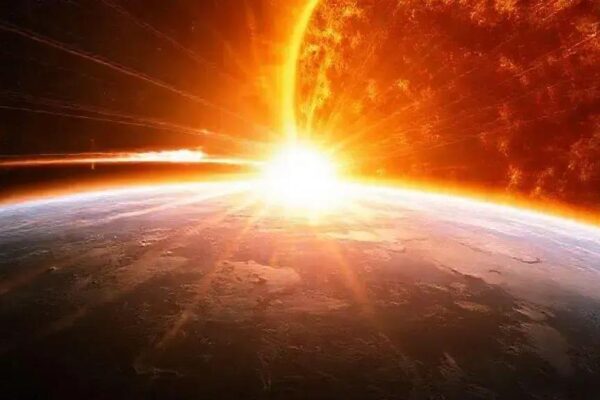
CME Formation fascinates scientists as they uncover how these massive solar eruptions take shape and influence our planet. Ever wondered what stirs these colossal bursts from the sun and how they mess with Earth’s magnetic shield? Let’s dig into the latest on coronal mass ejections and their surprising effects.
what are coronal mass ejections and why they matter
Coronal mass ejections, or CMEs, are significant bursts of solar wind and magnetic fields rising above the solar corona or being released into space. These massive eruptions can spew billions of tons of plasma and charged particles into the solar system. When these particles reach Earth, they interact with our magnetosphere, potentially disrupting satellite operations, communication systems, and even power grids.
CMEs matter because they are a primary driver of space weather, which can have direct effects on astronauts and technology-dependent systems on Earth. Their ability to cause geomagnetic storms makes understanding them crucial for preparing and protecting both space-based and ground-based technologies.
How CMEs Originate
CMEs often originate from regions on the sun where magnetic fields are especially strong and tangled, such as sunspot groups. Magnetic energy builds up in these areas until it suddenly releases, propelling the plasma outward at high speeds. This magnetic eruption is what creates the CME, sometimes accompanied by solar flares.
By studying CMEs, scientists aim to predict when and how these solar events occur, improving our ability to forecast space weather and minimize their harmful effects on daily life.
recent discoveries in cme formation
Recent research on CME formation has uncovered key insights into how magnetic fields on the Sun evolve and trigger these massive eruptions. Scientists now better understand that CMEs often begin with the sudden destabilization of twisted magnetic flux ropes in the solar corona. This occurs when stress builds up over time due to the sun’s complex magnetic activity.
Advanced spacecraft and observatories have allowed researchers to observe the early stages of CME development in unprecedented detail. They have detected small-scale magnetic reconnection events that act as a catalyst, releasing stored magnetic energy and launching plasma into space.
Magnetic flux ropes and their role
Magnetic flux ropes are bundles of twisted magnetic field lines that play a critical role in CME initiation. When these ropes break free from the Sun’s surface, they can erupt violently, becoming the core of the CME. Ongoing studies focus on how these structures form and evolve before an eruption.
Use of new imaging technologies
High-resolution images from satellites such as the Solar Dynamics Observatory provide valuable visual data that helps scientists track changes in the Sun’s atmosphere leading up to a CME. These detailed observations enable improved models of solar behavior, helping predict CME events more accurately.
Understanding these discoveries helps scientists anticipate the timing and impact of CMEs, enhancing space weather forecasting and protection strategies for technology-dependent systems on Earth.
mechanisms behind the birth of coronal mass ejections
The birth of coronal mass ejections (CMEs) involves complex mechanisms linked to the Sun’s magnetic field. At the core of CME formation is the process of magnetic reconnection, where twisted magnetic field lines in the solar corona suddenly realign and release vast amounts of energy. This energy propels solar plasma into space at high speeds.
Before a CME occurs, magnetic flux ropes form as magnetic fields twist and wrap around each other. These ropes store magnetic energy until they become unstable. When external forces or internal magnetic stresses disrupt this balance, the ropes can erupt violently, triggering the CME.
Role of magnetic reconnection
Magnetic reconnection is a fundamental physical process behind CMEs. It breaks and reconnects magnetic field lines, converting magnetic energy into kinetic and thermal energy. This rapid release results in the acceleration of solar particles and the outward push of plasma from the Sun’s surface.
Triggers for CME eruption
Various triggers can initiate a CME, including sudden changes in the magnetic environment, such as the emergence of new magnetic flux or interactions between magnetic regions. Sometimes, solar flares accompany CMEs, sharing the same underlying mechanism but differing in scale and particle ejection.
Studying these mechanisms helps scientists better predict when CMEs will occur and their potential impact, which is essential for safeguarding space-based technologies and power grids on Earth.
impact of cm es on Earth’s magnetosphere and technology
Coronal mass ejections (CMEs) can have a strong impact on Earth’s magnetosphere, which is the magnetic shield that protects us from harmful solar radiation. When a CME reaches Earth, its charged particles and magnetic fields interact with the magnetosphere, causing disturbances called geomagnetic storms.
These storms can lead to beautiful natural light displays known as auroras, but they also pose risks. Strong geomagnetic storms can disrupt satellite operations, affect GPS navigation, and even cause power grid failures by inducing electrical currents in transmission lines.
Effects on communication and navigation
Radio signals and GPS accuracy can be compromised during intense CME events. High-frequency radio waves used for aviation and maritime communication may become distorted or blocked, creating challenges for transportation and emergency services.
Impact on satellites and space technology
Satellites are vulnerable to the energetic particles carried by CMEs. These particles can damage sensitive electronics and increase atmospheric drag, shortening satellite lifespans. Space agencies closely monitor CMEs to protect critical space assets and ensure the safety of astronauts.
Understanding the impact of CMEs on Earth’s magnetosphere and technology helps us better prepare for space weather events. Improved forecasting allows operators to take precautions, reducing damage and maintaining reliable service.
advances in predicting cme events
Advances in predicting coronal mass ejection (CME) events have improved our ability to forecast space weather and mitigate its effects. Modern satellites equipped with sophisticated instruments can observe the Sun’s magnetic activity in real time. This allows scientists to detect early signs of CMEs, such as changes in sunspots and magnetic flux ropes.
Improved satellite monitoring
Satellites like the Solar and Heliospheric Observatory (SOHO) and the Solar Dynamics Observatory (SDO) provide continuous data on solar conditions. Their imaging technology captures high-resolution visuals of solar flares and eruptive events, offering early warnings about possible CMEs.
Modeling and simulations
Advanced computer models simulate the Sun’s magnetic field and plasma dynamics to predict when and where CMEs may occur. These models also estimate the speed, direction, and potential impact of CMEs traveling toward Earth. The growing accuracy of these simulations aids in timely forecasts.
Scientists combine satellite data with modeling to better understand CME triggers and propagation through space. This integrated approach helps agencies issue alerts, giving power grids, satellites, and other critical infrastructure more time to prepare for solar storms.
how cme research influences space weather forecasting
CME research plays a vital role in improving space weather forecasting by providing detailed knowledge about solar eruptions and their behavior. Understanding how coronal mass ejections form, travel, and interact with Earth’s magnetic field helps scientists predict the timing and severity of space weather events.
Enhanced models based on research
Research findings feed into advanced computer models that simulate solar activity and CME propagation. These models help forecast how solar storms will evolve and what impact they may have on Earth, allowing for earlier and more accurate warnings.
Real-time monitoring and risk assessment
Continuous study of CME characteristics helps improve instruments and satellites used for real-time solar monitoring. This enables quicker detection and assessment of CME threats, so that governments and industries can take protective actions.
The insights gained from CME research lead to better preparedness for space weather disruptions, reducing harm to satellites, communication systems, and power grids. This ongoing work also supports the safety of astronauts in space missions.
Understanding the importance of CME research
Studying coronal mass ejections helps us better prepare for the effects of space weather on Earth and in space. As research improves, so does our ability to predict these powerful solar events.
This knowledge protects our technology, communication, and power systems by giving us time to respond and reduce damage. Continued efforts in CME research are key to keeping both our planet and astronauts safe.
By staying informed and advancing forecasting methods, we can face future solar storms with greater confidence and resilience.
FAQ – Frequently Asked Questions about CME Formation and Space Weather
What is a coronal mass ejection (CME)?
A CME is a massive burst of solar wind and magnetic fields rising from the Sun’s corona, releasing plasma and charged particles into space.
Why is studying CME formation important?
Understanding CME formation helps scientists predict space weather events and protect satellites, power grids, and communication systems on Earth.
How do CMEs affect Earth’s technology?
CMEs can cause geomagnetic storms that disrupt satellite operations, GPS navigation, radio communications, and power grids.
What triggers the eruption of a CME?
CMEs are triggered by the sudden release of magnetic energy usually caused by magnetic reconnection and instability in magnetic flux ropes on the Sun.
How has technology improved CME prediction?
Advanced satellites and computer models now monitor the Sun’s magnetic activity in real time, allowing earlier detection and better forecasting of CMEs.
What role does CME research play in space weather forecasting?
CME research improves the accuracy of models and real-time monitoring tools, helping to forecast solar storms and protect technology and astronauts from their effects.
You may also like



Leave a Reply