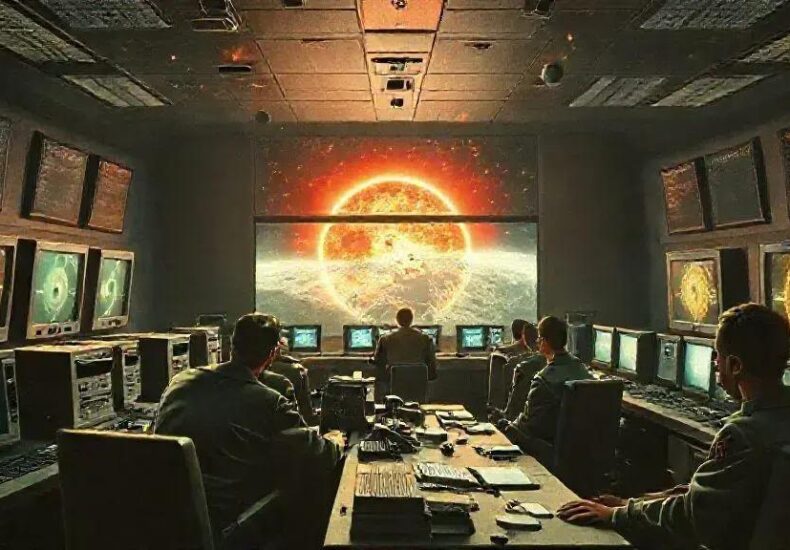
Cold War Concerns: Solar Storms and the Fear of Nuclear Misinterpretation
Cold War fears centered on solar storms disrupting communication systems and being misinterpreted as nuclear attacks, prompting advancements in monitoring technology and international scientific collaboration to prevent accidental conflicts.
Cold War Fears mixed with the unpredictable nature of solar storms created sticky situations where leaders worried about nuclear attacks. Ever wonder how a burst of sunlight could almost spark global panic? Let’s dive into this clash of science and politics that still echoes today.
the origins of Cold War fears
The origins of Cold War fears trace back to the immediate aftermath of World War II, when tensions between the United States and the Soviet Union escalated rapidly. Both superpowers emerged with conflicting ideologies, capitalism versus communism, fueling deep distrust. The arms race and the threat of nuclear weapons amplified these fears, leading to an atmosphere of constant vigilance and suspicion.
The memory of global warfare was still fresh, and the rapid development of atomic bombs introduced a terrifying possibility: total destruction at any moment. Governments built extensive intelligence networks and propaganda campaigns to reinforce their concerns about the enemy’s intentions.
This period was marked by events like the Berlin Blockade, the formation of NATO, and the Warsaw Pact, all intensifying the perception of an imminent global conflict. Ordinary citizens felt the impact through civil defense drills and fears of espionage. These early Cold War fears set the stage for decades of political and social tension worldwide, shaping policies and popular culture alike.
how solar storms affect Earth’s technologies
Solar storms are powerful bursts of energy from the sun that can disrupt Earth’s technologies. These storms release charged particles and electromagnetic radiation, which interact with our planet’s magnetic field. This interaction can cause disturbances in satellite operations, GPS signals, and radio communications.
One major effect is on power grids. Solar storms can induce strong electrical currents in power lines, sometimes leading to transformer damage or widespread blackouts. The famous 1989 Quebec blackout was caused by a solar storm, leaving millions without electricity.
Satellites, essential for communication and navigation, are vulnerable to solar storm activity. Increased radiation can damage onboard electronics or degrade solar panels. Space weather alerts are critical to protect these assets.
Radio communications, especially those relying on high-frequency signals, can also be interrupted. This impacts aviation, marine navigation, and emergency services. Understanding and predicting solar storms help prepare and protect crucial technologies that modern society depends on daily.
cases of solar storms triggering false alarms
During the Cold War, several solar storms caused false alarms that nearly escalated tensions between superpowers. One notable case happened in 1967 when a massive solar flare triggered radar and satellite sensors, initially interpreted as a potential missile attack. This event created panic but was later identified correctly as a natural solar disturbance.
Another incident occurred in 1972 when solar proton events caused disruptions in early warning systems used to detect nuclear launches. These malfunctions led to temporary confusion among military personnel, highlighting the vulnerability of technology to space weather.
These cases demonstrate how solar activity can mimic the signatures of nuclear threats, complicating the decision-making process during an already tense geopolitical climate. The risk of misinterpretation was high given the limited technology and communication speeds of the time.
Officials had to develop better detection methods and protocols to differentiate between solar storms and actual attacks. These historical incidents reveal how natural phenomena posed a unique challenge to maintaining global security during the Cold War era.
why nuclear misinterpretation was a serious risk
Nuclear misinterpretation during the Cold War was a significant risk due to the high tensions and the quick pace at which decisions had to be made. The fear that a false alarm could trigger a nuclear retaliation led to constant anxiety among leaders and military commanders.
Early warning systems were not foolproof. Radar and satellite data could be affected by technical glitches, human error, or natural phenomena like solar storms. This created a dangerous environment where a mistake in interpreting signals could result in launching nuclear weapons unnecessarily.
The concept of mutually assured destruction (MAD) meant that one side’s mistaken attack would provoke a devastating counterattack, potentially ending in global catastrophe. This made accurate communication and verification systems crucial, yet challenging to maintain with the technology of the time.
In such a climate, small errors or misread information carried enormous consequences. The possibility of nuclear misinterpretation added a layer of urgency to diplomatic efforts and led to improved protocols for decision-making under pressure.
impact of solar storms on Cold War communication
Solar storms had a significant impact on Cold War communication systems. These storms released bursts of electromagnetic energy that interfered with radio signals and radar systems used by military forces. The disruption of communication made it difficult to transmit critical information across distances quickly and accurately.
During intense solar activity, radio blackouts were common, affecting high-frequency communication channels vital for air and naval operations. This posed a challenge for coordinating military actions and monitoring enemy movements.
Satellite communications, though less advanced than today, were vulnerable to these solar events as well. Solar radiation could damage early satellites or cause signal loss, creating gaps in surveillance and intelligence gathering.
The uncertainty caused by solar storms increased the risk of miscommunication and misinterpretation of data. In the high-stress environment of the Cold War, this could lead to false warnings or delayed responses, raising the possibility of accidental conflict.
Efforts to understand and predict space weather became crucial for maintaining secure communication channels and reducing Cold War tensions caused by technological vulnerabilities.
technological limitations during the Cold War era
The Cold War era was marked by technological limitations that impacted communication and defense systems. Early radar and satellite technologies were primitive compared to what we have today. These systems often had slow data processing and limited accuracy, increasing the risk of misinterpretation.
Computers were bulky, slow, and less reliable, making data analysis and real-time decision-making difficult. The lack of advanced encryption made communications vulnerable to interception, adding to the secrecy and mistrust between nations.
Additionally, there were no comprehensive systems for predicting or monitoring space weather like solar storms. This made it hard to distinguish between natural phenomena and actual threats, complicating defense strategies.
Human factors also played a role, as operators had to interpret fuzzy radar signals and ambiguous alerts under stress. The combination of technical and human limitations created an environment where errors could easily escalate into serious incidents.
Despite these challenges, efforts were made to improve technology steadily, which helped reduce risks over time and contributed to the eventual easing of Cold War tensions.
efforts to differentiate solar storms from nuclear attacks
Efforts to differentiate solar storms from nuclear attacks became vital during the Cold War due to the high stakes involved. Scientists and military experts worked on improving detection technologies to distinguish natural electromagnetic disturbances from those caused by human-made weapons.
Advancements in satellite monitoring helped track solar activity in real time, allowing operators to correlate unusual signals with solar flares and geomagnetic storms. This space weather forecasting became a key tool in reducing false alarms.
Ground-based observatories and magnetometers were also deployed to measure Earth’s magnetic field changes, giving additional data points to identify solar events. Teams developed protocols for cross-checking alerts from different systems before initiating any military response.
Increased communication between scientific communities and military agencies helped spread awareness and understanding of solar phenomena. This cooperation was essential to implement safeguards that prevented misunderstandings that could escalate into nuclear conflict.
These combined efforts decreased the risk of misinterpretation and underscored the importance of scientific collaboration during tense geopolitical times.
lessons learned from Cold War misinterpretations
The Cold War era provided many lessons on the dangers of misinterpretation, especially regarding nuclear threats. One key takeaway was the vital importance of accurate intelligence and reliable communication systems to avoid false alarms that could lead to war.
Countries realized the need for improved early warning systems and better analysis of data to distinguish real threats from errors or natural phenomena such as solar storms. These efforts helped reduce the risk of accidental nuclear escalation.
Another lesson was the value of diplomatic communication and establishing backchannels to clarify intentions during tense moments. These channels helped prevent misunderstandings that could spiral out of control.
Training and protocols for decision-makers were enhanced to encourage cautious and deliberate responses rather than rushed actions based on incomplete information.
Overall, the Cold War experience highlighted how human error, technological limits, and natural events could combine to create dangerous situations. It emphasized ongoing vigilance, scientific cooperation, and diplomacy as keys to global security.
the role of scientific collaboration in reducing tensions
Scientific collaboration played a crucial role in reducing Cold War tensions by fostering communication and trust between rival nations. Despite political divisions, scientists from different countries shared data and worked together on understanding natural phenomena like solar storms.
International agreements allowed the exchange of space weather information, which was essential to prevent misunderstandings caused by unpredictable solar activity. This cooperation helped both sides to better interpret signals and avoid false alarms related to nuclear threats.
Joint research projects and conferences created channels for dialogue beyond political leaders, building mutual respect among experts. These efforts paved the way for treaties and protocols that increased transparency in military activities.
Science diplomacy during the Cold War showed how common goals can bridge divides, promoting peace through knowledge sharing and problem-solving.
The collaboration set a precedent for future international partnerships in science and technology, highlighting the power of collective efforts in managing global risks and enhancing security.
how Cold War fears influence today’s space weather preparedness
Cold War fears about nuclear misinterpretation and solar storms have shaped how we prepare for space weather today. The historic tension pushed governments to invest in better monitoring technology and early warning systems to avoid false alarms and manage real threats effectively.
Modern space weather preparedness benefits from those efforts with advanced satellites and global networks tracking solar activity continuously. These tools help protect critical infrastructure like power grids, communication satellites, and navigation systems from disruptions.
Lessons learned from Cold War incidents have informed international cooperation on sharing space weather data. Countries now collaborate more openly to forecast events and reduce risks collectively, minimizing panic and misunderstandings.
Emergency protocols and training for handling space weather impact have improved, reflecting the importance of clear communication and rapid response developed during Cold War uncertainty.
In this way, historical fears continue to influence how we safeguard modern technology and ensure global security in a world dependent on space-based systems.
Understanding Cold War Fears and Their Lasting Impact
The Cold War era showed us how natural events like solar storms could cause serious misunderstandings with potentially catastrophic results. These fears led to improved technology, better communication, and international cooperation to prevent mistakes.
Today, the lessons learned continue to guide space weather preparedness and global security efforts. By staying vigilant and working together, we can minimize risks and protect our modern world from both natural and human-made threats.
Remembering this history helps us appreciate the value of science, diplomacy, and careful decision-making in maintaining peace and safety.
FAQ – Cold War Fears and Solar Storms
What were Cold War fears related to solar storms?
Cold War fears involved the risk that solar storms could disrupt technology and be mistaken for nuclear attacks, potentially triggering conflict.
How do solar storms affect communication systems?
Solar storms emit charged particles that interfere with radio signals, radar, and satellite communications, causing disruptions and blackouts.
Why was nuclear misinterpretation a serious risk during the Cold War?
Due to limited technology and high tensions, false alarms from misinterpreted data or natural events could lead to accidental nuclear war.
What efforts were made to distinguish solar storms from nuclear attacks?
Scientists developed better space weather monitoring, satellite tracking, and communication protocols to differentiate natural phenomena from threats.
How did scientific collaboration help reduce Cold War tensions?
Collaboration allowed sharing of space weather data and improved understanding, helping to avoid false alarms and build trust between rival nations.
How do Cold War fears influence today’s space weather preparedness?
They led to investments in advanced monitoring systems and international cooperation to protect infrastructure and prevent misunderstandings related to space weather.
You may also like


Leave a Reply