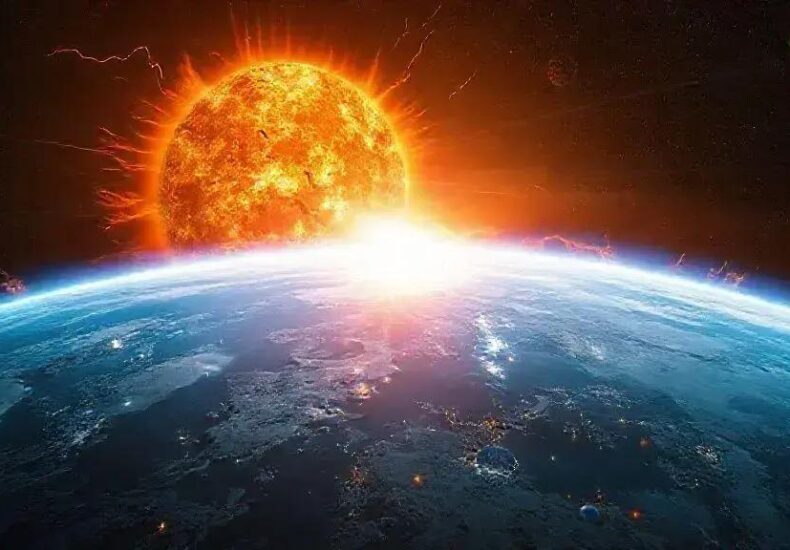
Comparing Historic Solar Storms: Magnitude, Duration, and Impact
Comparing storms involves analyzing historic solar events by their magnitude, duration, and geographic impact to understand their effects on Earth’s technology and improve future preparedness.
Comparing Storms from the sun isn’t just for scientists—it’s about grasping how these powerful events shape our world. Ever wondered why some solar storms cause blackouts while others barely make a ripple? Let’s uncover what sets them apart.
what solar storms are and how they form
Solar storms are natural disturbances in space caused by the sun’s activity. They include solar flares and coronal mass ejections (CMEs), which release huge amounts of energy and charged particles into space. These storms form when magnetic energy built up in the sun’s atmosphere is suddenly released.
Solar flares are intense bursts of radiation that can last from minutes to hours. They occur in active regions where magnetic fields are particularly strong and twisted. When these magnetic lines reconnect, they unleash a flare.
Coronal mass ejections are large expulsions of plasma and magnetic field from the sun’s corona. These can send billions of tons of solar material hurtling toward Earth and other planets at millions of miles per hour.
The combination of these solar events creates what we call a solar storm, which can disturb Earth’s magnetic field and cause effects like auroras, satellite disruptions, and power grid failures. Understanding how these storms form helps scientists predict their arrival and potential impact.
major historic solar storms and their timelines
Throughout history, several major solar storms have stood out for their intensity and effects on Earth. One of the most famous is the Carrington Event of 1859, which is considered the largest recorded solar storm. It caused widespread telegraph system failures and beautiful auroras visible near the equator.
Another significant event occurred in 1989, when a solar storm caused a nine-hour blackout in Quebec, Canada. This event highlighted how modern electrical grids are vulnerable to solar activity.
The Halloween Storms of 2003 included a series of powerful solar flares and coronal mass ejections that disrupted satellite communications and GPS systems. These storms were some of the most intense recorded in the early 21st century.
More recently, the Solar Storm of 2012 was a powerful CME that fortunately missed Earth but reminded scientists of the potential dangers of such events.
Timeline of Major Solar Storms
- 1859: Carrington Event – massive solar flare and CME
- 1989: Quebec blackout caused by geomagnetic storm
- 2003: Halloween Storms disrupting satellites and power grids
- 2012: Near miss by a major CME hitting Earth
Understanding the timelines and impacts of these historic solar storms helps us prepare for future events that could affect modern technology and infrastructure.
measuring the magnitude of solar storms
The magnitude of solar storms is measured using several key scales and tools that assess their energy and potential impact on Earth. One of the most commonly used scales is the Geomagnetic Storm Index (Kp index), which measures disturbances in Earth’s magnetic field from 0 (quiet) to 9 (extremely active).
Another important measure is the Solar Flare Classification, based on X-ray brightness measured by satellites. This classification includes classes A, B, C, M, and X, where X-class flares are the most powerful and can produce significant effects on satellites and communications.
Scientists also use data from spacecraft to measure the speed and density of solar particles during events called coronal mass ejections (CMEs). The faster and denser the CME, the more intense the potential geomagnetic storm could be.
These combined measurements help scientists estimate the storm’s strength and possible effects on technology, power grids, and navigation systems. Accurate measurement is crucial for early warnings and preparation.
how duration influences solar storm impact
The duration of a solar storm plays a critical role in determining its overall impact on Earth. Longer storms tend to cause more severe disruptions because they subject our planet’s magnetic field and technology to sustained stress. This can lead to extended power outages and prolonged communication blackouts.
Short-duration storms might create brief, intense effects like sudden radio signal loss, but their quick end means less damage to infrastructure. In contrast, storms lasting several days can overload power grids, causing transformers to overheat or fail.
The length of particle exposure also affects satellite operations. Prolonged high-energy particle bombardment can degrade satellite components and increase risks for astronauts in space.
Moreover, a storm’s duration can influence the intensity and visibility of auroras. Longer events usually produce spectacular light shows visible further from the poles than usual.
Understanding the relationship between storm duration and impact allows scientists and engineers to better prepare and protect essential systems on Earth and in orbit.
effects of solar storms on Earth’s technology
Solar storms can have serious effects on Earth’s technology, especially systems that rely on electricity and satellites. When charged particles from the sun interact with Earth’s magnetic field, they can induce strong currents in power lines, potentially causing widespread power outages.
Satellites are vulnerable during solar storms because high-energy particles can damage their electronics and disrupt communication signals. GPS systems may lose accuracy, affecting navigation for airlines, ships, and everyday devices.
Radio communications, particularly in high-frequency bands, can experience blackouts or static due to ionospheric disturbances caused by solar storm activity. This impacts aviation and emergency services that rely on reliable radio contact.
In some cases, solar storms have caused damage to transformers in power grids, leading to costly repairs and long-term outages. This highlights the need for monitoring and protective measures against space weather.
As technology becomes more advanced and interconnected, the impact of solar storms on Earth’s technology is increasingly significant, making preparedness critical for minimizing disruptions.
comparing geographic reach of past solar storms
The geographic reach of solar storms varies based on their intensity and the orientation of the Earth’s magnetic field at the time of impact. Some storms primarily affect polar regions, while others extend their effects to mid and even low latitudes.
Strong solar storms like the Carrington Event in 1859 produced auroras visible near the equator, a rare occurrence caused by intense disturbance of Earth’s magnetosphere. This wide reach indicates a storm’s high power.
Many solar storms mostly influence areas near the poles, where Earth’s magnetic field lines converge and allow charged particles easier access to the atmosphere. This results in frequent but localized auroras.
The differing geographic impact is also important for understanding which power grids and communication systems are at risk. Regions closer to the poles generally have higher vulnerability.
By comparing past events, scientists map how storms spread geographically to improve early warning systems and tailor protection efforts for the most affected regions.
lessons learned from historic solar storms
Historic solar storms have taught us valuable lessons about how to prepare and protect our technology and infrastructure. One key takeaway is the need for robust early warning systems. Advances in satellite monitoring allow scientists to detect solar flares and coronal mass ejections (CMEs) much earlier than before, giving time to mitigate damage.
Another lesson is the importance of hardened infrastructure. Power grids and satellites must be designed to withstand strong geomagnetic storms. For example, installing protective devices and backup systems can reduce the risk of failures during intense solar activity.
Communication networks have also improved, with protocols to switch to safer modes during solar disturbances. This helps maintain critical services like aviation and emergency response.
International collaboration has increased, as space weather impacts are global. Sharing data and strategies helps countries prepare better and respond effectively to solar storms.
These lessons remind us that while solar storms are natural, understanding and preparation can minimize their impact on our modern world.
preparing for future solar storm events
Preparing for future solar storm events involves a combination of monitoring, infrastructure upgrades, and public awareness. Space weather forecasting uses satellites and ground-based sensors to track solar activity and predict potential storms, giving early warnings to industries and governments.
Upgrading power grids and communication systems to withstand geomagnetic disturbances is vital. This includes installing protective devices like surge protectors and designing satellites with radiation-hardened components.
Emergency plans should account for the possibility of widespread outages and communication failures. This is especially important for critical services such as hospitals, transportation, and emergency responders.
Public education plays a key role in ensuring individuals understand solar storm risks and how to respond during events. Awareness campaigns can help minimize panic and encourage preparedness.
International cooperation and data sharing between space agencies and governments also enhance our ability to respond effectively to solar storms and protect global infrastructure.
Understanding and preparing for solar storms
Solar storms have shaped our technology and environment throughout history, showing us both their power and potential risks. By studying past events, we learn how to detect and measure these storms and their effects on Earth.
Preparing for the future means improving our systems, sharing knowledge globally, and staying alert to space weather warnings. With careful planning and cooperation, we can reduce the impact of solar storms on our daily lives and protect the technology we rely on.
As solar storms continue to occur, staying informed and ready will help keep our world connected and resilient.
FAQ – Common Questions About Solar Storms and Their Impact
What causes solar storms?
Solar storms are caused by sudden releases of energy from the sun, such as solar flares and coronal mass ejections.
How do solar storms affect Earth’s technology?
Solar storms can disrupt power grids, damage satellites, interfere with GPS, and cause radio communication blackouts.
Can we predict solar storms before they hit Earth?
Yes, scientists use satellites and ground sensors to monitor solar activity and provide early warnings of upcoming solar storms.
What measures can protect power grids from solar storms?
Power grids can be protected by installing surge protectors, upgrading infrastructure, and creating backup systems.
Do solar storms affect everyone on Earth equally?
No, their impact is usually stronger near the polar regions but very powerful storms can affect lower latitudes as well.
How can individuals prepare for solar storms?
Staying informed through alerts, having emergency plans for power outages, and protecting sensitive electronics can help prepare for solar storms.
You may also like



Leave a Reply