
Cosmic Rays and Solar Activity: Understanding the Link
Cosmic Rays Link refers to how solar activity influences the intensity and effects of cosmic rays reaching Earth, impacting climate, technology, and space weather forecasting through variations in solar cycles and Earth’s magnetic field.
Have you ever wondered about the Cosmic Rays Link and how solar activity plays a part? This connection affects more than just space — it can influence technology and even our climate. Let’s unravel the mystery behind these cosmic players and what they mean for us here on Earth.
what are cosmic rays and where do they come from
Cosmic rays are high-energy particles that travel through space and strike the Earth’s atmosphere. Most of these particles are protons, but they can also include heavier atomic nuclei and electrons. They originate from a variety of sources in the universe, ranging from the Sun to distant supernovae and other energetic cosmic events.
Types of Cosmic Rays
There are two main categories: primary cosmic rays and secondary cosmic rays. Primary cosmic rays come directly from outer space, while secondary cosmic rays are particles created when primary cosmic rays collide with atoms in Earth’s atmosphere.
Origins in Space
Some cosmic rays are emitted by the Sun during solar flares and coronal mass ejections. Others are accelerated by powerful explosions such as supernovae, which send shock waves through space that boost particles to nearly the speed of light. Even more energetic cosmic rays possibly come from distant active galactic nuclei or pulsars.
How Cosmic Rays Reach Earth
These energetic particles travel across vast distances, but their journey is influenced by magnetic fields, including our solar system’s magnetic environment. When cosmic rays reach Earth’s atmosphere, they collide with molecules and create showers of secondary particles, which can be detected by ground-based observatories.
Understanding where cosmic rays come from helps scientists study both astrophysical processes and their effects on Earth’s environment.
how solar activity affects cosmic ray intensity
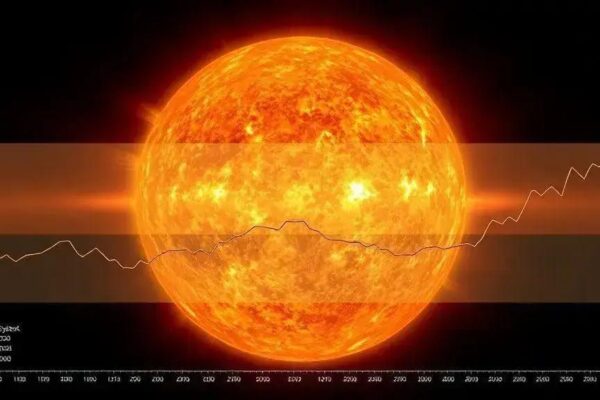
Solar activity plays a significant role in the intensity of cosmic rays that reach Earth. During periods of high solar activity, such as solar maximum, the Sun emits stronger solar winds and magnetic fields. These solar winds act as a shield, pushing away many cosmic rays from entering the inner solar system.
Solar Cycles and Cosmic Ray Modulation
The Sun goes through roughly 11-year cycles of activity. At solar maximum, frequent solar flares and coronal mass ejections increase the solar wind pressure, which reduces the cosmic ray intensity that reaches Earth.
Conversely, during solar minimum, the Sun’s magnetic field weakens, allowing more cosmic rays to penetrate the solar system and reach Earth’s atmosphere.
Heliospheric Magnetic Field Influence
The heliosphere, formed by the solar magnetic field carried by the solar wind, expands and contracts with solar activity. A stronger heliospheric magnetic field during solar maximum better deflects cosmic rays, while a weaker field during solar minimum allows increased cosmic ray penetration.
Impact on Earth’s Radiation Environment
These fluctuations in cosmic ray intensity impact radiation levels on Earth, especially at high altitudes and polar regions. Increased cosmic rays during solar minimum can affect aviation safety and satellite operations.
Monitoring solar activity helps predict changes in cosmic ray intensity and prepare for their effects on technology and the environment.
the role of the earth’s magnetic field in cosmic ray modulation
The Earth’s magnetic field plays a crucial role in controlling the cosmic ray flux that reaches the surface. Acting like a shield, this magnetic field deflects many of the charged particles from cosmic rays, preventing them from directly hitting the Earth.
Magnetosphere and Cosmic Rays
The magnetosphere is the region around the Earth dominated by its magnetic field. It traps and guides charged particles, creating zones like the Van Allen radiation belts. These belts protect the planet by absorbing and deflecting harmful cosmic rays.
Magnetic Rigidity and Particle Trajectories
The strength and orientation of the magnetic field affect the paths that cosmic rays take. Particles with lower energy are deflected more easily, while higher-energy particles can penetrate closer to the Earth’s surface. This phenomenon is described by the concept of magnetic rigidity.
Geographical Variation and Cosmic Ray Intensity
Cosmic rays are more intense near the poles because the magnetic field lines converge there, allowing particles easier access. Near the equator, the field is stronger and more horizontal, blocking many particles. This causes variations in radiation exposure based on geographic location.
Understanding how the Earth’s magnetic field modulates cosmic rays helps scientists predict radiation risks for astronauts, airline crews, and electronics in space and on Earth.
cosmic rays’ impact on earth’s atmosphere and climate
Cosmic rays play an important role in influencing Earth’s atmosphere and climate. When cosmic rays enter the atmosphere, they cause ionization by knocking electrons off air molecules. This ionization can affect cloud formation and weather patterns.
Cloud Formation and Climate
Cosmic rays help produce tiny particles called aerosols, which can serve as seeds for cloud droplets. An increase in aerosols can lead to more clouds, which may impact the amount of sunlight reaching Earth’s surface and influence temperature.
Impact on Atmospheric Chemistry
Cosmic rays can also break up molecules in the atmosphere, changing the balance of gases like ozone. This can affect the UV radiation that reaches the surface and play a role in atmospheric chemistry that influences climate.
Long-Term Climate Variations
Researchers study cosmic ray patterns alongside solar activity to understand climate changes over decades or centuries. Variations in cosmic rays may correlate with historical climate events, but the exact mechanisms are still being investigated.
Understanding cosmic rays’ impact on the atmosphere helps improve climate models and predictions.
technological effects: satellites, aviation, and power grids
Cosmic rays can have significant effects on technology such as satellites, aviation, and power grids. These high-energy particles can cause disruptions by interfering with electronic systems and increasing radiation exposure.
Effects on Satellites
Satellites are exposed to cosmic rays in space, which can cause electronic malfunctions or damage to critical components. This may result in data errors, temporary failures, or even permanent hardware damage, affecting communication and navigation systems.
Impacts on Aviation
At high altitudes, especially near the poles, cosmic rays increase radiation exposure to airline crews and passengers. Pilots and crew are exposed to higher doses of ionizing radiation, which can impact health over time. Cosmic rays can also affect avionics, causing glitches or errors in aircraft systems.
Power Grid Vulnerabilities
Cosmic rays can indirectly influence power grids by inducing geomagnetic storms when solar activity interacts with Earth’s magnetic field. These storms can cause fluctuations in the Earth’s magnetic field, leading to currents in power lines that can overload transformers and cause widespread outages.
Monitoring cosmic ray levels and solar activity helps protect these technologies by preparing systems for potential disruptions.
methods scientists use to study cosmic rays and solar activity
Scientists use various methods to study cosmic rays and solar activity to better understand their nature and effects. Ground-based detectors, balloons, and satellites all contribute valuable data for this research.
Ground-Based Observatories
Large arrays of detectors are spread over wide areas to observe cosmic ray showers created when particles hit the Earth’s atmosphere. These observatories measure particle types, energies, and directions.
Balloon and Aircraft Missions
High-altitude balloons and research aircraft carry instruments to the upper atmosphere, collecting data on cosmic rays before they interact heavily with air molecules. This gives insights into their original properties.
Satellite Instruments
Satellites equipped with particle detectors monitor cosmic rays and solar particles in space, free from atmospheric interference. These instruments observe solar flares, solar wind, and cosmic ray intensity.
Solar Telescopes and Space Probes
Solar telescopes track changes in the Sun’s surface and magnetic activity, helping predict cosmic ray variations linked to solar cycles. Space probes venture closer to the Sun to collect direct measurements.
Computer Modeling and Simulations
Scientists use complex models to simulate cosmic ray propagation, interactions with magnetic fields, and effects on the atmosphere. Simulations improve prediction accuracy for solar storms and cosmic ray intensity.
These combined methods provide a comprehensive understanding of cosmic rays and their link to solar activity.
recent discoveries linking solar cycles to cosmic ray variations
Recent discoveries show a clearer link between solar cycles and cosmic ray variations. Scientists found that during different phases of the solar cycle, the number of cosmic rays reaching Earth changes significantly.
Solar Cycle Influence
The solar cycle is about 11 years long, moving between solar maximum and solar minimum. At solar maximum, increased solar wind and magnetic activity reduce cosmic ray intensity. During solar minimum, the Sun’s magnetic field weakens, allowing more cosmic rays to enter the solar system.
New Data from Space Missions
Recent space missions and satellites provided detailed measurements of cosmic rays and solar activity. These data helped identify subtle patterns and better predict cosmic ray fluctuations based on solar cycle stages.
Heliosphere’s Role
Research uncovered how changes in the heliosphere’s size and magnetic strength during solar cycles affect cosmic ray propagation. The heliosphere acts as a shield, expanding during high solar activity and contracting when the Sun is quieter.
Impact on Earth and Space Weather
Understanding these patterns improves space weather forecasts, helping protect astronauts, satellites, and power grids from sudden cosmic ray increases.
These discoveries highlight the dynamic relationship between solar behavior and cosmic ray variations in space and on Earth.
how understanding cosmic rays benefits space weather forecasting
Understanding cosmic rays is essential for improving space weather forecasting. Cosmic rays interact with Earth’s magnetic field and atmosphere, affecting satellite operations, communication, and navigation systems.
Predicting Radiation Levels
By monitoring cosmic ray intensity, scientists can predict periods of increased radiation, helping safeguard astronauts and airline crews from harmful exposure. This information is vital for planning space missions and high-altitude flights.
Protecting Satellites and Technology
Cosmic rays can cause glitches or damage in satellite electronics. Forecasting space weather enables operators to prepare and protect sensitive equipment, reducing the risk of failure during solar storms or cosmic ray surges.
Improving Communication Systems
Space weather disturbances, influenced by cosmic rays, can disrupt radio and GPS signals. Better predictions allow for adjustments that minimize these disruptions, ensuring more reliable communication.
Supporting Power Grid Stability
Space weather events triggered by cosmic rays can induce currents in power grids, risking outages. Early warnings from space weather forecasts help grid managers take preventive measures.
Overall, advancing our understanding of cosmic rays enhances the accuracy and effectiveness of space weather forecasts, protecting technology and human health.
Understanding Cosmic Rays and Solar Activity Matters
Cosmic rays and solar activity are deeply connected, influencing everything from our climate to the technology we rely on daily. By studying this link, scientists can better predict space weather and protect vital systems.
This knowledge helps keep astronauts safe, ensures reliable communication, and prevents power outages. As we continue to explore and use space, understanding cosmic rays becomes even more important for a safer, connected future.
FAQ – Understanding Cosmic Rays and Solar Activity
What are cosmic rays?
Cosmic rays are high-energy particles from outer space that travel through the universe and reach Earth’s atmosphere.
How does solar activity affect cosmic ray intensity?
During solar maximum, strong solar winds reduce cosmic ray intensity reaching Earth, while during solar minimum, weaker solar winds allow more cosmic rays to enter.
Why is Earth’s magnetic field important for cosmic rays?
Earth’s magnetic field deflects many cosmic rays, protecting the surface by funneling more particles to the poles and reducing exposure near the equator.
What impact do cosmic rays have on Earth’s climate?
Cosmic rays help form aerosols that seed clouds, potentially affecting weather patterns and climate variability.
How do cosmic rays affect technology?
Cosmic rays can cause malfunctions in satellites, increase radiation exposure for aviation crews, and induce currents that disrupt power grids during solar storms.
Why is studying cosmic rays important for space weather forecasting?
Understanding cosmic rays helps predict radiation levels and space weather events, protecting astronauts, satellites, communication systems, and power grids from disruptions.
You may also like



Leave a Reply