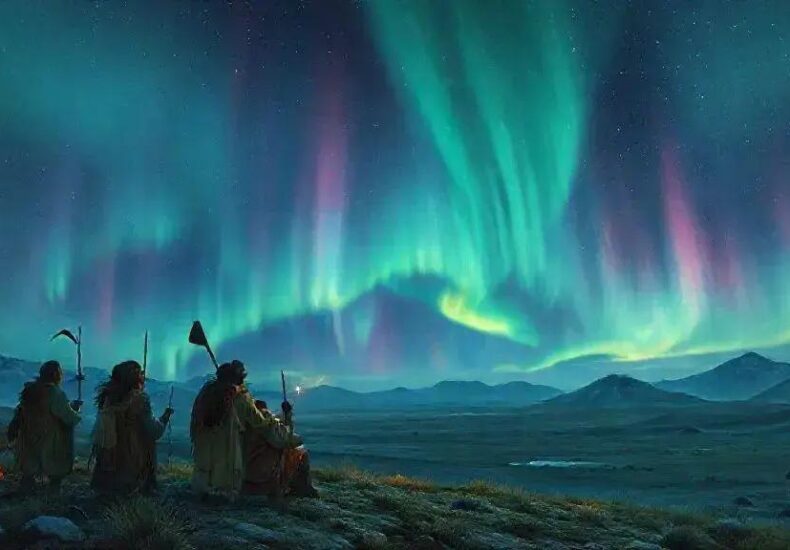
Auroral Legends: Cultural Interpretations of Historic Solar Events
Cultural legends explain auroral and solar events as spiritual and natural phenomena, reflecting ancient beliefs that continue to influence modern understanding and cultural practices worldwide.
Ever wondered how different cultures made sense of strange lights in the sky? Cultural Legends about auroras often mix awe, mystery, and ancient wisdom, showing us how people connected natural events with their beliefs and stories. Ready to explore their fascinating journey?
understanding auroral phenomena through history
The study of auroral phenomena has fascinated humans for centuries. Ancient civilizations observed these glowing lights and sought to understand their origins and meanings. Historically, auroras were often seen as mystical or supernatural events that communicated messages from the gods or ancestors.
Early records from various cultures describe auroras as signs of important events, such as wars, natural disasters, or changes in leadership. These interpretations varied according to local beliefs and environmental conditions. For example, northern peoples living closer to the Arctic Circle had more frequent encounters with auroras, leading to richer cultural narratives.
With the advancement of science, researchers began to study the causes of auroral lights. Today, we know that auroras occur when charged particles from the sun collide with Earth’s magnetic field and atmosphere. Despite this scientific understanding, the awe-inspiring visual display continues to inspire cultural stories and artistic expression around the world.
solar events in indigenous storytelling
Indigenous communities around the world have rich traditions of storytelling that include solar events like eclipses, solar flares, and auroras. These stories often serve as valuable lessons or warnings, connecting natural phenomena to cultural values and history.
Many indigenous tales describe solar events as powerful, spiritual experiences. For example, some Native American tribes believed that solar eclipses were times when the sun was temporarily swallowed by a celestial creature, reminding people to respect the forces of nature. Others saw the bright colors of auroras as the spirits of ancestors dancing in the night sky.
These narratives frequently serve to explain the unknown and help communities interpret their world. They often include rituals or ceremonies performed to honor or influence these events, reflecting a deep relationship with the environment.
Through oral tradition, indigenous storytelling preserves detailed accounts of solar activity that modern science sometimes corroborates, demonstrating a blend of cultural insight and empirical observation.
scientific perspective on auroras and solar storms
Auroras and solar storms are fascinating natural phenomena explained by modern science. They occur when the sun emits charged particles known as solar wind, which travel through space and interact with Earth’s magnetic field.
These charged particles collide with gases in our atmosphere, such as oxygen and nitrogen, creating the bright and colorful lights we see as auroras. The most intense solar storms can disrupt communication systems and power grids, showing their strong impact on technology.
Scientists study solar activity using satellites and ground-based observatories to better understand and predict these events. This research helps protect infrastructure and enhances our knowledge of space weather.
By combining scientific data with historical records, we gain a fuller picture of how auroras and solar storms have affected Earth throughout time.
legends from northern cultures
Northern cultures, including the Inuit, Sámi, and Norse, have rich legends linked to auroras and other solar events. For these peoples, the lights were not just natural phenomena but powerful symbols woven into their spiritual and cultural lives.
The Sámi people of Scandinavia believed the aurora to be a living force, often calling it “the fire fox” due to the way the lights flickered across the sky. They respected the auroras deeply, believing that whistling or making noise beneath them could bring bad luck or even danger.
The Inuit had stories that portrayed auroras as the spirits of ancestors playing games or dancing. These lights were viewed with awe and seen as a connection between the living and the spirit world.
In Norse mythology, the aurora was thought to be reflections from the shields of the Valkyries or an extension of the Bifrost, the rainbow bridge linking Midgard to Asgard, home of the gods.
These legends served as explanations for the mysterious lights and strengthened communal bonds through shared beliefs and storytelling.
auroral myths in asian traditions
Across many Asian cultures, auroras and solar events have inspired fascinating myths that blend natural observation with spiritual meaning. These events were often interpreted as signs from the heavens or the actions of gods.
In Chinese tradition, auroras were sometimes linked to celestial dragons breathing fire across the sky. These dragons were seen as powerful protectors and symbols of good fortune, so the lights were often regarded as auspicious.
Japanese folklore also contains references to glowing lights in the sky, which were believed to be manifestations of divine spirits or ancestors watching over the living. These myths reflect a respect for nature and the supernatural.
In some parts of Central Asia, legends describe auroras as the results of battles between spirits or deities, representing a cosmic struggle that explains changes in the natural world.
These stories not only provide cultural context to auroral displays but also illustrate a deep connection between ancient Asian peoples and the sky above them.
european interpretations of solar events
In Europe, solar events like auroras, eclipses, and comets were often seen as omens or messages from the divine. Medieval and Renaissance societies interpreted these phenomena through religious and superstitious lenses.
Auroras were sometimes believed to be warnings of impending wars, plagues, or political upheaval. Chronicles and diaries from the past often describe awe and fear when these lights appeared, as people sought meaning in the sky’s unusual displays.
During solar eclipses, many Europeans saw the darkening sun as a sign that something significant or disastrous was about to happen. Churches and leaders sometimes used these events to encourage moral reform or rally people toward religious devotion.
Some legends also portrayed these natural events as battles between angels and demons, reflecting the spiritual struggles thought to shape human fate.
These interpretations reveal how solar events influenced cultural beliefs and historical records across Europe, blending natural curiosity with faith and folklore.
impact of solar activity on historical societies
Solar activity has had notable effects on historical societies by influencing both the environment and human behavior. Strong solar storms could disrupt early communication systems like telegraphs and later affected radios and power grids.
In past centuries, sudden changes in solar activity may have contributed to unusual weather patterns, which impacted agriculture and food supply. Poor harvests often led to social unrest or famine, showing how solar phenomena could indirectly shape history.
Records from different cultures indicate that bright auroral displays sometimes coincided with important events or shifts in leadership, and people often interpreted these lights as omens.
Solar activity also inspired art, literature, and spiritual beliefs, reflecting a deep connection between human societies and celestial events.
Understanding these historical impacts helps us appreciate how ancient cultures coped with natural uncertainties and integrated solar phenomena into their worldview.
celebrations and rituals linked to auroral displays
Throughout history, many cultures have developed celebrations and rituals inspired by auroral displays. These luminous events were often seen as sacred and connected to the presence of spirits or divine forces.
Various indigenous groups held ceremonies to honor the auroras, believing the lights were messages or blessings from ancestors. These rituals might include dancing, singing, or offerings aimed at respecting the forces behind the auroral glow.
In parts of Scandinavia, people traditionally remained silent or behaved cautiously during auroral events, fearing that disrespect could provoke bad luck or attract harmful spirits.
Festivals in modern northern communities still celebrate the aurora borealis, blending ancient beliefs with contemporary appreciation. These events often feature storytelling, cultural performances, and sky-watching gatherings that deepen communal bonds.
Such celebrations highlight the enduring human connection to natural phenomena and the way societies integrate awe-inspiring sights into their cultural fabric.
modern relevance of ancient auroral legends
Ancient auroral legends remain relevant today as they deepen our understanding of human culture and our relationship with nature. These stories offer valuable insights into how early societies made sense of the world around them, blending observation with imagination.
Modern science has confirmed many aspects of auroral phenomena that were once thought to be pure myth. This connection between legends and scientific fact enhances cultural appreciation and inspires new perspectives.
Today, artists, educators, and communities use these ancient tales to promote environmental awareness and preserve cultural heritage. They serve as a bridge between generations, reminding us of the wonder and mystery the skies hold.
In a time of rapid technological change, these legends encourage reflection on our place in the universe and the enduring human need to explain the unknown through stories.
Understanding the enduring power of auroral legends
Auroral legends show us how humans have long tried to connect with the natural world and find meaning in mysterious events.
These stories enrich our culture and history, blending ancient beliefs with modern science.
Embracing both tradition and discovery helps us appreciate the beauty and mystery of the auroras even more.
By honoring these legends, we keep alive a sense of wonder that continues to inspire people across generations.
FAQ – Cultural Legends and Auroral Phenomena
What are auroral legends?
Auroral legends are traditional stories from various cultures that explain the mysterious lights seen in the sky, often linking them to spiritual or natural events.
How did ancient cultures interpret solar events?
Many ancient cultures saw solar events like auroras and eclipses as messages from gods or ancestors, often using them to explain natural phenomena or predict important events.
Why are auroras important in indigenous storytelling?
Auroras are often seen as spiritual phenomena that connect the living with ancestors or deities, playing a key role in rituals and cultural traditions.
How does modern science explain auroras?
Modern science shows that auroras are caused by charged particles from the sun interacting with Earth’s magnetic field and atmosphere, creating colorful light displays.
Can ancient auroral legends still be relevant today?
Yes, these legends provide cultural insights, inspire art and education, and help us appreciate the blend of mythology and science in understanding natural events.
What kind of celebrations are linked to auroral displays?
Many northern cultures hold ceremonies and festivals during auroral displays to honor the spirits or forces behind the lights, often involving storytelling, dancing, and rituals.
You may also like



Leave a Reply