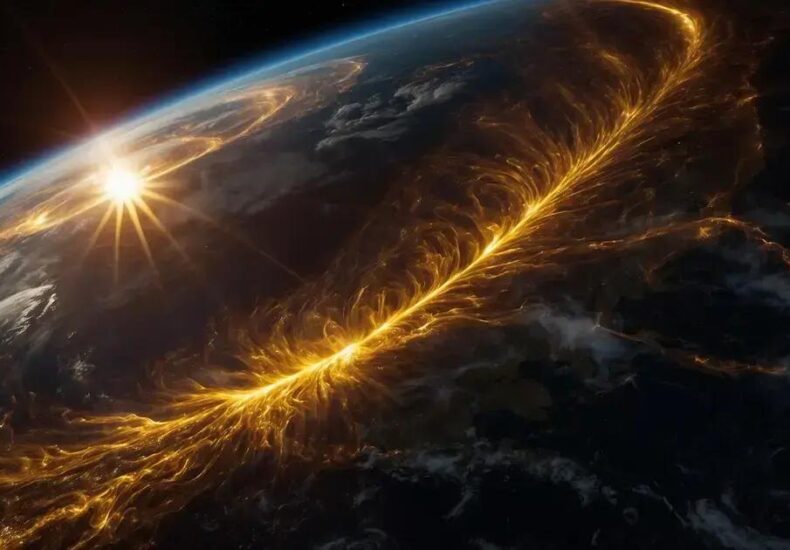
ESA Updates: Recent Solar Wind Patterns and Their Effects
ESA Updates report on recent solar wind patterns reveal changes in solar particle flow affecting Earth’s magnetosphere, satellite operations, and space weather forecasting, supported by advanced missions like Solar Orbiter to enhance understanding and protection of space technology.
ESA Updates bring fresh insights into recent solar wind patterns and their ripple effects on our planet and technology. Ever wondered how these invisible solar gusts influence your everyday gadgets or space missions? Let’s explore what’s new and why it matters to you.
understanding solar wind and its origin
Solar wind is a continuous flow of charged particles released from the sun’s outer atmosphere, known as the corona. These particles, mainly electrons and protons, travel through space at high speeds, shaping the space environment around planets. The origin of solar wind is tied to the sun’s magnetic field and extreme heat, which accelerates particles to escape the sun’s gravity.
What causes solar wind?
The sun’s corona has temperatures reaching millions of degrees Celsius, much hotter than the sun’s surface. This intense heat causes the outer atmosphere to expand rapidly, pushing particles outward. Magnetic field lines guide these particles, forming streams in various directions.
Types of solar wind
There are generally two types: fast and slow solar wind. Fast solar wind travels at speeds of about 750 kilometers per second, usually coming from coronal holes with open magnetic field lines. Slow solar wind, at roughly 400 kilometers per second, originates from more complex and less understood solar regions.
Why is it important to understand solar wind origin?
Knowing where solar wind comes from helps scientists predict space weather events that can affect satellites, power grids, and communication systems on Earth. By studying its origin, researchers improve models for forecasting solar activity and protecting technology.
how solar wind patterns change over time
Solar wind patterns are not constant; they evolve due to changes in the sun’s activity and magnetic field. As the sun goes through its approximately 11-year solar cycle, the amount and speed of solar wind vary. During periods of high solar activity, more frequent solar flares and coronal mass ejections cause disruptions in the solar wind, creating waves and fluctuations.
Solar cycle and its effects
The solar cycle influences the number of sunspots and magnetic storms on the sun’s surface. In solar maximum phases, the sun emits stronger, more variable solar wind. In contrast, during solar minimum, the wind is typically weaker and steadier.
How patterns shift
Solar wind streams can form high-speed streams followed by slower winds, causing interaction regions where fast solar wind collides with slower streams. These regions generate shocks and turbulence, which change Earth’s space environment dynamically.
Long-term variations
Scientists also observe longer changes beyond the solar cycle, such as gradual shifts in the sun’s magnetic polarity and solar wind density. These changes affect how solar wind reaches Earth and its overall impact on space weather.
recent solar wind observations by ESA
ESA has been actively monitoring solar wind through a network of advanced space missions and instruments. Recent observations focus on measuring particle speed, density, and magnetic field variations. Data collected by satellites like Solar Orbiter provide precise and real-time insights into solar wind behavior close to the sun.
Instruments and missions
The Solar Orbiter, launched by ESA, carries cutting-edge tools designed to capture detailed images and measurements of the sun’s atmosphere and solar wind streams. This mission helps scientists understand solar wind formation and acceleration.
Key recent findings
ESA’s data has revealed unexpected changes in solar wind speed and fluctuations linked to solar surface features. Magnetic field irregularities detected suggest complex interactions between solar wind and the sun’s magnetic field.
Impact of observations
These observations improve space weather forecasting models and provide valuable information for protecting satellites and astronauts against solar wind effects. ESA’s ongoing work supports international efforts to better understand and prepare for solar wind variations.
effects of solar wind on Earth’s magnetosphere
The solar wind constantly interacts with Earth’s magnetosphere, a protective magnetic field surrounding our planet. When solar wind particles collide with the magnetosphere, they can cause geomagnetic storms, disrupting Earth’s magnetic field and triggering beautiful auroras near the poles.
Magnetosphere dynamics
The magnetosphere absorbs and deflects most solar wind particles. However, during intense solar wind events, like coronal mass ejections, this protective shield can be compressed or temporarily weakened, allowing charged particles to enter Earth’s atmosphere.
Impact of geomagnetic storms
These storms can affect satellite operations, GPS navigation, and power grids. Sudden changes in the magnetosphere can induce currents in power lines, leading to outages or equipment damage. Communications and avionics systems may also experience interference during strong solar wind impacts.
Auroras and atmospheric effects
Particles entering the magnetosphere excite gases in the upper atmosphere, producing stunning auroras. These displays, seen mostly near the poles, are visual evidence of solar wind’s energy affecting Earth directly.
Understanding these effects helps scientists improve space weather forecasts and develop technologies to protect critical infrastructure from solar wind disruptions.
impact on satellite operations and communications
Solar wind can significantly affect satellite operations and communications by disrupting the space environment they rely on. Charged particles and magnetic fluctuations cause temporary malfunctions or damage to satellite electronics and sensors. Communication signals may be weakened or lost during intense solar wind events.
Satellite vulnerabilities
Satellites orbiting Earth face risks from solar wind-driven space weather, including increased radiation levels and changes in Earth’s ionosphere. These factors can cause electronic components to short-circuit or degrade over time.
Communication disruptions
Solar wind impacts can distort radio signals used for GPS, television, and phone communications. This interference leads to signal delays or complete outages, especially at high latitudes near the poles.
Mitigation strategies
To reduce risks, satellite operators monitor space weather forecasts closely and may put satellites into safe modes during strong solar events. Advances in radiation-hardened technologies and shielding help improve satellite resilience.
Understanding how solar wind affects satellites is crucial for maintaining reliable communication networks and ensuring the success of space missions.
solar wind’s role in space weather forecasting
Solar wind plays a crucial role in space weather forecasting by acting as a major driver of geomagnetic activity. By monitoring solar wind conditions, scientists can predict storms that may disrupt Earth’s magnetic field and technology. Key parameters such as solar wind speed, density, and magnetic field orientation are vital for accurate forecasts.
Data sources for forecasting
Spacecraft equipped with solar wind sensors provide real-time data on solar wind properties. This data feeds into models that simulate how solar wind interacts with Earth’s magnetosphere, enabling forecasts of geomagnetic storms.
Predictive models and alerts
Using data on solar wind fluctuations, space weather centers issue warnings to satellite operators, power grid managers, and others. These alerts help prepare for potential disruptions caused by space weather events.
Improving forecast accuracy
Continuous monitoring and advancements in solar wind research improve predictive models. Better forecasts mean enhanced protection for critical infrastructure and more informed planning for space missions.
technological challenges caused by solar winds
Solar winds pose several technological challenges due to their charged particles and magnetic disturbances. These winds can induce electrical currents in power lines, leading to equipment malfunctions and blackouts. Satellites face risks of radiation damage and signal interference, affecting navigation and communication systems.
Impact on power grids
When intense solar wind hits Earth’s magnetosphere, it can create geomagnetically induced currents in power grids. These unexpected surges can overload transformers and cause widespread outages.
Satellite and spacecraft issues
Solar wind increases radiation levels in space, which can damage satellite electronics and shorten their lifespan. Communication signals may be disrupted, leading to loss of data or control of spacecraft.
Mitigating the challenges
Engineers develop radiation-shielded components and backup systems to enhance resilience. Monitoring space weather allows operators to take preventive actions, such as switching satellites to safe mode.
Addressing these technological challenges is vital to maintaining modern infrastructure and ensuring the safety of space missions amid solar wind activity.
future ESA missions studying solar wind
ESA is planning several ambitious missions to deepen understanding of solar wind and its effects on the solar system. These missions will use advanced spacecraft equipped with sensitive instruments to measure solar wind particles, magnetic fields, and plasma waves in unprecedented detail.
Upcoming missions
One key project is the Solar Orbiter’s extended mission, which will explore the sun’s poles and provide new data on solar wind acceleration. ESA also plans to collaborate on future multi-spacecraft missions aimed at capturing three-dimensional views of solar wind structures.
Scientific goals
The main goal of these missions is to uncover the mechanisms behind solar wind formation and variability. By understanding these processes better, scientists hope to improve space weather prediction and protect modern technology.
Technological innovations
State-of-the-art sensors and communication systems will enable real-time data transmission and detailed observations from close to the sun. These innovations will set new standards in solar research and inspire future space exploration efforts.
Continued investment in solar wind studies by ESA ensures progress toward safeguarding Earth’s space environment and expanding human knowledge of our star.
Understanding the Importance of Solar Wind Studies
Solar wind affects many aspects of our technology and space environment. Monitoring its patterns helps protect satellites, power grids, and communication systems from disruptions.
ESA’s ongoing and future missions continue to provide valuable data that improve space weather forecasts and deepen our understanding of the sun’s behavior. As researchers uncover more about solar wind, we become better equipped to face its challenges and benefit from space technology.
Staying informed about solar wind and its effects is essential in our modern, connected world. The continued work by ESA ensures we are prepared for the dynamic space environment surrounding Earth.
FAQ – Common Questions About ESA Updates and Solar Wind
What is solar wind and where does it come from?
Solar wind is a stream of charged particles released from the sun’s outer atmosphere, caused by the sun’s high temperatures and magnetic field.
How do solar wind patterns change over time?
Solar wind patterns change due to the sun’s 11-year solar cycle, with variations in speed and intensity linked to solar activity like sunspots and flares.
How does solar wind affect Earth’s magnetosphere?
Solar wind interacts with Earth’s magnetosphere causing geomagnetic storms that can disrupt magnetic fields and create auroras near the poles.
What impacts does solar wind have on satellite operations and communications?
Solar wind can damage satellite electronics, disrupt signals, and interfere with communication and navigation systems, especially during intense solar events.
How does ESA monitor solar wind?
ESA uses advanced spacecraft like the Solar Orbiter equipped with sensors to collect real-time data on solar wind particles, magnetic fields, and solar surface activity.
What future missions does ESA plan to study solar wind?
ESA plans missions with advanced instruments to study solar wind formation and variability, improving space weather forecasts and protecting space and Earth technologies.
You may also like




Leave a Reply