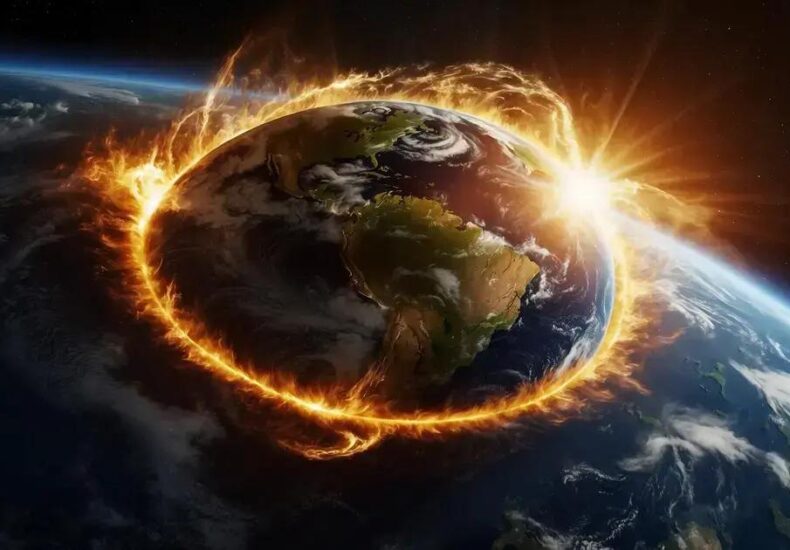
How Geomagnetic Storms Affect Earth’s Magnetic Shield
Geomagnetic shield is Earth’s magnetic field that protects the planet from charged solar particles, with geomagnetic storms disrupting this shield and impacting technology, communication, and power systems.
Geomagnetic Shield is our planet’s invisible armor against solar storms, but how exactly do these geomagnetic storms shake things up? You might wonder how this invisible force affects satellites, power grids, or even your phone’s signal. Let’s dive into the fascinating dance between solar tempests and Earth’s magnetic protection.
What is the geomagnetic shield and why it matters
The geomagnetic shield is the magnetic field surrounding our planet, created by the movement of molten iron in Earth’s core. This invisible shield deflects charged particles from the sun, known as solar wind, protecting the atmosphere and life on Earth from harmful radiation.
Without this magnetic shield, Earth’s surface would be exposed to intense solar and cosmic radiation, which could damage living organisms and disrupt electronic systems. It’s like a protective bubble, constantly interacting with solar activity to keep our planet safe.
Understanding why the geomagnetic shield matters goes beyond science – it affects daily technologies such as GPS navigation, telecommunications, and power grids. The shield’s strength and behavior directly influence space weather, which can cause disruptions when solar storms become intense.
Scientists study the geomagnetic shield using satellites and ground-based observatories to monitor its shifts and changes. This helps predict geomagnetic storms and prepare for their potential impacts, safeguarding both technology and people.
How geomagnetic storms form and their origins
Geomagnetic storms begin with intense activity on the sun, such as solar flares and coronal mass ejections (CMEs). These events release massive amounts of charged particles and energy into space, which travel toward Earth at high speeds.
When this solar material hits Earth’s magnetic shield, it can cause disturbances known as geomagnetic storms. These storms arise from the interaction between solar wind and Earth’s magnetosphere, compressing and shaking the magnetic field.
Solar flares, bursts of light and radiation, and CMEs, massive clouds of solar plasma, are the primary drivers. CMEs are especially influential as they carry strong magnetic fields that can reconnect with Earth’s field, injecting energy and causing storms.
The frequency of these storms is linked to the sun’s 11-year solar cycle, with more storms during solar maximum when the sun is most active. Understanding these origins helps scientists predict space weather and its potential impact on Earth’s systems.
The interaction between solar wind and Earth’s magnetic shield
The interaction between the solar wind and Earth’s magnetic shield is a dynamic and complex process. Solar wind consists of charged particles—mainly electrons and protons—that constantly flow from the sun into space at high speeds. When these particles reach Earth, they encounter the geomagnetic shield, also called the magnetosphere.
The magnetosphere acts like a protective bubble, deflecting most solar wind particles around the planet. However, when solar wind pressure is strong, it compresses the magnetic field on the sun-facing side and stretches it into a long tail on the night side. This interaction can cause magnetic storms and energize particles trapped within the magnetosphere.
Magnetic reconnection is a key process during this interaction, where magnetic field lines from the solar wind connect with Earth’s magnetic field lines. This event allows charged particles to enter Earth’s upper atmosphere, creating phenomena like the aurora borealis and aurora australis.
The strength and direction of the solar wind’s magnetic field strongly influence how much energy and particles penetrate the shield. Scientists monitor this interaction to predict space weather that can impact satellite functions, GPS accuracy, and power grids.
Effects of geomagnetic storms on the magnetic shield strength
Geomagnetic storms can cause significant fluctuations in the strength of Earth’s magnetic shield. During a strong storm, the magnetosphere becomes disturbed and compressed by the intense solar wind pressure. This compression reduces the size of the magnetic shield on the side facing the sun and stretches the opposite side into a long tail.
These changes temporarily weaken the magnetic shield’s ability to block charged particles, allowing more energetic particles to penetrate Earth’s atmosphere. This influx can affect satellite electronics, radio communications, and navigation systems.
Magnetic field strength often drops sharply during geomagnetic storms, measured by ground-based magnetometers showing sudden fluctuations called geomagnetic variations. These changes can last from hours to days, depending on storm intensity.
The magnetic shield’s varying strength during storms also energizes particles trapped in the Van Allen radiation belts, increasing radiation levels around Earth. This heightened radiation poses risks to spacecraft and astronauts.
Studying these effects helps scientists understand how the geomagnetic shield responds to solar activity and improves space weather forecasting to protect technology and infrastructure on Earth.
Consequences for Earth’s atmosphere and space weather
Geomagnetic storms can have notable consequences for Earth’s atmosphere and space weather. When charged particles from the sun penetrate the magnetic shield, they interact with the upper atmosphere, causing changes in temperature and ionization levels.
These interactions can lead to increased ionization in the ionosphere, which affects radio wave propagation. This disruption can cause communication blackouts and navigation errors, especially for GPS signals.
Auroras, or polar lights, are a visible effect of these interactions. They occur when energetic particles collide with gases in the atmosphere, creating bright, colorful displays near the poles.
Geomagnetic activity can also heat the Earth’s upper atmosphere, causing it to expand. This expansion increases drag on satellites in low Earth orbit, potentially shortening their operational lifetimes or altering their trajectories.
Changes in space weather conditions impact not just Earth-based technologies but also spacecraft operations and astronaut safety by increasing radiation exposure in space.
Understanding these consequences helps researchers improve space weather forecasts to better protect technology, infrastructure, and human activities dependent on space systems.
Impact on satellite operations and communication systems
Geomagnetic storms can seriously impact satellite operations and communication systems. These storms increase radiation levels around Earth, which can damage satellite electronics and disrupt signals.
Satellite orbits can be affected due to atmospheric heating caused by geomagnetic storms, which expands the upper atmosphere. This expansion increases drag on satellites in low Earth orbit, causing them to slow down and change orbit, sometimes requiring costly adjustments.
Communication systems, including GPS and radio, depend on the ionosphere. During geomagnetic storms, increased ionization can distort or block signals, leading to lost or inaccurate data. This impact can affect navigation, aviation, and emergency services relying on reliable communication.
High-frequency radio waves are especially vulnerable, causing outages or degraded connection quality. Satellite-based internet and television services may also experience interruptions in service.
Space weather monitoring helps operators prepare for these effects by forecasting storms and enabling protective actions, like putting satellites into safe mode or delaying sensitive operations.
Protecting satellites and communication systems from geomagnetic storm impacts is critical for many aspects of modern life, including global communication, navigation, and defense systems.
Geomagnetic storms and power grid vulnerabilities
Geomagnetic storms can pose serious threats to power grids on Earth. When these storms disturb the geomagnetic shield, they induce electric currents in the ground known as geomagnetically induced currents (GICs). These GICs can enter power grids and cause voltage fluctuations or even damage transformers.
Power transformers are particularly vulnerable as GICs can cause them to overheat, leading to equipment failure or reduced lifespan. In extreme cases, widespread blackouts may occur when multiple grid components fail simultaneously.
Regions at higher latitudes, closer to the poles, are more susceptible because the Earth’s magnetic field lines are more concentrated there, allowing stronger induced currents in the ground.
Grid operators use space weather forecasts to prepare for geomagnetic storms by adjusting load and taking transformers offline if needed. Installing protective devices and improving grid resilience are important steps to minimize the impact.
Understanding how geomagnetic storms affect power grids helps engineers design safer infrastructure and develop protocols to keep electricity flowing during space weather events.
How scientists monitor and predict geomagnetic disturbances
Scientists monitor and predict geomagnetic disturbances using a network of satellites and ground-based observatories. These tools track changes in the sun’s activity and Earth’s magnetic field in real-time.
Satellites such as the NOAA’s DSCOVR and NASA’s ACE measure solar wind speed, density, and magnetic field direction before it reaches Earth. This data helps forecast potential geomagnetic storms hours in advance.
Ground-based magnetometers detect fluctuations in Earth’s magnetic field, providing local data on geomagnetic activity. Combining satellite and ground data enables a clearer picture of space weather.
Advanced computer models simulate the interactions between solar particles and Earth’s magnetosphere. These models help predict how geomagnetic storms will develop and their potential severity.
Early warning systems based on this data allow power companies, satellite operators, and communication networks to prepare and reduce damage. This monitoring effort is key to protecting modern technology from space weather hazards.
Mitigation strategies to protect technology and infrastructure
Mitigation strategies to protect technology and infrastructure from geomagnetic storms focus on minimizing damage and ensuring continuity of services. One key approach is hardening electrical grids by installing devices that detect and block geomagnetically induced currents (GICs) to prevent transformer damage.
Satellite operators use radiation-hardened components and can switch satellites into safe mode during storms to protect sensitive electronics. Designing satellites with shielding helps reduce the impact of energetic particles.
Improved forecasting allows utility companies and communication networks to prepare for incoming geomagnetic disturbances by adjusting power loads, delaying sensitive operations, or temporarily shutting down vulnerable systems.
Ground infrastructure is also strengthened through the use of redundancy, backup systems, and surge protectors. Regular maintenance and upgrading aging equipment help reduce risks.
Public awareness and training play an important role, enabling organizations to respond quickly and effectively. Collaboration between governments, scientists, and industry ensures better resilience against space weather threats.
Everyday implications of geomagnetic storms on human activity
Geomagnetic storms impact daily human activities more than many realize. One common effect is on navigation systems; GPS signals can become inaccurate or unreliable during intense storms, affecting everything from car navigation to flights.
Communication systems relying on radio waves, such as aviation and emergency services, may experience disruptions or delays. This can challenge coordinated responses in critical situations.
Power grids can experience voltage fluctuations, sometimes causing outages that affect homes, businesses, and public services. While rare, severe storms have led to long-lasting blackouts.
Individuals who use electronic devices reliant on satellite signals may notice slower internet speeds or dropped connections during geomagnetic activity.
Additionally, increased radiation exposure during strong storms can pose health risks for airline crews and passengers on high-latitude flights.
Understanding these everyday implications helps raise awareness about how space weather quietly influences modern life and highlights the importance of monitoring geomagnetic storms.
Understanding the Impact of Geomagnetic Storms
Geomagnetic storms are powerful natural events that affect Earth’s magnetic shield and, in turn, influence many aspects of our daily lives. From disrupting GPS and communication systems to posing challenges for power grids and satellites, their effects are wide-reaching.
By studying these storms and monitoring space weather, scientists help us prepare and protect essential technology and infrastructure. Awareness and mitigation efforts ensure that we can minimize risks and maintain the systems we rely on every day.
Staying informed about geomagnetic storms highlights the importance of Earth’s magnetic shield and the need to safeguard our modern world against solar activity’s influence.
FAQ – Common Questions About Geomagnetic Storms and Earth’s Magnetic Shield
What is a geomagnetic shield?
The geomagnetic shield is Earth’s magnetic field that protects the planet from harmful charged particles emitted by the sun.
How do geomagnetic storms form?
Geomagnetic storms form when solar flares and coronal mass ejections from the sun send charged particles that interact with Earth’s magnetic field.
Can geomagnetic storms affect everyday technology?
Yes, geomagnetic storms can disrupt GPS, communication systems, power grids, and satellite operations.
What are the effects of geomagnetic storms on power grids?
They can induce electric currents in power lines, potentially damaging transformers and causing voltage fluctuations or blackouts.
How do scientists predict geomagnetic storms?
Scientists use satellites and ground observatories to monitor solar activity and Earth’s magnetic field, enabling early space weather forecasts.
What can be done to protect technology from geomagnetic storms?
Mitigation includes hardening power grids, shielding satellites, using early warnings, and designing systems to handle geomagnetic disturbances.
You may also like

Leave a Reply