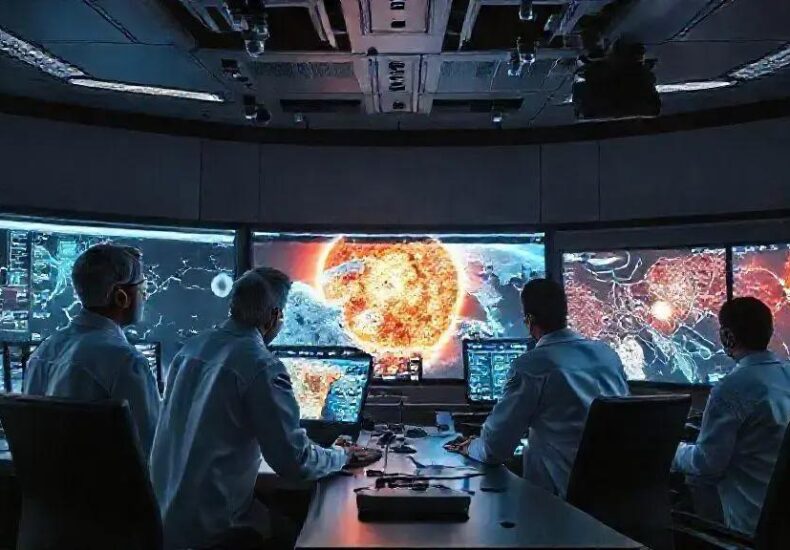
Global Collaboration: Space Agencies Unite to Monitor Solar Events
Global Collaboration enables space agencies worldwide to share data and technology for monitoring solar events, improving prediction accuracy and protecting Earth’s technology from disruptive solar storms.
Global Collaboration among space agencies is reshaping how we watch the Sun’s activity. Ever wondered how agencies from different countries team up to keep an eye on solar flares? This union could be a game-changer in protecting our technology and understanding the cosmos.
the significance of global collaboration in space exploration
Global collaboration in space exploration is essential for advancing scientific knowledge and addressing challenges that no single country can solve alone. When countries unite their resources, expertise, and technologies, they achieve more accurate and comprehensive monitoring of space phenomena like solar events.
Pooling knowledge and technology allows space agencies to share satellite data, improve observation networks, and respond quickly to solar flares or coronal mass ejections that may affect Earth’s communication and power systems.
This teamwork reduces costs since expensive equipment and missions are shared, benefiting all participants. Additionally, collaborative projects foster innovation as diverse teams bring unique perspectives to problem-solving and research.
By working together, nations increase the reliability and scope of space monitoring, which is crucial for protecting satellites, astronauts, and terrestrial technology from harmful solar activity. Ultimately, global collaboration creates a safer and more informed approach to exploring and utilizing outer space.
key space agencies involved in monitoring solar events
Several key space agencies play crucial roles in monitoring solar events to enhance our understanding and preparedness. The National Aeronautics and Space Administration (NASA) leads efforts with specialized satellites like the Solar Dynamics Observatory (SDO), capturing detailed images of the Sun.
The European Space Agency (ESA) contributes with missions such as the Solar Orbiter, providing close-up observations of solar activity from unique angles. These missions help track solar winds and flares that could impact Earth.
Another important player is Japan Aerospace Exploration Agency (JAXA), which develops satellites equipped to study solar phenomena and their effects on space weather. Coordinated data sharing with NASA and ESA ensures a comprehensive monitoring network.
Additionally, agencies like India’s ISRO and China’s CNSA are expanding their capabilities, deploying satellites that monitor solar radiation and magnetic storms. This global network strengthens the accuracy and timeliness of warnings about potentially disruptive solar events.
Together, these agencies form a collaborative front in maintaining Earth’s safety from solar hazards by continuously tracking the Sun’s activity and sharing vital information for research and protection purposes.
technologies used to track solar activity
Tracking solar activity relies on advanced technologies developed to observe the Sun’s behavior and its impact on space weather. Satellites equipped with sophisticated sensors play a major role in monitoring solar flares, sunspots, and coronal mass ejections.
Among these, spacecraft like the Solar Dynamics Observatory (SDO) use extreme ultraviolet and X-ray imaging to capture high-resolution images of the Sun’s surface. Such data helps scientists understand solar storms in real-time.
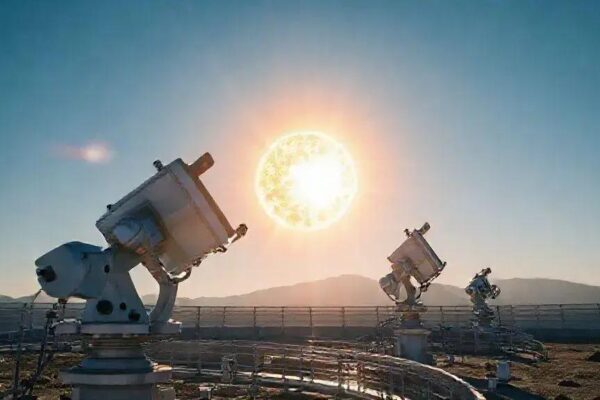
In addition, solar telescopes on Earth complement space-based observations by measuring magnetic fields and solar emissions. These instruments provide important details that satellites might miss due to their orbital positions.
Radio wave detectors also monitor solar bursts that can disrupt communications and GPS signals on Earth. By analyzing these radio signals, experts can forecast incoming solar disturbances.
Data from multiple sensors is often combined using computer models and artificial intelligence to predict solar activity’s effects, improving warnings that protect technology and power grids.
With continuous advances in technology, our ability to track and respond to solar events becomes increasingly accurate and timely, ensuring better protection for both space and Earth-based systems.
how solar events impact Earth and technology
Solar events such as solar flares and coronal mass ejections (CMEs) can significantly impact Earth and our technology. When these solar storms release charged particles and intense radiation, they interact with our planet’s magnetic field, causing geomagnetic storms.
These geomagnetic storms can disrupt satellite operations, affect GPS navigation, and interrupt radio communications, which are vital for daily activities and emergency services.
On the ground, strong solar events can induce electrical currents in power grids, sometimes leading to widespread power outages and damaging transformers. For example, the famous 1989 Quebec blackout was caused by a severe geomagnetic storm.
Astronauts in space face increased radiation exposure during solar events, making monitoring essential for their safety. Air travel on polar routes can also be affected due to radiation exposure and communication blackouts.
Understanding how solar activity affects technology is crucial for developing strategies to protect infrastructure, minimize risks, and maintain reliable communication and navigation systems.
the role of data sharing among international space agencies
Data sharing among international space agencies is critical for effective solar event monitoring and research. By exchanging real-time information collected from various satellites and observatories, agencies create a more complete and accurate picture of solar activity.
Collaborative platforms allow agencies such as NASA, ESA, JAXA, and others to pool their resources, reducing duplication and filling observation gaps. This open data access leads to faster detection and better predictions of solar storms.
Shared data also supports joint research projects, advancing scientific understanding of the Sun’s behavior. Furthermore, it helps develop uniform protocols for forecasting space weather, enhancing global preparedness.
Strong data sharing agreements improve communication during solar events, allowing countries to coordinate protective measures for sensitive infrastructure like power grids and satellites.
Ultimately, the role of data sharing is vital in strengthening the global space weather network, ensuring timely warnings and fostering innovation through international cooperation.
case studies of successful joint solar monitoring missions
Several joint solar monitoring missions highlight the power of global collaboration in understanding and predicting solar activity. One notable example is the SOHO (Solar and Heliospheric Observatory), a mission jointly operated by NASA and the European Space Agency (ESA). SOHO has provided uninterrupted solar observations since 1995, helping scientists study solar flares and coronal mass ejections in real time.
Another successful mission is the STEREO (Solar TErrestrial RElations Observatory) by NASA, which includes two nearly identical spacecraft providing stereoscopic images of the Sun. This mission enabled three-dimensional mapping of solar storms, enhancing forecasting accuracy.
ESA’s Solar Orbiter mission works closely with NASA’s programs to study the Sun from close distances, focusing on the Sun’s polar regions. This cooperation has deepened insights into the solar wind and magnetic fields.
These missions demonstrate how sharing expertise, data, and technology across borders leads to better observational capabilities and improved space weather prediction.
By learning from these case studies, space agencies continue to develop more advanced collaborative missions, strengthening our understanding of solar events and their effects on Earth.
challenges faced in coordinating global space efforts
Coordinating global space efforts presents several complex challenges. One major issue is communication barriers caused by differences in language, culture, and organizational structures. Effective coordination requires clear and ongoing dialogue among diverse teams.
Technical compatibility also poses difficulties. Different countries use varied technology standards and protocols for satellites and data formats, complicating seamless integration and data sharing.
Funding disparities can limit cooperation, as space programs often depend on government budgets that vary widely. Some agencies may have limited resources, affecting their ability to contribute equally to joint missions.
Political and legal issues may arise from differing national interests, regulations, and policies governing space activities. Creating agreements that satisfy all parties requires careful negotiation.
Finally, real-time data sharing and security concerns are critical. Protecting sensitive information while maintaining open access is a delicate balance that agencies must manage to ensure trust and collaboration.
Overcoming these challenges requires strong leadership, trust, and commitment to shared goals among international space partners.
future directions for collaborative solar event monitoring
The future of collaborative solar event monitoring is driven by advances in technology and international partnerships. Enhanced satellite networks with improved sensors will provide higher resolution images and real-time data, allowing faster detection of solar flares and coronal mass ejections.
Emerging technologies like artificial intelligence (AI) and machine learning will play a key role in analyzing vast datasets, identifying patterns, and predicting solar storms with greater accuracy.
Greater integration of ground-based observatories and space missions will give a more complete view of solar activity. This holistic approach will improve understanding and forecasting capabilities.
Internationally, there is a move toward building global data-sharing platforms that allow instant access to solar monitoring information, enhancing collaboration and joint response efforts.
Investments in cube satellites and small satellite constellations enable more frequent and distributed space weather monitoring, making the system more resilient and adaptive.
These future directions promise to strengthen global preparedness for solar events, protect technology infrastructure, and deepen scientific insights into space weather.
how global collaboration benefits everyday life on Earth
Global collaboration in monitoring solar events directly benefits everyday life on Earth by helping protect essential technology and infrastructure. When space agencies work together, they provide early warnings about solar storms that could disrupt communication networks, GPS systems, and power grids.
This teamwork ensures that power companies can prepare for geomagnetic storms, reducing the risk of blackouts that affect homes, hospitals, and businesses. Airlines also use this information to adjust flight paths and timings, safeguarding passengers from increased radiation exposure during solar events.
Moreover, global data sharing supports advances in technology by improving satellite reliability and extending their lifespan through better space weather forecasting.
Collaborative efforts in space weather research lead to innovations that enhance telecommunications and internet services, making our digital lives more secure.
Ultimately, these international partnerships contribute to a more resilient and connected world, where the daily technologies people rely on are protected from the Sun’s powerful activity.
Why global collaboration matters in space monitoring
Working together across countries makes monitoring solar events more effective and reliable. Sharing data and technology helps protect Earth’s technology and infrastructure from the Sun’s powerful storms.
This cooperation leads to better predictions, improved research, and stronger defenses against space weather impacts. It also supports scientific discoveries that benefit everyone.
As technology advances, continued global teamwork will be key to keeping our planet safe and our daily lives connected.
In the end, global collaboration is essential for a smarter and safer future in space exploration.
FAQ – Global Collaboration in Solar Event Monitoring
What is global collaboration in space exploration?
Global collaboration involves space agencies around the world working together to monitor and study solar events for better accuracy and protection.
Why is monitoring solar events important?
Monitoring solar events helps protect Earth’s technology, such as satellites, power grids, and communication systems, from harmful solar storms.
Which space agencies are involved in solar event monitoring?
Key agencies include NASA, ESA, JAXA, ISRO, and CNSA, among others, all working together to share data and resources.
How do solar events affect everyday technology?
Solar storms can disrupt GPS, radio communications, and power grids, potentially causing outages and affecting daily life and safety.
What technologies are used to track solar activity?
Satellites with advanced sensors, ground-based telescopes, radio wave detectors, and AI models are used to observe and predict solar activity.
How does data sharing improve solar monitoring?
Sharing data globally allows space agencies to get a more complete view of solar events, improves forecasting, and enables faster response to solar storms.
You may also like



Leave a Reply