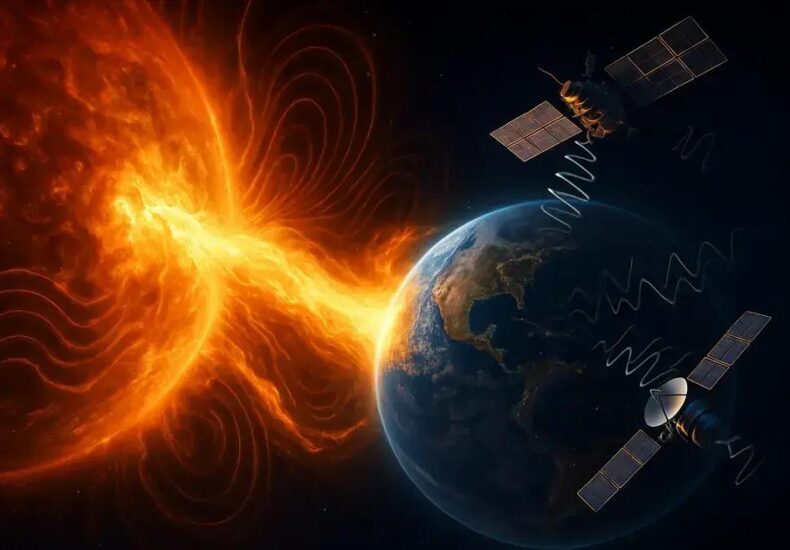
How Solar Storms Disrupt Global Communication Systems
Global Communication is disrupted by solar storms through solar flares, geomagnetic storms, and solar wind, which interfere with satellites, radio signals, and cable infrastructure, causing outages and signal degradation worldwide.
When we talk about Global Communication, have you ever stopped to wonder how solar storms shake things up? These bursts from the sun can scramble signals, leaving satellites and networks in a tough spot. Curious how it happens? Keep reading…
what are solar storms and how do they form
Solar storms are powerful bursts of radiation and charged particles released from the sun’s surface. They typically form due to intense magnetic activity in the sun’s atmosphere, particularly in regions known as sunspots. These areas have strong magnetic fields that can suddenly realign, causing massive explosions called solar flares.
Formation of Solar Storms
The process begins with magnetic field lines twisting and tangling beneath the sun’s surface. When these lines snap or reconnect, they release huge amounts of energy that accelerate particles into space. This ejected material, known as coronal mass ejections (CMEs), travels through space and can interact with Earth’s magnetic field.
Types of Solar Storms
Solar flares are intense bursts of light and radiation, affecting radio signals on Earth. Meanwhile, CMEs carry billions of tons of solar plasma that can cause geomagnetic storms when they collide with our planet’s magnetosphere. Both types can disrupt communication systems if strong enough.
Understanding the origins of solar storms helps scientists predict when these events might occur and prepare for their potential impact on technology and communication worldwide.
the role of solar wind in communication disruption
The solar wind is a continuous flow of charged particles, mainly electrons and protons, emitted by the sun. When these particles reach Earth, they interact with our planet’s magnetic field and can disturb communication systems. The solar wind carries energy that can create geomagnetic storms, which may cause fluctuations in satellite operations and radio transmissions.
How Solar Wind Affects Communication
As solar wind particles collide with Earth’s magnetosphere, they induce electrical currents that can disrupt satellite signals and navigation systems. This interference mainly affects high-frequency radio waves, used for aviation, maritime, and emergency communications.
Impact on Technology
The solar wind can also cause voltage spikes in power grids and damage sensitive electronics on communication satellites. These disruptions lead to dropped signals, slower data rates, and even complete communication blackouts in severe cases.
Monitoring solar wind velocity and density helps scientists forecast space weather impacts. Early warnings allow operators to take preventive measures and protect critical communication infrastructure from damage.
effects of geomagnetic storms on satellites
Geomagnetic storms occur when charged particles from solar eruptions disturb Earth’s magnetic field. These storms can severely impact satellites orbiting the planet. The effects of geomagnetic storms on satellites include signal disruption, hardware damage, and increased radiation exposure.
Signal Disruption and Communication Issues
During geomagnetic storms, satellites may experience signal interference or complete signal loss. This affects GPS accuracy, satellite TV, and communication networks relying on satellite data.
Damage to Satellite Electronics
Backsweeping currents induced by geomagnetic activity can cause electrical malfunctions or permanent damage to satellite components. Sensitive systems, such as processors and sensors, are particularly at risk.
Increased Radiation Levels
Satellites become exposed to higher doses of solar and cosmic radiation during these storms. This radiation can degrade materials and affect the lifespan of satellite batteries and solar panels.
To mitigate these risks, satellite operators monitor space weather forecasts and may temporarily shut down or reposition satellites to avoid the worst effects of geomagnetic storms.
how solar flares interfere with radio signals
Solar flares are sudden bursts of energy from the sun’s surface that emit intense radiation across the electromagnetic spectrum. When these flares reach Earth, they can interfere with radio signals, especially those that rely on high-frequency (HF) bands used in aviation, marine, and emergency communications.
Mechanism of Radio Signal Disruption
The intense X-rays and ultraviolet radiation from solar flares increase ionization in the Earth’s ionosphere, a layer of the atmosphere crucial for reflecting radio waves over long distances. This increased ionization causes signal absorption and scattering, leading to degraded or lost communication.
Types of Radio Interference
Radio blackouts occur when the ionosphere’s D-layer becomes highly ionized, absorbing HF signals and preventing their reflection back to Earth. This can last from minutes to hours, affecting aviation and maritime communication.
Solar flares can also cause noise and static in satellite communication and GPS signals, causing inaccuracies and temporary failures.
Monitoring solar flare activity helps communication operators prepare and mitigate the impact, ensuring critical services maintain reliability during solar events.
impact on undersea and terrestrial communication cables
Undersea and terrestrial communication cables form the backbone of global communication networks, carrying vast amounts of data across continents. Solar storms can affect these cables indirectly by inducing geomagnetically induced currents (GICs) in the Earth’s crust and ocean floor. These currents can disrupt the electrical systems that support cable operations.
How Solar Storms Affect Communication Cables
Geomagnetically induced currents can overload power supplies and damage repeaters along undersea cables. Repeaters are crucial devices that amplify signals to maintain data quality over long distances.
Risks to Terrestrial Cables
Terrestrial cables, which run through land networks, can also experience disruptions from GICs. These currents can increase corrosion in cable infrastructure and lead to signal degradation or loss.
Operators of these cable systems monitor space weather events closely, as unexpected power surges can cause outages and costly repairs. Understanding the impact of solar storms helps in designing more robust systems to withstand these natural challenges.
real-world cases of global communication outages
Global communication systems have experienced several notable outages caused by solar storms. One of the most famous incidents is the March 1989 geomagnetic storm, which crippled communication networks and power grids in Canada and the northeastern United States. This event demonstrated how vulnerable global infrastructure can be to space weather.
The 2012 Solar Storm Near-Miss
In 2012, a massive solar storm passed near Earth, missing us by just days. Had it struck, it could have caused widespread communication outages and satellite damages similar to, or worse than, the 1989 storm.
Satellite Failures and Signal Losses
More recently, solar storms have led to temporary blackouts of GPS and satellite communication signals. Airlines and shipping companies reported signal disruptions, complicating navigation and coordination efforts worldwide.
These real-world cases highlight the importance of monitoring solar activity to prepare and protect global communication infrastructure from severe disruptions.
methods to predict and monitor solar storm activity
Predicting and monitoring solar storm activity is essential for protecting global communication networks. Scientists use various techniques and instruments to track solar behavior and forecast space weather events that could disrupt systems.
Satellite Observations
Satellites equipped with specialized sensors observe the sun’s surface and corona to detect solar flares, sunspots, and coronal mass ejections (CMEs). These real-time data allow scientists to issue early warnings about incoming solar storms.
Ground-Based Monitoring
Ground observatories use radio telescopes and magnetometers to track changes in Earth’s magnetic field and monitor solar radiation. These tools help confirm solar storm impacts and update forecasts.
Space Weather Prediction Models
Advanced computer models simulate the sun-Earth connection, predicting when solar storms may occur and their potential intensity. These models help communicate risks to satellite operators, power grid managers, and communication providers.
Continuous improvements in prediction methods enable better preparation and response, helping reduce the damage solar storms can cause to global communication systems.
technological defenses against solar storm interference
Technological defenses against solar storm interference aim to protect satellites, communication networks, and power grids from damage. These strategies include hardening equipment, developing early warning systems, and implementing protective protocols.
Satellite Shielding and Hardening
Satellites are designed with shielding to guard sensitive electronics from solar radiation. Hardened components reduce the risk of failures caused by charged particles during solar storms.
Early Warning Systems
Space weather monitoring allows operators to receive advance notice of solar storms. This information helps them adjust satellite orbits, power down vulnerable systems, and reroute communications to safer pathways.
Grid Protection Protocols
Power grids utilize devices to detect geomagnetically induced currents and isolate affected sections. These measures minimize damage and maintain service continuity during intense solar activity.
The integration of these technologies improves the resilience of global communication infrastructure against the unpredictable effects of solar storms.
future challenges for global communication resilience
As our reliance on global communication systems grows, so do the challenges posed by future solar storms. Improving resilience means preparing for stronger and more unpredictable solar events.
Increasing Solar Activity
Solar cycles can bring periods of intense activity, leading to more frequent and severe solar storms. These events demand continuous advancement in protective technologies and forecasting abilities.
Expanding Satellite Networks
The rise of mega constellations for internet and communication increases the number of vulnerable targets in space. Protecting these satellites from solar storm interference becomes a critical concern.
Integration of Emerging Technologies
As new communication technologies develop, they must be designed to withstand space weather disruptions. Future-proofing infrastructure involves incorporating robust materials and adaptive systems.
Addressing these challenges requires global cooperation, investment in research, and ongoing innovation to ensure that communication remains stable no matter the solar weather conditions.
Understanding and Preparing for Solar Storms
Solar storms have a significant impact on global communication systems, affecting satellites, radio signals, and infrastructure. By studying these natural events and improving prediction methods, we can better protect the technologies that connect us worldwide.
Advances in monitoring, technological defenses, and global cooperation will help reduce disruptions and maintain reliable communication. Staying informed and investing in resilient systems are key steps toward ensuring that solar storms create fewer challenges for our interconnected world.
FAQ – Common Questions About Solar Storms and Global Communication
What are solar storms and how do they impact communication?
Solar storms are bursts of solar radiation and charged particles that can disrupt satellite signals, radio communications, and power grids.
How can solar storms affect satellites?
Solar storms can cause signal disruptions, damage satellite electronics, and increase radiation levels, which may lead to communication outages.
Can solar storms interfere with radio signals?
Yes, solar flares from solar storms increase ionization in the ionosphere, causing radio signal absorption and blackouts, especially affecting high-frequency communications.
Are undersea and terrestrial cables vulnerable to solar storms?
Indirectly yes, geomagnetically induced currents from solar storms can damage cable infrastructure and disrupt data transmission along these cables.
How do scientists predict and monitor solar storms?
Using satellites, ground observatories, and computer models, scientists track solar activity and forecast potential solar storms to provide early warnings.
What measures exist to protect communication systems from solar storms?
Technological defenses include shielding satellites, early warning systems, and power grid protection protocols to minimize damage during solar storm events.
You may also like




Leave a Reply