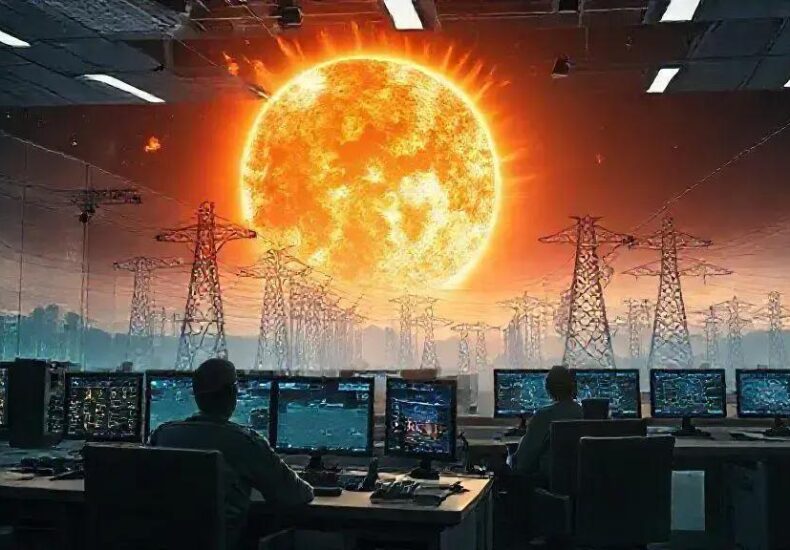
Preempting Blackouts: Modernizing Grids for Solar Storm Resilience
Grid resilience ensures power systems withstand and quickly recover from solar storm disruptions by integrating smart technologies, advanced infrastructure, real-time monitoring, and flexible energy management.
Grid resilience is more important than ever as solar storms threaten to disrupt power systems worldwide. Ever wondered how these events could suddenly knock out electricity, and what’s being done to stop that? This article dives into the ways we’re upgrading grids to face this cosmic challenge.
understanding the impact of solar storms on power grids
Solar storms, also known as geomagnetic storms, can cause significant disruptions to power grids by inducing strong electrical currents in transmission lines. These currents can overload transformers and other components, leading to power outages and equipment damage. Understanding these impacts is crucial as solar storm intensity varies, sometimes causing minor glitches, other times triggering widespread blackouts.
When charged particles from the sun interact with Earth’s magnetosphere, they can induce geomagnetically induced currents (GICs) that flow through the grid. These currents mimic electrical faults, stressing transformers and increasing the risk of catastrophic failure. The 1989 Quebec blackout is a key example where a solar storm caused a province-wide outage by damaging the grid’s infrastructure.
Aside from direct electrical damage, solar storms may interfere with communication and navigation systems, complicating grid management during crises. Power operators need to understand how solar weather data correlates with grid vulnerabilities to anticipate and mitigate risks effectively.
Key factors influencing impact
The location and design of the power grid influence how solar storms affect it. Regions closer to the poles typically experience stronger GICs due to Earth’s magnetic field geometry. Grids with long high-voltage transmission lines are more susceptible because these lines act as antennas for induced currents.
By studying solar storm patterns and integrating monitoring technologies, grid operators can predict risk periods and take preventative actions such as load adjustments or temporary shutdowns of vulnerable components.
key challenges in current grid infrastructure
Current power grid infrastructure faces several key challenges that hinder its ability to withstand solar storms and other threats. Aging equipment is a major issue; many transformers and substations are decades old and were not designed to handle extreme conditions caused by geomagnetic disturbances.
Another challenge is the grid’s complexity and interconnectivity. While connections allow for power sharing and stability, they also create vulnerability, as a fault or overload in one section can cascade and affect large areas. This interdependence makes managing unexpected disruptions difficult without advanced monitoring.
Limited real-time monitoring and communication
Many grids lack sufficient sensors and communication technologies to detect and respond quickly to solar storm effects. Delay in identifying geomagnetically induced currents or equipment stress can result in severe damage before protective measures are activated.
Infrastructure rigidity also restricts flexibility. Most traditional grids cannot easily reroute power or isolate problem areas dynamically, which is necessary to minimize outage impact during solar events.
Investment and regulatory challenges add to these problems. Funding for upgrades is often limited, and coordinating improvements across multiple jurisdictions slows modernization efforts. In addition, standards and policies specific to solar storm mitigation are still developing.
Addressing these challenges requires focused efforts on upgrading equipment, deploying smart grid technologies, and enhancing operational protocols to build a more resilient grid capable of handling today’s solar threats.
technologies boosting grid resilience
Advancements in technology are crucial for enhancing grid resilience against solar storms and other disruptions. One key technology is the use of advanced transformers designed to withstand geomagnetically induced currents (GICs), reducing the risk of damage during solar events.
Smart grid technologies
Smart grids integrate real-time data collection and advanced analytics to monitor grid health continuously. This allows operators to detect irregularities caused by solar storms and react quickly to protect vulnerable components. Phasor measurement units (PMUs) play a vital role by providing detailed insights into voltage and current changes across the grid.
Energy storage systems, such as batteries, help stabilize the grid by balancing supply and demand during disturbances. Combined with renewable energy sources, storage adds flexibility and improves overall resilience.
Automated control systems
Automated switching and control systems enable the grid to isolate affected sections promptly, preventing cascading failures. These systems can reroute power flows dynamically to maintain service where possible.
Wide-area monitoring systems (WAMS) collect and analyze data from multiple grid points, offering a comprehensive view of the system’s status. This holistic monitoring is essential for preemptive action during solar storm threats.
These technologies, when integrated, create a robust defense that helps maintain grid stability and reduces downtime during severe space weather events.
role of smart grids and IoT in modernization
The role of smart grids and the Internet of Things (IoT) in modernizing power systems is vital for improving grid resilience against solar storms and other threats. Smart grids use digital technology to enhance the control and efficiency of electricity distribution.
IoT devices, such as sensors and smart meters, provide real-time data on the grid’s performance. This data helps operators detect anomalies caused by geomagnetic disturbances quickly and respond before major issues arise.
Improved monitoring and control
Smart grids enable detailed monitoring of grid components, allowing for better fault detection and quicker resolution. Automated systems can adjust power flows dynamically, isolating affected areas to prevent blackouts from spreading.
IoT enhances predictive maintenance by tracking the condition of equipment constantly. This minimizes downtime and extends the life of critical infrastructure by addressing problems early.
Consumer engagement and demand response
Smart meters empower consumers with detailed usage data, encouraging energy conservation during peak solar storm risk periods. Demand response programs can temporarily reduce electricity consumption to ease stress on the grid.
Together, smart grids and IoT create a flexible, responsive power system essential for meeting modern challenges and protecting against solar-induced disruptions.
case studies of solar storm-related blackouts
Several notable case studies highlight the impact of solar storms on power grids, illustrating the risks and lessons learned. The most famous incident occurred in 1989 when a geomagnetic storm caused a nine-hour blackout in Quebec, Canada. This event demonstrated how vulnerable large transformers and grid infrastructure could be to geomagnetically induced currents (GICs).
In 2003, solar storm activity caused power disturbances in Sweden, affecting portions of their grid. These blackouts were shorter but still significant, prompting European countries to increase grid monitoring and invest in improved protection systems.
The Carrington Event and its lessons
The 1859 Carrington Event remains the most powerful solar storm on record. If such an event happened today, it could result in catastrophic grid failures worldwide. This historic case drives many current modernization efforts to avoid similar consequences.
Smaller events in recent years have tested the resilience of grids in the U.S. and other nations. These real-world examples emphasize the need for continuous investment in technology and protocols to detect solar storms early and respond effectively.
Each case study reinforces how grid resilience depends on preparation, technology upgrades, and swift operational responses to minimize outages and damage.
strategies for early warning and rapid response
Effective strategies for early warning and rapid response are critical to protecting power grids from the effects of solar storms. Early warning systems rely on satellite data that monitor solar activity continuously, providing alerts when risky geomagnetic events approach Earth.
Predictive modeling and real-time monitoring
Advanced predictive models use data from space weather forecasts to assess potential impacts on the grid. Combined with real-time monitoring of grid conditions, these tools help operators anticipate and prepare for disturbances.
Integration of automated shutdown protocols can temporarily isolate vulnerable components to prevent damage without causing widespread outages.
Emergency response coordination
Coordination between grid operators, government agencies, and emergency services enables swift action during solar storm events. Clear communication channels and predefined procedures ensure that risks are minimized, and restoration efforts can begin immediately.
Training and simulation exercises are essential to keep teams ready for rapid response. They help identify weaknesses in plans and improve overall preparedness.
Using these strategies together enhances the grid’s ability to withstand and recover from solar storms, reducing the risk of blackouts and infrastructure damage.
investment trends in grid modernization
Investment trends in grid modernization have grown steadily as the need for resilient and adaptable power systems becomes more urgent due to threats like solar storms. Governments and private sectors are increasing funding for upgrading aging infrastructure and integrating advanced technologies.
Public and private funding collaboration
Many countries are establishing grants and incentives to encourage utilities to invest in smart grid technologies, high-capacity transformers, and energy storage solutions. Public-private partnerships play a crucial role in pooling resources and expertise.
Venture capital and innovation funds are also directed toward startups and companies developing novel grid resilience technologies, such as AI-based monitoring tools and advanced materials for grid components.
Focus on renewable integration and cybersecurity
As renewable energy sources become more prominent, investments target systems that ensure smooth integration with the existing grid and prevent instabilities. Cybersecurity investments are critical too, protecting smart grids from digital threats that could exacerbate physical outages.
The allocation of funds is shifting towards long-term grid sustainability rather than just quick fixes, reflecting a strategic approach to energy security and reliability.
Overall, investment trends show a strong commitment to building a grid that can handle not only solar storms but diverse and evolving challenges in the energy landscape.
how renewable energy affects grid stability
The increasing use of renewable energy sources like solar and wind power has a significant effect on grid stability. These energy sources are variable by nature, depending on weather and daylight, which poses challenges for maintaining a steady power supply.
Impact of variability on the grid
Renewables can cause fluctuations in electricity generation that are hard to predict. This variability requires grids to be more flexible and have systems in place to balance supply and demand at all times.
Energy storage systems, such as batteries, become essential in smoothing out these fluctuations by storing excess energy when production is high and releasing it when demand increases or production drops.
Grid integration and management
Advanced grid technologies, including smart grids and IoT, help integrate renewable energy by providing real-time data and automated controls to adjust power flows. This allows for quicker responses to changes caused by renewable generation variability.
Demand response programs also play a role by encouraging consumers to shift or reduce energy use during peak renewable production or low generation periods, helping stabilize the grid.
Maintaining grid stability with high renewable penetration requires new strategies, investments, and technologies that prioritize flexibility, forecasting, and rapid response, ensuring a reliable energy supply despite the challenges.
future outlook for resilient power grids
The future outlook for resilient power grids focuses on building systems that can adapt and recover quickly from disruptions, including solar storms. This involves integrating advanced technologies, improving infrastructure, and adopting innovative management practices.
Emerging technologies and smart systems
Developments in artificial intelligence and machine learning will play a significant role in predictive maintenance and real-time grid optimization. These technologies enable quicker detection of faults and faster decision-making to prevent blackouts.
Energy storage solutions, such as large-scale batteries and emerging technologies like hydrogen storage, will enhance grid flexibility. This allows for better handling of variable energy sources and unexpected disruptions.
Increased focus on decentralization
Moving towards decentralized grids with distributed energy resources improves resilience by reducing reliance on single points of failure. Microgrids can operate independently during disturbances, ensuring critical services maintain power.
Policy and regulatory frameworks will evolve to support investment in grid modernization and incentivize resilience-building measures.
In summary, the grid of the future will be smarter, more flexible, and better equipped to handle challenges, ensuring reliable power supply amidst growing environmental and technological risks.
Building a resilient grid for the future
As solar storms and other challenges threaten power systems, strengthening grid resilience is more important than ever. Through modernization, smart technologies, and strategic investments, power grids can become more flexible and reliable.
Emerging innovations like AI, energy storage, and decentralized grids will help us better face disruptions and ensure continuous power supply. Collaboration between governments, utilities, and communities is key to successful upgrades and preparations.
By focusing on resilience today, we can protect our energy future and reduce the risk of blackouts caused by extreme space weather or other threats.
FAQ – Understanding Grid Resilience and Solar Storms
What is grid resilience and why is it important?
Grid resilience refers to the power grid’s ability to withstand and quickly recover from disruptions, such as solar storms. It is important to prevent blackouts and ensure a stable energy supply.
How do solar storms affect power grids?
Solar storms induce geomagnetically induced currents that can overload transformers and cause widespread power outages by damaging electrical infrastructure.
What technologies help improve grid resilience?
Technologies like advanced transformers, smart grids, IoT sensors, automated control systems, and wide-area monitoring systems enhance grid resilience against disturbances.
How does renewable energy impact grid stability?
Renewable energy sources are variable and can cause fluctuations in power supply. Energy storage and smart grid technologies help balance supply and maintain stability.
What strategies are used for early warning and rapid response to solar storms?
Early warning systems use satellite data and real-time grid monitoring. Automated shutdown protocols and coordinated emergency responses help minimize damage and outages.
Why is investment in grid modernization important?
Investing in modernization upgrades infrastructure, integrates new technologies, and improves grid flexibility, all of which are vital for handling current and future threats to power reliability.
You may also like



Leave a Reply