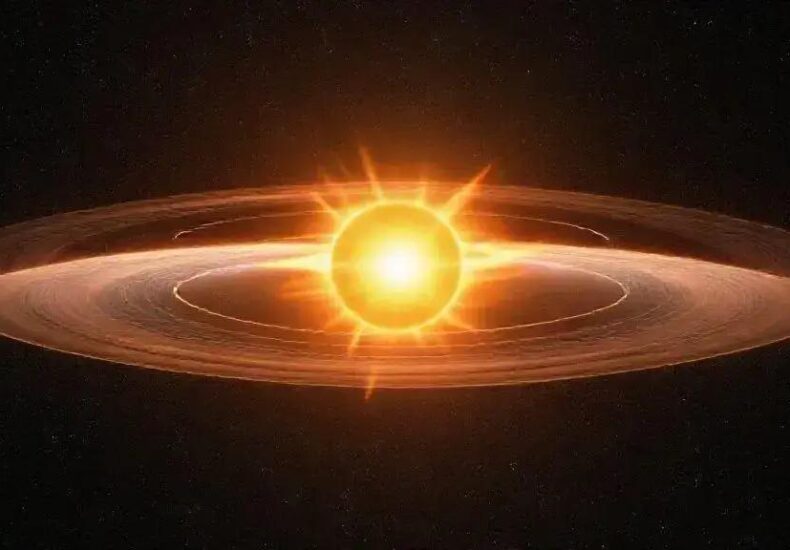
Exploring the Heliosphere: New Studies on Solar System Boundaries
Heliosphere studies analyze the solar wind’s protective bubble around our solar system, revealing its structure, interactions with interstellar space, and effects on space weather and cosmic radiation shielding.
Heliosphere Studies open a fascinating window into the outer limits of our solar system. Ever wondered what protects us from the vast cosmic environment? Let’s dive into these new insights shaping our view of space just beyond the Sun’s influence.
what is the heliosphere and why it matters
The heliosphere is a vast bubble-like region of space dominated by the Sun’s solar wind. It extends far beyond the orbit of Pluto, acting as a shield that protects our solar system from harmful cosmic radiation. This invisible boundary marks the limits where solar influence fades and interstellar space begins.
Understanding the heliosphere is crucial because it controls the environment around Earth and other planets. It affects space weather, which can impact satellites, communications, and even the safety of astronauts in space. Scientists study the heliosphere to learn how the Sun interacts with the galaxy and to better predict changes in cosmic radiation.
Modern spacecraft like the Voyager probes have provided valuable data by crossing this boundary, revealing how the heliosphere shapes our space neighborhood. This knowledge helps protect technology and life on Earth while expanding our grasp of cosmic processes.
how the solar wind shapes the heliosphere
The solar wind is a continuous stream of charged particles released from the Sun’s outer atmosphere, called the corona. This flow of particles moves outward in all directions, shaping the heliosphere into a protective bubble around our solar system. The speed and pressure of the solar wind determine the size and shape of the heliosphere.
How Solar Wind Shapes the Heliosphere
As the solar wind travels through space, it pushes against the interstellar medium—the gas and dust between stars. This interaction creates a boundary where the solar wind slows and heats up, called the termination shock. Beyond this lies the heliopause, where the pressure from the solar wind balances the pressure from interstellar space.
The solar wind also generates a magnetic field that extends throughout the heliosphere, influencing cosmic rays and solar particles. Changes in solar activity, such as solar flares or coronal mass ejections, can cause fluctuations in the solar wind that impact the shape and density of the heliosphere.
Studying how the solar wind interacts with space helps scientists better understand space weather, which affects satellites, communication systems, and astronaut safety within our solar system.
new findings from recent heliosphere missions
Recent missions studying the heliosphere have provided groundbreaking insights into the outer edges of our solar system. For example, NASA’s Voyager 1 and Voyager 2 spacecraft have crossed the heliopause, the boundary where the solar wind meets interstellar space. Their data revealed that this region is much more complex and dynamic than previously thought.
Key Discoveries from Recent Missions
One major finding is the detection of unexpected magnetic fields and changes in particle density at the heliosphere’s boundary. These spacecraft observed a slowdown in solar wind speed and an increase in cosmic rays, indicating a turbulent transition between our solar system and the galaxy beyond.
The Interstellar Boundary Explorer (IBEX) mission captured detailed images of energetic neutral atoms, outlining the shape and structure of the heliosphere. IBEX’s observations suggest the heliosphere’s shape is not perfectly round but rather influenced by the varying pressure of interstellar winds.
These new findings help scientists refine models of solar and interstellar interactions, advancing our understanding of space weather, cosmic radiation, and the protective bubble that shields Earth.
interactions between heliosphere and interstellar space
The heliosphere acts as a protective bubble, separating our solar system from the vast interstellar space. This boundary is dynamic due to continuous interactions between the solar wind and particles from the galaxy beyond.
How the heliosphere and interstellar space interact
At the edge of the heliosphere lies the heliopause, where the outward pressure of the solar wind balances with the inward pressure of interstellar gas and dust. This region is complex, featuring magnetic fields from both the Sun and interstellar space, creating a turbulent zone with shifting currents and energetic particles.
Cosmic rays from interstellar space try to penetrate the heliosphere but are deflected or slowed down by its magnetic field. This interaction is essential for protecting Earth from high-energy radiation. Changes in the heliosphere, caused by solar cycles or interstellar environment variations, can influence how much cosmic radiation reaches the inner solar system.
Scientists use data from spacecraft and simulations to study these processes, enhancing our understanding of the space environment around us and helping predict conditions that may affect space travel and satellite operations.
impact of heliosphere studies on space weather forecasting
Studying the heliosphere is essential for improving space weather forecasting, which predicts conditions in space that can affect Earth and its technologies. The heliosphere acts as a shield against solar radiation and energetic particles, so understanding its behavior helps us anticipate solar storms and their effects.
How heliosphere studies improve space weather forecasts
Scientists analyze data on solar wind speed, magnetic fields, and particle flows within the heliosphere to monitor solar activity. Changes in the solar wind can signal incoming solar storms that may disrupt satellite operations, GPS systems, and power grids on Earth.
Advanced models based on heliosphere research help forecast when and how these solar events will reach Earth, allowing organizations to take protective measures. For example, predicting geomagnetic storms helps safeguard astronauts and sensitive electronics in space missions.
Ongoing heliosphere missions provide real-time information about solar wind patterns and cosmic radiation, enhancing the accuracy of space weather predictions and helping us better prepare for the impact of solar activity on daily life.
the role of cosmic rays in understanding heliosphere boundaries
Cosmic rays are high-energy particles that travel through space and play a key role in helping scientists understand the boundaries of the heliosphere. These rays originate outside our solar system and interact with the heliosphere’s magnetic field and solar wind.
Cosmic rays and heliosphere boundaries
As cosmic rays approach the solar system, the heliosphere acts as a shield, blocking many of these particles. The intensity and behavior of cosmic rays change near the heliosphere’s outer limits, which provides clues about the size and shape of this protective bubble.
Scientists use instruments on space missions to measure cosmic ray particles and analyze how they are affected by crossing different regions of the heliosphere. Variations in cosmic ray levels help identify the termination shock and heliopause, the important boundaries where solar wind pressure changes.
Studying cosmic rays also helps understand space weather and radiation risks for astronauts. This research improves models of particle movement and gives insights into how the heliosphere guards our solar system against harmful radiation from deep space.
technologies driving current heliosphere research
The study of the heliosphere depends heavily on advanced technologies that allow scientists to explore and monitor this distant region of space. These technologies provide detailed data on solar winds, magnetic fields, and cosmic particles beyond Earth’s atmosphere.
Key technologies in heliosphere research
Spacecraft like NASA’s Voyager probes and the Interstellar Boundary Explorer (IBEX) are equipped with instruments that measure particle densities, magnetic fields, and energetic atoms. These spacecraft gather valuable information as they travel through and observe the edges of the heliosphere.
Remote sensing technologies and powerful telescopes also help scientists study the heliosphere by detecting energetic neutral atoms and other signals that reveal its structure and dynamics.
Data from these technologies are integrated into computer models that simulate heliospheric conditions. These models improve our understanding of how solar activity interacts with interstellar space and how the heliosphere protects the planets from cosmic radiation.
Ongoing advancements in sensor sensitivity, data transmission, and artificial intelligence aid researchers in processing the vast amount of information collected, accelerating discoveries and enhancing predictions about space weather and solar system boundaries.
challenges faced in exploring distant solar system edges
Exploring the distant edges of the solar system presents many challenges due to the extreme distances and harsh conditions. Spacecraft must travel billions of miles through cold, dark space, where communication delays and limited power supply complicate missions.
Technical and environmental challenges
One major issue is the weakening signal strength, which makes it difficult for scientists to receive real-time data. There is also the problem of limited energy, as solar panels become less effective far from the Sun, requiring the use of long-lasting nuclear batteries on deep space probes.
The outer solar system is filled with radiation, cosmic rays, and debris that can damage instruments and spacecraft electronics. Engineers design highly durable probes to withstand these conditions and operate autonomously since immediate control from Earth is impossible due to long transmission delays.
Additionally, the lack of detailed knowledge about these remote regions makes navigation and predicting conditions challenging. Successful exploration depends on continuous innovation in spacecraft technology, communication, and data analysis to overcome these obstacles and expand our understanding of the solar system’s boundaries.
future missions and what they hope to discover
Future missions to the heliosphere aim to explore its boundaries and the interaction between our solar system and interstellar space in greater detail. These missions will use advanced instruments to gather data on solar wind, magnetic fields, and cosmic rays with higher precision.
Goals of upcoming heliosphere missions
Scientists hope to better understand the shape and size of the heliosphere, study changes caused by solar activity, and learn about the effects of interstellar gas and dust on this protective bubble. These missions also aim to improve space weather forecasts crucial for safeguarding astronauts and satellites.
Some projects plan to send probes farther than ever before, equipped with powerful sensors to detect energetic particles and measure magnetic fields beyond the heliopause. This data will fill gaps in our knowledge about how the solar system interacts with the galaxy.
Additionally, future missions will investigate the impact of cosmic rays on Earth’s atmosphere and deepen our understanding of the heliosphere’s role in shielding our planet. The insights gained will help shape humanity’s next steps in space exploration and deepen our grasp of the universe.
how heliosphere studies affect our understanding of the universe
Studying the heliosphere helps scientists better understand the universe by revealing how our solar system interacts with the galaxy. The heliosphere serves as a protective shield, influencing cosmic radiation and space weather, which affect both Earth and the broader cosmos.
Impact on our understanding of the universe
Heliosphere research shows how solar winds shape the boundary between our solar system and interstellar space. This knowledge informs theories about how stars and their solar systems influence their surroundings.
By examining particle flows and magnetic fields at the edges of the heliosphere, scientists gain insight into the properties of the interstellar medium that fills the universe. This data helps improve models of cosmic ray propagation and galaxy dynamics.
Understanding the heliosphere also shapes our grasp of how life on Earth is protected from harmful cosmic rays and radiation. These findings deepen our appreciation of space environments and the delicate balance required for life to exist within the universe.
Wrapping up our understanding of the heliosphere
The heliosphere is a vital part of our solar system that protects us from harmful space radiation and connects us to the wider galaxy. Through ongoing studies and advanced missions, we continue to learn more about its complex boundaries and interactions.
These discoveries not only improve space weather forecasting and protect astronauts but also deepen our knowledge of the universe’s structure and behavior. As technology advances, future missions will bring even greater insights, helping us explore the cosmos safely and effectively.
Understanding the heliosphere is key to unlocking new mysteries about space and our place in it, making it an exciting and important focus for scientists and space explorers alike.
FAQ – Common questions about heliosphere studies
What is the heliosphere?
The heliosphere is a large bubble around our solar system formed by the solar wind, protecting us from harmful cosmic radiation.
Why are heliosphere studies important?
They help us understand space weather, protect satellites and astronauts, and reveal how our solar system interacts with the galaxy.
How do spacecraft study the heliosphere?
Spacecraft like Voyager and IBEX carry instruments that measure particles, magnetic fields, and cosmic rays near the heliosphere’s boundaries.
What challenges do missions face when exploring the heliosphere?
Challenges include extreme distances, weak signals, limited power supply, and harsh radiation conditions in deep space.
How do cosmic rays help us understand the heliosphere?
Changes in cosmic ray intensity near the heliosphere’s edges reveal details about its shape, size, and protective properties.
What future discoveries might come from heliosphere research?
Future missions aim to uncover more about the heliosphere’s structure, solar and interstellar interactions, and improve space weather prediction.
You may also like


Leave a Reply