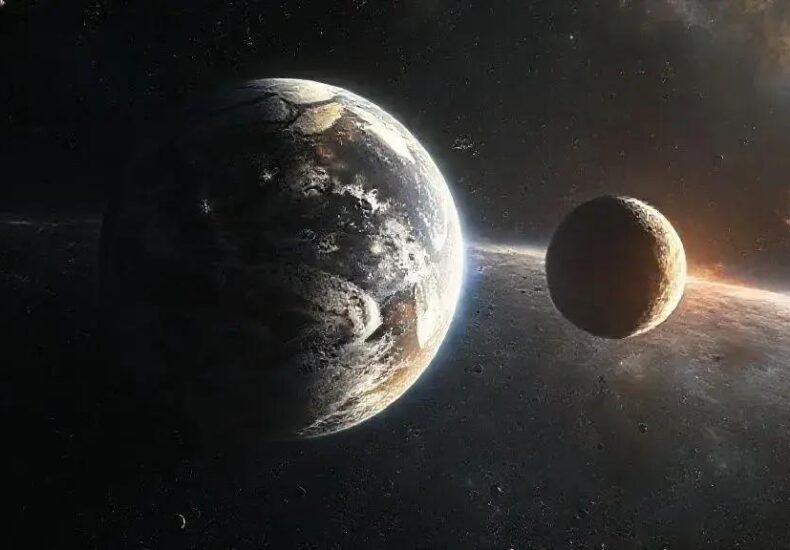
How Earth’s Collision Made the Moon: Debunking a Cosmic Myth
The moon was formed from debris created by a giant collision between Earth and a Mars-sized object, providing insights into our planet’s history and the moon’s composition.
Scientists believe that the moon was formed from a huge collision. About 4.5 billion years ago, a Mars-sized body crashed into the young Earth. This impact was massive and sent debris flying into space. Over time, this debris came together to form the moon. This theory is known as the giant impact hypothesis. It explains why the moon is so similar to Earth. The rocks on the moon share many traits with Earth’s crust. Also, the moon’s composition shows that it came from our planet. This collision theory also helps us understand why the moon has a different atmosphere. The moon lacks a thick atmosphere like Earth. This means there’s no weather, and it can’t hold heat well. Temperatures can swing from really hot to extremely cold. It’s fascinating to think about such violent events shaping our universe! The moon affects our oceans and how we see the night sky. Understanding its origin helps us learn about Earth too. So, next time you look at the moon, remember its incredible story!
You may also like




Leave a Reply