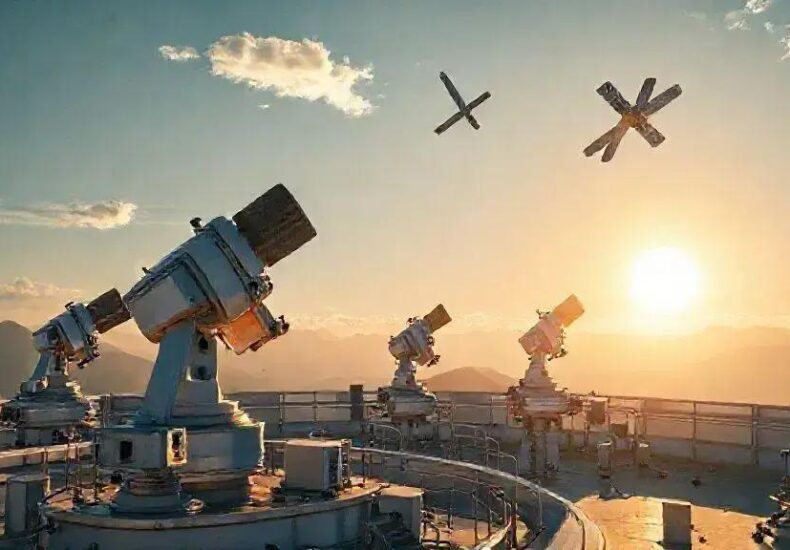
Instruments of Discovery: How We Study the Sun
Instruments of study such as telescopes, spectrometers, space probes, satellites, and solar observatories enable detailed observation and analysis of the sun’s composition, activity, and effects, advancing our understanding through advanced imaging, data collection, and real-time monitoring technologies.
When we talk about Instruments of Study for the sun, we’re diving into amazing tools that let us peek into our closest star’s secrets. Ever wondered how scientists capture the sun’s fiery dance and hidden changes? Let’s explore together!
history of solar observation instruments
The history of solar observation instruments dates back centuries, marking humanity’s growing curiosity about our closest star. Early observations relied on simple tools like the naked eye and basic devices such as the pinhole camera to safely view the sun without damage. During the 17th century, the invention of the telescope revolutionized solar study, allowing for more detailed observation of sunspots and solar phenomena.
Galileo Galilei was among the first to use telescopes to observe sunspots in 1610, challenging previous notions that the sun was perfect and unchanging. Over time, advances led to the development of specialized solar telescopes that could filter intense sunlight and capture intricate solar details.
In the 19th century, the emergence of spectroscopy began a new era in solar studies. Scientists could analyze the sun’s light spectrum to discover the elements composing the solar atmosphere. Instruments like the spectroscope helped astronomers detect solar flares and prominences that couldn’t be seen by regular telescopes.
By the 20th century, solar observatories installed at various locations around the world enhanced continuous monitoring of the sun. These observatories combined modern optics with photographic and electronic instruments to capture precise images and data. The development of space-based instruments later allowed observation from above Earth’s atmosphere, greatly improving clarity and detail.
Understanding this history shows how each new instrument built upon previous knowledge, making solar science more accurate and expansive. These innovations paved the way for current advanced tools studying the sun’s impact on Earth and the solar system.
how telescopes help us see the sun
Telescopes play a crucial role in how we observe and study the sun, allowing scientists to see details that are invisible to the naked eye. These instruments collect and magnify sunlight, enabling precise examination of solar phenomena like sunspots, flares, and prominences.
Special solar telescopes use filters to reduce the sun’s intense brightness, protecting both the observer and the equipment. These filters block harmful rays while letting through specific wavelengths of light that reveal different solar layers and activities.
Optical telescopes equipped with advanced lenses and mirrors can capture sharp images of the sun’s surface, helping scientists analyze changes and patterns. Additionally, telescopes connected to cameras and sensors record these images for detailed study over time.
Beyond traditional optical telescopes, helioscopes are designed specifically to study the sun’s light spectrum. They help researchers understand the sun’s composition and magnetic fields by breaking sunlight into its spectral components.
Space-based telescopes avoid atmospheric distortion, providing clearer and more accurate views. For example, NASA’s Solar Dynamics Observatory uses telescopes that observe in multiple wavelengths, giving insights into various solar processes in unprecedented detail.
space probes and solar missions
Space probes and solar missions have transformed our ability to study the sun by sending advanced instruments directly into space. These missions carry specialized equipment designed to observe the sun up close, collecting detailed data on solar activity and the sun’s influence on the solar system.
Probes like NASA’s Parker Solar Probe travel closer to the sun than any spacecraft before, enduring extreme heat to measure solar winds and magnetic fields in unprecedented detail. This mission helps scientists understand how the sun’s energy affects space weather and Earth’s environment.
Other missions, such as the European Space Agency’s Solar Orbiter, combine close-up observations with remote sensing, capturing high-resolution images of the sun’s poles and surface. These missions provide three-dimensional views that reveal how the sun’s magnetic field drives solar eruptions.
Space probes carry instruments like magnetometers, spectrometers, and particle detectors to analyze solar particles and radiation. They constantly transmit data back to Earth, enabling real-time monitoring of solar storms that can impact satellites and power grids.
The success of solar missions depends on robust engineering to protect instruments from intense radiation and heat. Shielding and cooling systems are critical so probes can operate effectively near the sun.
Thanks to these space missions, scientists gain a deeper knowledge of the sun’s complex behavior, which improves forecasting and helps safeguard technology and life on Earth.
using spectrometers to analyze solar light
Spectrometers are powerful instruments that scientists use to analyze the light coming from the sun. By breaking sunlight into its various colors, a spectrometer reveals the sun’s composition and activity. This process helps us understand the elements and gases present in the solar atmosphere.
How spectrometers work: They capture sunlight and split it into a spectrum, much like a prism does. Different elements emit or absorb light at specific wavelengths, creating unique patterns called spectral lines. These lines serve as fingerprints to identify what the sun contains.
Using spectrometers, researchers can detect solar phenomena such as flares and prominences by observing changes in the spectrum. They provide critical data about the sun’s temperature, density, and magnetic fields, giving us insights into solar processes.
Advancements in spectrometry allow scientists to perform detailed solar studies both from earth-based observatories and space missions. Instruments aboard solar satellites carry spectrometers that operate in ultraviolet and X-ray wavelengths, revealing layers of the sun invisible to normal light.
Interpreting spectrometer data requires precise calibration and analysis tools. This enables the monitoring of solar activity cycles and helps predict space weather events which may affect satellite communications and power systems on Earth.
Overall, spectrometers are key to unlocking the complex chemistry and physics of the sun, offering a deeper understanding of our star’s behavior and its impact on our solar system.
solar observatories on earth
Solar observatories on Earth play a vital role in monitoring our star’s activity from the ground. These facilities house advanced telescopes and instruments designed to study solar phenomena such as sunspots, solar flares, and the solar corona.
Location and design are important for solar observatories. They are often placed at high altitudes or in dry climates to reduce atmospheric distortion and cloud cover. This improves the clarity of solar images and data collected.
Observatories use specialized solar telescopes equipped with filters to safely view the sun. These filters block harmful ultraviolet and infrared rays, allowing detailed observations without damaging the instruments or the observers.
Many observatories employ adaptive optics technology, which adjusts the telescope’s mirrors in real-time to compensate for the Earth’s atmospheric turbulence. This results in sharper images and more precise measurements.
Solar observatories contribute significantly to scientific research by recording long-term solar cycles and sudden solar events. Their data supports space weather prediction, which helps protect satellites, power grids, and communications on Earth.
Collaborations between Earth-based observatories and space missions provide comprehensive views of solar activity, creating a more complete understanding of how the sun influences our planet.
the role of satellites in solar science
Satellites play a critical role in solar science by orbiting above Earth’s atmosphere, providing an unobstructed view of the sun. This vantage point allows them to capture high-resolution images and collect precise data on solar activity.
Solar observation satellites carry advanced instruments such as ultraviolet and X-ray detectors, magnetometers, and spectrometers. These tools help scientists study solar flares, sunspots, and the solar wind in great detail, enhancing our understanding of the sun’s behavior.
One major advantage of satellites is their ability to continuously monitor the sun without interruptions caused by weather or daylight. This constant stream of data is vital for tracking solar cycles and predicting space weather events that can impact Earth.
Satellites like NASA’s Solar Dynamics Observatory and the European Space Agency’s PROBA-2 have greatly expanded solar science. They provide multi-wavelength imaging, revealing different layers and activities of the sun simultaneously.
Data from satellites supports the study of how solar energy affects Earth’s magnetic field and atmosphere. This information is crucial for protecting communication systems, power grids, and astronauts in space from harmful solar radiation.
Overall, satellites are indispensable tools that deepen our knowledge of the sun and help prepare for its effects on our technology-dependent world.
advances in solar imaging technology
Recent advances in solar imaging technology have greatly improved how we observe the sun, providing clearer and more detailed pictures than ever before. These innovations use high-resolution cameras and adaptive optics that adjust for atmospheric distortions to capture sharp images of the sun’s surface.
Multi-wavelength imaging is a key development, allowing scientists to study the sun across different parts of the light spectrum, such as ultraviolet and X-rays. This reveals various solar phenomena that are invisible in regular light.
New technologies include digital sensors with faster processing speeds, enabling real-time imaging of dynamic events like solar flares and coronal mass ejections. These tools help researchers monitor sudden changes and forecast space weather.
Advances in computational imaging techniques also allow scientists to combine data from multiple instruments, enhancing the clarity and depth of solar observations.
Space telescopes further boost imaging capabilities by avoiding Earth’s atmospheric interference entirely. Instruments aboard missions like the Solar Dynamics Observatory provide continuous, high-quality images that deepen our understanding of solar activity and its impact on Earth.
data collection and interpretation tools
Data collection and interpretation tools are essential in solar science for gathering accurate information and making sense of complex solar phenomena. These tools help scientists turn raw measurements into meaningful insights about the sun’s behavior.
Modern data collection relies on sensors and instruments aboard satellites, ground observatories, and space probes. These devices record solar radiation, magnetic fields, particle flows, and images across various wavelengths.
Once collected, the data undergoes processing using advanced software. These programs correct distortions, calibrate measurements, and filter noise to ensure the quality of the information.
Interpretation tools use algorithms and models to analyze solar activity trends, predict solar storms, and understand solar cycles. Visualization software helps by creating graphs, maps, and 3D models, making complex data easier to comprehend.
With the aid of artificial intelligence and machine learning, scientists can now identify patterns and anomalies in vast datasets more efficiently. This improves forecasting of space weather events, which can affect satellites and power grids on Earth.
Overall, these tools connect the collected data with practical knowledge, advancing our understanding of the sun and supporting the safety of technologies affected by solar activity.
future instruments shaping sun research
Future instruments shaping sun research are expected to bring groundbreaking advances by combining new technologies with enhanced data-gathering capabilities. These tools aim to explore deeper layers of the sun and capture phenomena with unprecedented clarity.
Next-generation solar telescopes will feature larger apertures and improved adaptive optics, allowing scientists to see smaller features on the solar surface. These improvements will reveal details about solar magnetism and energy transfer.
Emerging space missions plan to send probes closer to the sun, equipped with advanced sensors to withstand extreme heat and radiation. These probes will measure solar winds and magnetic fields directly in ways never before possible.
Innovations in artificial intelligence and machine learning will enhance data analysis, helping researchers identify patterns and predict solar activity more quickly and accurately.
In addition, multi-messenger solar astronomy, combining light, particles, and magnetic field data, will provide a holistic view of the sun’s dynamic processes. Instruments capable of integrating these data streams will deepen our understanding of solar behavior and its effects on space weather.
These future instruments promise to revolutionize sun research, offering new insights that could improve forecasts and protect Earth’s technological infrastructure from solar disruptions.
Looking Ahead in Sun Research
Advances in technology and new instruments are opening exciting doors to better understand our sun. With improved tools and smarter data analysis, scientists can explore the sun’s mysteries in ways never possible before.
These innovations not only bring us closer to the sun’s hidden secrets but also help protect our technology and daily life from solar impacts. As research continues, future instruments will play a key role in keeping us informed and prepared.
By embracing these developments, we can better appreciate the sun’s power and its influence on our world.
FAQ – Instruments of Discovery: How We Study the Sun
What types of instruments are used to study the sun?
Scientists use telescopes, spectrometers, space probes, satellites, and solar observatories to study different aspects of the sun.
How do space probes contribute to solar research?
Space probes travel close to the sun to collect direct measurements of solar winds, magnetic fields, and particles that help us understand solar activity.
Why are satellites important in solar science?
Satellites provide continuous, high-resolution observations of the sun from space, avoiding atmospheric distortions to capture detailed solar images and data.
What role do spectrometers play in studying the sun?
Spectrometers analyze sunlight by splitting it into its spectrum, revealing the sun’s composition, temperature, and solar phenomena not visible to the naked eye.
How do solar observatories on Earth observe the sun safely?
Solar observatories use specialized telescopes with filters that block harmful rays, allowing safe and detailed observation of the sun’s surface and activity.
What future technologies will improve solar research?
Future instruments will include more advanced telescopes, heat-resistant space probes, and AI-powered data analysis tools that provide clearer insights into solar behavior and its effects.
You may also like



Leave a Reply