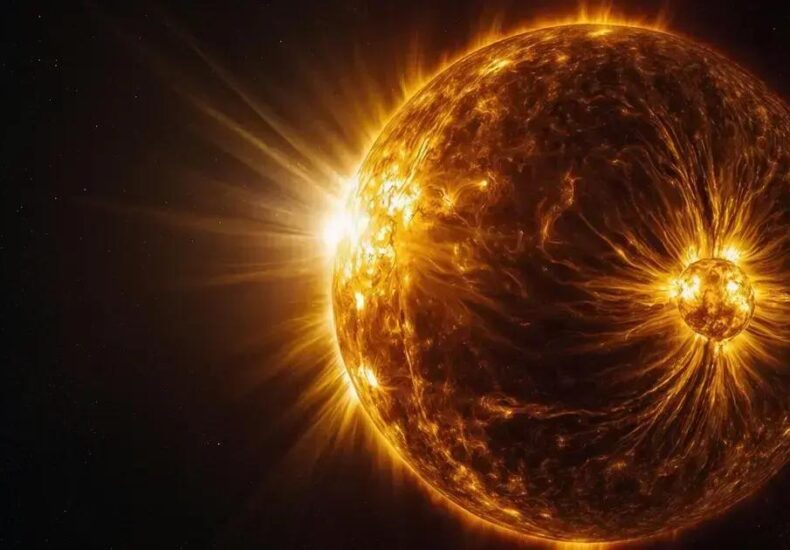
Latest Insights into the Sun’s Magnetic Field Dynamics
Magnetic Field Dynamics describe how the sun’s magnetic fields are generated, change, and drive solar activity such as flares and storms that affect space weather and Earth’s technology.
Ever wondered how the Magnetic Field Dynamics of the sun shape solar storms and impact our space environment? Let’s explore the latest findings that reveal surprising details about this cosmic dance.
understanding the sun’s magnetic field basics
The sun’s magnetic field is a complex and dynamic force generated by the motion of charged particles within its interior. This magnetic field shapes much of the sun’s behavior, influencing sunspots, solar flares, and coronal mass ejections. At its core, the solar magnetic field is created by a process called the solar dynamo, where the movement of hot, conductive plasma generates magnetic fields through electric currents.
Basics of Solar Magnetic Field Structure
The magnetic field lines emerge from the sun’s surface and loop back, creating regions of intense magnetic activity. These loops often appear as dark spots called sunspots, which are cooler than the surrounding areas due to concentrated magnetic fields that inhibit convection.
How the Magnetic Field Changes Over Time
The sun’s magnetic field is not static; it changes on an approximately 11-year cycle known as the solar cycle. During this cycle, the magnetic poles flip, and the number of sunspots rises and falls, affecting space weather and conditions on Earth.
Understanding these basics is key to grasping more advanced concepts in magnetic field dynamics and how they impact our solar system. These fundamental principles provide the foundation for interpreting observations and predicting solar activity.
how magnetic fields influence solar activity
The sun’s magnetic fields play a crucial role in driving various types of solar activity such as sunspots, solar flares, and coronal mass ejections (CMEs). These phenomena happen because magnetic energy builds up in certain regions of the sun’s surface and suddenly releases, affecting the entire solar system.
The Connection to Sunspots
Sunspots are dark patches on the sun’s surface caused by strong magnetic fields that block heat from rising. They are often the starting points for solar flares and CMEs. The size and number of sunspots change as the magnetic field shifts through the solar cycle.
Solar Flares and Magnetic Reconnection
Solar flares occur when magnetic field lines twist and snap, releasing huge amounts of energy in a short time. This process, called magnetic reconnection, accelerates particles and sends out bursts of light and radiation.
Coronal Mass Ejections and Space Weather
CMEs are massive bubbles of plasma and magnetic fields ejected from the sun’s corona. These eruptions can impact Earth’s magnetic field, causing geomagnetic storms that affect satellites and power grids.
Understanding how magnetic fields influence solar activity helps scientists predict space weather events, improving safety for astronauts and satellite operators.
methods for observing solar magnetic fields
Observing the sun’s magnetic fields requires specialized tools and techniques due to the sun’s intense brightness and complex magnetic structure. Scientists use a range of methods to measure and visualize these fields, which helps us understand solar behavior better.
Zeeman Effect and Spectropolarimetry
One common method is based on the Zeeman effect, where magnetic fields cause splitting in spectral lines. Instruments like spectropolarimeters measure the polarization of light emitted by the sun, allowing detection of magnetic field strength and direction in the sun’s atmosphere.
Magnetographs
Magnetographs are powerful tools that create detailed maps of magnetic fields on the sun’s photosphere. They measure the strength and polarity of magnetic fields, revealing structures such as sunspots and active regions.
Space-Based Observatories
Satellites like NASA’s Solar Dynamics Observatory (SDO) provide continuous and high-resolution data on solar magnetic fields. These observatories avoid atmospheric distortion and capture magnetic activity across different wavelengths.
Ground-based solar telescopes equipped with adaptive optics systems also contribute by offering detailed observations, especially during specific solar events.
Using these methods in combination provides a comprehensive view of the magnetic field dynamics, crucial for predicting solar flares and understanding the sun’s influence on space weather.
recent discoveries in magnetic field dynamics
Recent advances in solar research have unveiled new details about magnetic field dynamics that challenge older models. Improved satellite technology and computer simulations have increased our understanding of how magnetic fields behave on the sun’s surface and in its atmosphere.
Discovery of Small-Scale Magnetic Structures
Scientists have identified tiny magnetic elements on the sun’s surface that play an outsized role in shaping solar activity. These small-scale fields contribute to heating the solar corona and driving solar winds, processes that were not fully understood before.
Insights into Magnetic Reconnection Processes
New observations have provided detailed views of magnetic reconnection, a process where magnetic field lines break and reconnect, releasing energy that powers solar flares. These insights help explain the timing and intensity of solar eruptions better than ever.
Role of Magnetic Waves in Energy Transport
Researchers discovered that magnetic waves carry energy from the sun’s interior to its outer layers, influencing the magnetic field’s shape and strength. This energy transfer is key to explaining why the solar corona is hotter than the sun’s surface.
These discoveries are expanding our knowledge of the sun’s magnetic environment and improving predictions of space weather effects on Earth and technology.
the role of magnetic reconnection in solar events
Magnetic reconnection is a critical process in solar events where magnetic field lines rearrange and release vast amounts of energy. This phenomenon occurs when oppositely directed magnetic fields come close and break, then reconnect in a new configuration.
Triggering Solar Flares and Coronal Mass Ejections
During magnetic reconnection, energy stored in the magnetic fields converts into heat, light, and kinetic energy. This sudden release powers solar flares and drives coronal mass ejections (CMEs), which eject material into space.
How Reconnection Changes Magnetic Field Lines
The process alters the sun’s magnetic topology, creating new magnetic loops and accelerating charged particles. These changes can rapidly intensify solar storms and increase space weather effects.
Importance for Space Weather Prediction
Studying magnetic reconnection helps scientists predict the timing and strength of solar events that can disrupt communications, satellites, and power grids on Earth. Understanding this process is essential for protecting technology and astronauts in space.
impact of magnetic field changes on space weather
Changes in the sun’s magnetic field have a direct impact on space weather, affecting Earth and the entire solar system. Variations in magnetic activity influence solar wind, radiation levels, and can trigger geomagnetic storms.
Solar Wind and Magnetic Field Fluctuations
The solar wind is a stream of charged particles released from the sun’s upper atmosphere. Changes in the magnetic field alter its speed and density, which can intensify its effects on Earth’s magnetosphere.
Geomagnetic Storms and Their Effects
When magnetic field changes cause energized particles to collide with Earth’s magnetic environment, geomagnetic storms occur. These storms can disrupt satellite operations, GPS signals, and cause power grid failures.
Radiation Exposure Risks
Elevated solar magnetic activity increases radiation in space. This poses risks to astronauts and high-altitude flights by enhancing exposure to harmful particles.
Monitoring magnetic field dynamics is vital for predicting space weather events and protecting technology and human activities against solar-driven disturbances.
future research directions in solar magnetism
Future research in solar magnetism aims to deepen our understanding of the sun’s magnetic behavior and improve predictions of solar activity. Scientists are developing more advanced instruments to observe the sun with greater detail and accuracy.
Advanced Space Missions
New space missions plan to study the sun’s magnetic fields from closer viewpoints. These initiatives will provide high-resolution data on magnetic changes and solar eruptions, helping us learn about the origins of solar storms.
Improved Computational Models
Researchers are creating better computer simulations of the solar dynamo and magnetic reconnection to predict how magnetic fields evolve. These models will allow scientists to forecast space weather more reliably.
Interdisciplinary Approaches
Combining data from solar physics, plasma physics, and space weather studies offers a broader view of magnetic influences. This interdisciplinary work helps in understanding how solar magnetism affects Earth’s environment and technology.
Ongoing research efforts promise to reveal surprising aspects of the sun’s magnetic world, increasing our preparedness for solar-driven impacts in the future.
Understanding the Sun’s Magnetic Field Dynamics
The sun’s magnetic field is a key driver of solar activity that affects our space environment and technology. By studying magnetic field dynamics, scientists can better predict space weather and protect our modern systems.
With continuous advancements in observation tools and research, we are uncovering new details about how magnetic fields behave and influence solar events. This knowledge not only deepens our connection with the sun but also prepares us for future challenges.
Staying informed about solar magnetism helps us appreciate the powerful forces shaping our solar system and the important role of ongoing scientific discovery.
FAQ – Frequently Asked Questions about the Sun’s Magnetic Field Dynamics
What is the sun’s magnetic field and why is it important?
The sun’s magnetic field is a complex force generated by electric currents inside the sun. It drives solar activity that affects space weather and technology on Earth.
How do magnetic fields cause solar flares?
Solar flares happen when magnetic field lines twist, break, and reconnect, releasing large amounts of energy in the process called magnetic reconnection.
What tools are used to observe solar magnetic fields?
Scientists use spectropolarimeters, magnetographs, and space-based observatories like NASA’s Solar Dynamics Observatory to study solar magnetic fields.
How do changes in the sun’s magnetic field impact Earth?
Changes can cause solar storms and geomagnetic storms, which may disrupt satellites, communication systems, and power grids on Earth.
What are recent discoveries in magnetic field dynamics?
Recent findings include the role of small-scale magnetic structures, detailed views of magnetic reconnection, and the influence of magnetic waves on solar energy transport.
What future research is planned for solar magnetism?
Future research includes advanced space missions, improved computer models, and interdisciplinary studies to better understand and predict solar magnetic behavior.
You may also like




Leave a Reply