The Solar Storm That Almost Was: Near-Misses in History
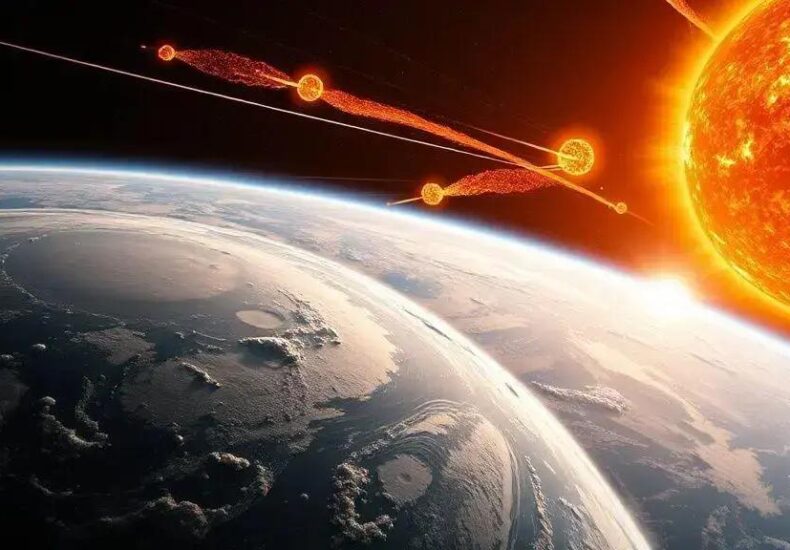
Near-misses in solar storms occur when powerful solar eruptions narrowly avoid striking Earth, highlighting the importance of satellite monitoring and early warning systems to protect technology and infrastructure from potential space weather damage.
Near-Misses have a way of making us wonder what could have happened if things went differently, especially when it comes to solar storms. Ever thought about how close Earth has come to a space weather disaster? Let’s explore those nail-biting moments in history and what they meant for us.
understanding solar storms and their impact
Solar storms are massive bursts of energy and particles released from the sun’s surface. These storms include solar flares and coronal mass ejections (CMEs), which can send charged particles hurtling through space toward Earth.
Types of Solar Storms
Solar flares are sudden, intense bursts of radiation caused by magnetic energy on the sun’s surface. They release X-rays and ultraviolet light that can affect the Earth’s upper atmosphere.
Coronal mass ejections (CMEs) involve huge bubbles of gas threaded with magnetic field lines, ejected into space at high speeds. When these hit Earth’s magnetic field, they can cause geomagnetic storms and disrupt technology.
Impact on Earth and Technology
Solar storms can interfere with satellite communications, GPS signals, and even power grids. In the atmosphere, they cause beautiful auroras near the poles, but strong storms can trigger dangerous fluctuations in electrical currents on the ground.
Understanding solar storms helps scientists predict when they may occur and prepare systems to withstand their effects. This knowledge is vital to protecting our modern technologies from unexpected disruptions.
Scientific Monitoring
Space agencies use satellites to monitor the sun’s activity continuously. By tracking solar flares and CMEs, they can give early warnings to minimize the impact of these powerful solar storms on Earth’s infrastructure.
defining near-misses in space weather
Near-misses in space weather refer to events where solar storms or other cosmic phenomena come dangerously close to impacting Earth but ultimately cause little or no damage. These moments highlight how close our planet has come to experiencing severe disruptions.
What Makes a Near-Miss?
A near-miss typically involves a solar flare or coronal mass ejection (CME) missing Earth’s atmosphere by a small margin or being weaker than expected. While the sun frequently emits particles and radiation, only certain powerful eruptions can disturb Earth’s magnetic field significantly.
Scientists pay close attention to near-misses because they provide clues about the potential risks of future solar activity. Understanding these helps in improving prediction models and preparing better defense mechanisms.
Examples of Near-Misses
Some near-misses involved solar storms that could have damaged satellites, disrupted communication networks, or caused blackouts. Although the worst-case scenarios didn’t happen, these incidents remind us how vulnerable modern technology can be.
The Importance of Monitoring Near-Misses
Tracking near-misses allows researchers to study the dynamics between solar emissions and Earth’s magnetic defenses. This knowledge aids in developing early warning systems to protect power grids, GPS, and other critical infrastructure.
Near-misses also serve as important case studies to raise awareness and promote preparedness among governments and industries that depend on stable technological operations.
notable historical solar storm near-misses
Throughout history, Earth has experienced several notable solar storm near-misses that remind us how vulnerable our planet is to space weather.
The Carrington Event of 1859
This was the most powerful solar storm on record. The sun unleashed a massive flare and coronal mass ejection that barely missed the worst-case damage by striking Earth’s upper atmosphere and causing widespread telegraph disruptions. It created vivid auroras seen as far south as the Caribbean.
The 1921 Railroad Storm
A strong geomagnetic storm in 1921 disrupted telegraph and radio communications across North America. The storm closely approached modern-day power grid technologies, which were just emerging at the time.
The 2012 Solar Storm Near-Miss
A large solar eruption in 2012 headed straight for Earth but narrowly missed. Had it hit, it could have caused serious damage to satellites, power grids, and communication systems worldwide.
Learning From Near-Misses
These events emphasize the need for constant vigilance. Each near-miss enhances our understanding of solar activity and highlights the importance of preparation against future space weather threats.
effects a solar storm could have caused on modern tech
Solar storms have the potential to disrupt many aspects of modern technology that we rely on daily. The energetic particles and radiation can interfere with electronic systems and communication networks around the globe.
Impact on Power Grids
Strong solar storms can induce electric currents in power lines, transformers, and other infrastructure. This may cause widespread power outages lasting days or even weeks, similar to what happened during the 1989 Quebec blackout.
Satellite Disruption
Satellites in orbit are vulnerable to solar storm radiation, which can damage sensitive electronics and reduce their operational lifespan. This interruption affects GPS navigation, weather forecasting, and communication services.
Communication Systems
High-frequency radio signals used by airplanes and maritime industries can be blocked or degraded during solar storms. This can pose risks for navigation and safety, especially in remote areas.
Aviation and Astronaut Safety
Solar radiation increases exposure risks to pilots and astronauts, particularly during flights over polar regions where Earth’s magnetic protection is weaker. Monitoring solar activity is critical for issuing timely alerts.
Understanding these effects helps organizations build resilience and prepare for future space weather events that could impact critical technology worldwide.
how scientists track and predict solar storms
Scientists use a combination of ground-based and space-based tools to track and predict solar storms. These methods help provide early warnings to protect technology and infrastructure on Earth.
Space-Based Observatories
Satellites like the Solar and Heliospheric Observatory (SOHO) and the Solar Dynamics Observatory (SDO) continuously monitor the sun’s surface. They capture images and detect solar flares and coronal mass ejections (CMEs) in real time.
Magnetometers and Ground Stations
Ground stations equipped with magnetometers measure changes in Earth’s magnetic field caused by incoming solar particles. This data helps scientists understand the storm’s strength and arrival time.
Solar Wind Monitoring
Spacecraft such as the Advanced Composition Explorer (ACE) measure solar wind particles’ speed, density, and magnetic field. This information is critical for predicting the impact on Earth’s magnetosphere.
Computer Models and Forecasting
Scientists use sophisticated computer models to simulate solar storm paths. These models predict how solar particles interact with Earth’s magnetic field and estimate potential disruptions.
Combining these tools allows experts to provide timely alerts, helping industries and governments prepare for possible effects of solar storms on technology and daily life.
lessons learned from past near-misses
Past near-misses with solar storms have taught us valuable lessons about our planet’s vulnerability and the importance of preparedness.
Understanding Risks to Infrastructure
These events highlighted how critical infrastructure like power grids, satellites, and communication networks can be severely affected by solar activity. Lessons learned include the need for robust design and protective measures to minimize damage.
Improving Early Warning Systems
Near-misses showed gaps in monitoring and prediction capabilities. This urged scientists to enhance satellite technology and data analysis methods for more accurate and timely alerts.
Raising Public and Government Awareness
Near-misses have prompted governments to recognize space weather as a national security issue. Awareness campaigns emphasize preparedness plans for utilities, aviation, and emergency services.
Collaborative Global Efforts
Solar storms affect the whole planet, so international cooperation has increased. Joint research, data sharing, and coordinated responses improve resilience worldwide.
By analyzing past close calls, we continue to refine technologies and strategies to protect modern life from future solar storm threats.
the role of satellite technology in near-miss detection
Satellite technology plays a crucial role in detecting and monitoring solar storms that could lead to near-misses with Earth. Equipped with specialized instruments, satellites provide real-time data essential for space weather forecasting.
Space-Based Solar Observatories
Satellites like the Solar and Heliospheric Observatory (SOHO) and the Solar Dynamics Observatory (SDO) continuously observe the sun’s surface. They track solar flares and coronal mass ejections (CMEs), helping scientists identify potential threats early.
Monitoring Solar Wind and Magnetic Fields
Other satellites, such as the Advanced Composition Explorer (ACE), measure solar wind properties and magnetic fields in space. This data helps predict how solar storms might interact with Earth’s magnetic environment.
Early Warning Systems
By analyzing satellite data, scientists can issue early warnings about incoming solar storms. These alerts allow power grids, satellite operators, and communication networks to take precautions and reduce possible damage.
Improving Prediction Accuracy
Satellite technology enhances prediction models by providing detailed and continuous observations. This improves the accuracy of forecasts and the timing of alerts, essential for minimizing risks associated with near-miss solar storms.
Overall, satellites are indispensable for understanding space weather and protecting modern technology from solar storm impacts.
preparing for future solar storm threats
Preparing for future solar storm threats involves risk assessment, technological upgrades, and effective emergency planning to protect critical systems and populations.
Strengthening Power Grids
Power companies are upgrading transformers and installing protective devices to reduce vulnerability to geomagnetic induced currents caused by solar storms. Grid modernization helps prevent large-scale blackouts.
Satellite Resilience
Satellite manufacturers improve shielding and design redundancy in spacecraft systems to withstand solar radiation. Operators also develop protocols to place satellites in safe modes during intense solar activity.
Improving Forecasting and Alerts
Advancements in solar monitoring and prediction models allow for earlier warnings. Governments and industries use these alerts to activate contingency plans, minimizing disruptions.
Public Awareness and Emergency Planning
Educating the public and emergency responders about solar storm risks ensures readiness. Plans include backup power sources, communication strategies, and rapid response teams.
Through these efforts, societies aim to reduce the impact of future solar storms on infrastructure and daily life.
what the future may hold for solar storm awareness
The future of solar storm awareness promises advanced technology, better global cooperation, and increased public engagement to mitigate space weather risks.
Enhanced Monitoring Technology
Upcoming satellites and observatories will provide more detailed, real-time data about solar activity. This will improve early detection and enable faster responses to potential solar storms.
Global Collaboration
International partnerships will become stronger, allowing shared research and coordinated efforts in prediction, warning systems, and response planning for space weather events.
Public Education and Preparedness
As awareness grows, educational programs will help communities and industries understand solar storm risks and take proactive measures to protect infrastructure and safety.
Integration with AI and Big Data
Artificial intelligence and big data analytics will play key roles in analyzing solar data, improving forecast accuracy and decision-making for governments and companies.
These advancements will help societies better anticipate and manage solar storm threats, reducing their impact on technology-dependent life.
Understanding near-misses helps us prepare for the future
Near-misses with solar storms remind us just how close we have come to major disruptions. By studying these events, we gain valuable knowledge about the sun’s behavior and its effects on Earth.
Advances in technology, improved forecasting, and global cooperation are making it possible to reduce risks and protect our vital systems.
Staying aware and ready ensures we can face future solar storms with confidence and keep our world running smoothly, no matter what the sun sends our way.
FAQ – Common Questions About Near-Misses in Solar Storms
What is a near-miss in space weather?
A near-miss occurs when a solar storm or coronal mass ejection comes close to hitting Earth but misses, causing minimal or no damage.
How can solar storms affect Earth?
Solar storms can disrupt power grids, satellite communications, GPS systems, and cause beautiful auroras near the poles.
How do scientists track solar storms?
Scientists use satellites and ground-based observatories to monitor solar activity, measure solar wind, and predict storms using computer models.
Why are near-misses important to study?
Studying near-misses helps improve prediction models and prepares us to protect technology and infrastructure from future solar storms.
What role do satellites play in near-miss detection?
Satellites monitor the sun’s activity and solar wind, providing real-time data to detect potential solar storms and issue early warnings.
How can we prepare for future solar storm threats?
Preparation includes upgrading power grids, designing resilient satellites, improving forecasting, and raising public awareness to minimize impact.
You may also like



Leave a Reply