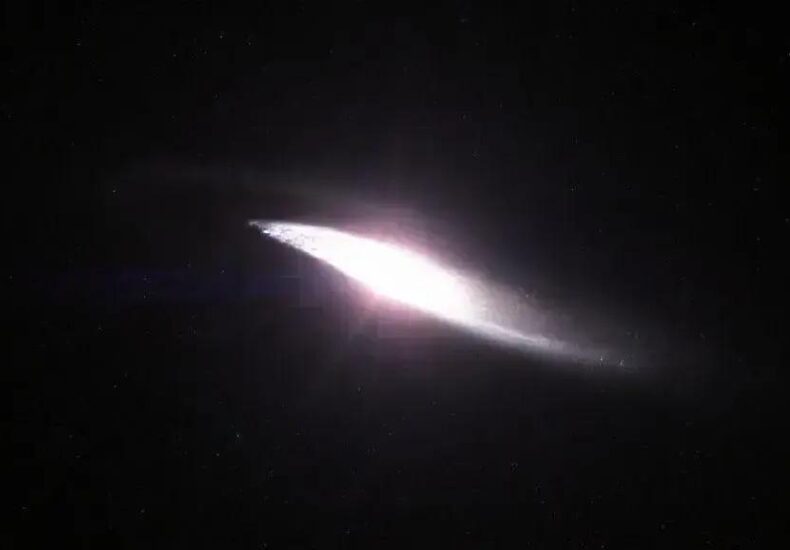
New Insights on Comet 3I/ATLAS from Hubble and ESA Juice
Comet 3I/ATLAS will make its closest approach to Earth on December 19, 2025, providing an excellent opportunity for stargazers. As it comes nearer, the comet will shine brighter, allowing for detailed observations and studies by scientists.
Have you heard about the fascinating **Comet 3I/ATLAS**? Recent observations from the Hubble Space Telescope and ESA’s Juice reveal exciting details about this interstellar visitor, making it a hot topic in the astronomy community!
Hubble’s Recent Observation of 3I/ATLAS
Recently, the Hubble Space Telescope turned its powerful gaze toward comet 3I/ATLAS. This comet is quite special because it’s from outside our solar system. What’s fascinating is how its size and brightness have changed over time.
Hubble’s observations reveal that 3I/ATLAS has an active surface. This means it is releasing gas and dust as it approaches the sun. Such activity is typical for comets, yet Hubble’s clear images help us understand what’s happening up close.
Scientists have noticed the comet getting brighter. This increase is likely due to the heating of the comet’s nucleus. As it gets closer to the sun, the ice inside warms up and starts to turn into gas.
What’s even more interesting is that Hubble captured images of 3I/ATLAS from various angles. This helps researchers study its shape and tail, which often stretches far behind the comet. Understanding these aspects is crucial to learning about its journey through space.
With each observation, Hubble continues to unlock the secrets of 3I/ATLAS. It’s exciting to think about what we might discover next!
ESA Juice’s Curious Findings
The ESA Juice mission recently shared some exciting findings about comet 3I/ATLAS. Juice, which stands for Jupiter Icy Moons Explorer, has a unique view of our solar system.
This spacecraft is designed to study Jupiter and its moons. However, its instruments are also useful for observing comets. When Juice passed near 3I/ATLAS, it gathered important data.
One of the intriguing discoveries was about the comet’s composition. Juice detected signs of different gases. These gases can tell us a lot about the comet’s history.
The spacecraft also found that 3I/ATLAS has a dusty environment. This dust can affect the way it interacts with sunlight and other forces in space. Understanding this helps scientists predict its movement better.
Moreover, Juice’s observations could reveal new details about the comet’s tail. The tail is made of gas and dust that streams behind the comet as it travels through space.
Overall, ESA Juice is helping us learn more about 3I/ATLAS. Each piece of data adds to the bigger picture of this fascinating comet.
Comparing Previous and Current Views of the Comet
When comparing the previous views of comet 3I/ATLAS to the current ones, big changes stand out. Hubble’s latest images show the comet looking different than before.
Earlier observations showed a smaller, less bright version of 3I/ATLAS. But now, we see it glowing more brightly. This change likely happens because it’s getting closer to the sun.
Scientists often use different telescopes to study comets. For instance, ground telescopes can take fewer details than Hubble. But now they can see the evolving features of the comet.
The current views also reveal the comet’s tail. Earlier, it was faint, and now it stretches much farther behind the nucleus. The tail is important because it tells us how the comet reacts to sunlight.
When scientists compare old and new views, they can track how the comet changes. This helps them understand its journey and behavior in space.
Overall, these comparisons show us the exciting dynamics of comet 3I/ATLAS. Each observation adds more to our knowledge!
The Importance of Distance and Timing in Observations
Distance and timing play key roles in observing comet 3I/ATLAS. As the comet moves closer to the sun, its features become more noticeable. This makes timing important for capturing the best images.
When scientists plan to observe a comet, they consider its distance from Earth. The closer it is, the better the view. Hubble’s powerful lenses can reveal details that smaller telescopes can’t capture.
Timing also matters because of the comet’s speed. 3I/ATLAS travels quickly, and each observation window is short. If scientists miss their shot, they might have to wait a long time for another chance.
Another factor is the comet’s position in the sky. Some times of the year, it might be better placed for viewing. Observers try to coordinate their efforts to match these moments.
Understanding the right distance and timing helps scientists gather crucial data. This data leads to better insights about 3I/ATLAS’s behavior and its journey through space.
Upcoming Closest Approach to Earth on December 19, 2025
Mark your calendars! Comet 3I/ATLAS is set to make its closest approach to Earth on December 19, 2025. This is an exciting event for skywatchers. It will provide a great chance to see the comet up close.
As it approaches, 3I/ATLAS will get brighter. This means anyone can spot it with the naked eye or through a telescope. During this time, it’ll be visible in the night sky, making it a perfect opportunity for stargazers.
Scientists will be studying the comet closely. They’ll use powerful telescopes to gather data on its characteristics and changes. This information will help us understand more about 3I/ATLAS and other comets.
Don’t miss out on this unique chance! As the date gets closer, stay tuned for updates. Observers and scientists alike are eager to learn what new details this approach will reveal about comet 3I/ATLAS.
You may also like




Leave a Reply