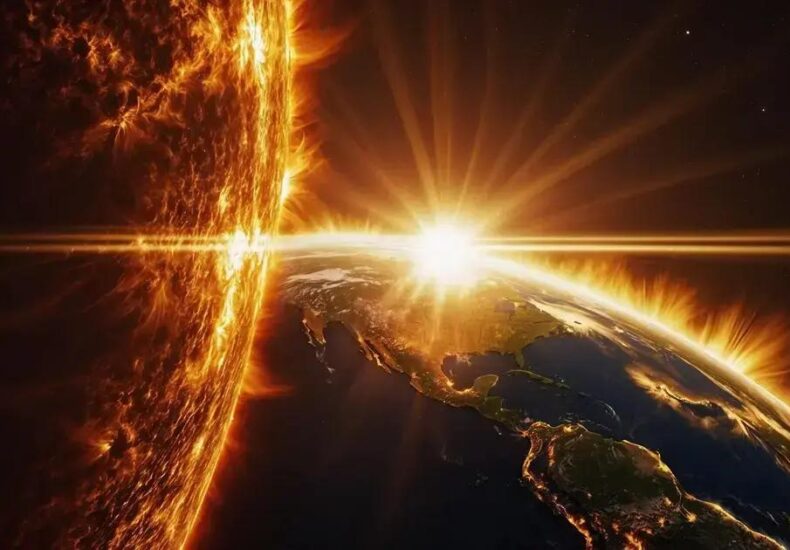
New Sunspot Regions Identified: What They Mean for Earth
New sunspot regions are areas of intense magnetic activity on the sun that can trigger solar storms impacting Earth’s magnetic field, disrupting power grids, communications, and satellite operations.
Have you heard about the New Sunspot Regions spotted on the sun lately? These dark patches might seem distant, but their effects can ripple all the way to Earth in ways that touch our daily lives. Curious about what that means for you? Let’s explore together.
understanding sunspots and their formation
Sunspots are dark, cooler areas that appear on the sun’s surface, caused by intense magnetic activity. These spots form when magnetic fields become twisted and concentrated, inhibiting the normal flow of heat from the sun’s interior to its surface. The result is a region that is cooler and less bright than its surroundings.
How Sunspots Form
The sun’s magnetic field lines can become tangled due to the sun’s rotation and internal movements. When these lines loop through the sun’s surface, they create areas of strong magnetic activity that suppress convection, the process that brings hot gases to the surface. This suppression cools the surface in these spots, making them appear darker.
Characteristics of Sunspots
Sunspots often occur in groups and vary in size, sometimes as large as Earth or even bigger. They can last from a few days to several weeks. These spots are important indicators of solar activity, often preceding solar flares and coronal mass ejections, which affect space weather.
Significance of Sunspots
Monitoring sunspots helps scientists understand the sun’s solar cycle, which lasts about 11 years. During the cycle’s peak, known as the solar maximum, sunspot numbers increase, causing more solar activity. This information helps predict effects on Earth’s space environment and technology.
recent discoveries of new sunspot regions
Recent discoveries of new sunspot regions have been made possible by advanced solar observatories like NASA’s Solar Dynamics Observatory (SDO) and the European Space Agency’s Solar Orbiter. These instruments provide high-resolution images and data that reveal even small and short-lived sunspot regions previously undetectable.
Enhanced Monitoring Techniques
With continuous monitoring, scientists track the birth and evolution of sunspots in real time. This allows for the identification of new sunspot regions as they appear, improving predictions of solar activity, such as flares and coronal mass ejections.
Implications of New Discoveries
The detection of new sunspot regions offers insight into the sun’s magnetic cycle and helps understand the formation mechanisms behind these dark spots. These findings refine models used to forecast space weather events that can impact satellite communications and power grids on Earth.
Significance for Research and Technology
Studying new sunspot regions enhances our knowledge of solar physics and provides crucial information for protecting technology on Earth. The data collected aids in developing early warning systems that can mitigate the effects of solar storms.
how sunspots affect Earth’s magnetic field
Sunspots are closely linked to changes in Earth’s magnetic field through the solar wind and solar storms they often produce. When sunspots are active, they can trigger solar flares and coronal mass ejections (CMEs), releasing vast amounts of charged particles into space. These particles travel toward Earth, interacting with its magnetic field.
Disturbances in Earth’s Magnetosphere
When charged particles from the sun collide with Earth’s magnetic field, they can cause geomagnetic storms. These storms temporarily disturb the magnetosphere, the area around Earth controlled by its magnetic field, leading to fluctuations that can affect navigation systems and satellites.
Effects on Communication and Power Systems
Strong geomagnetic storms can induce electric currents in power lines, causing voltage instability and even power outages. Communication systems, especially those relying on radio waves and GPS signals, can also be disrupted due to the changes in the magnetic field and the ionosphere.
Visual Phenomena and Scientific Importance
The interaction between sunspot-induced solar activity and Earth’s magnetic field creates spectacular auroras near the poles. Additionally, monitoring these effects helps scientists understand space weather and protect technology reliant on stable magnetic and radio conditions.
potential impacts on communication and power systems
Solar activity from new sunspot regions can have significant impacts on communication and power systems on Earth. When sunspots release solar flares and coronal mass ejections, charged particles rush toward our planet, affecting technologies that rely on electromagnetic signals.
Disruptions to Communication Systems
High-frequency radio communications, GPS signals, and satellite operations can be disturbed during solar storms. These disruptions may cause temporary loss of signal, reduced accuracy in navigation systems, and interference in satellite data transmission.
Effects on Power Grids
Geomagnetic storms induced by solar activity can create electric currents in power lines, known as geomagnetically induced currents (GICs). These currents may overload transformers and other electrical equipment, potentially leading to voltage instability or widespread power outages.
Strategies to Mitigate Risks
Power companies and communication providers use space weather forecasts to prepare for solar storms. Early warning systems help operators take precautionary measures, such as adjusting grid loads or re-routing communications to minimize damage and maintain service.
Understanding the potential impacts of sunspots on these systems is essential for developing resilient technology and protecting critical infrastructure against solar-induced disruptions.
monitoring solar activity: tools and techniques
Monitoring solar activity is essential for understanding sunspots and their potential effects on Earth. Scientists use a variety of advanced tools and techniques to track and study solar phenomena in real time.
Space-Based Observatories
Satellites like NASA’s Solar Dynamics Observatory (SDO) and the European Space Agency’s Solar Orbiter provide continuous, high-resolution images of the sun. These observatories use ultraviolet and X-ray imaging to capture details invisible to the naked eye, allowing scientists to detect new sunspot regions and solar flares quickly.
Ground-Based Telescopes
Ground observatories equipped with specialized solar telescopes complement satellite data. They monitor the sun’s magnetic field and visible light emissions, helping to confirm sunspot activity and solar eruptions.
Magnetometers and Radio Telescopes
Magnetometers on Earth measure changes in our planet’s magnetic field triggered by solar storms. Radio telescopes detect solar radio bursts caused by energetic solar events, providing early warnings for space weather disturbances.
Data Analysis and Forecasting Models
Scientists use computer models to simulate solar activity based on collected data. These models help predict solar flares, coronal mass ejections, and their potential impact on Earth’s environment and technology.
The combination of these tools and techniques allows for a comprehensive understanding of solar behavior, which is vital for early warning systems and protecting our infrastructure.
preparing for solar events: what individuals can do
Individuals can take several steps to prepare for solar events caused by new sunspot activity. Being aware of space weather alerts and understanding their potential impacts is the first step toward readiness.
Stay Informed About Space Weather
Sign up for notifications from reliable sources like NOAA’s Space Weather Prediction Center or other space weather services. Timely alerts help you anticipate solar storms that may disrupt communication or power.
Protect Electronic Devices
During strong solar storms, electronics can be vulnerable to power surges. Use surge protectors to shield devices, and unplug sensitive equipment if a significant event is forecasted.
Have Emergency Supplies Ready
Since solar storms can cause power outages, keep essentials like flashlights, batteries, and non-perishable food available. Having a battery-powered radio can also help you stay updated if other communication channels fail.
Limit Use of GPS and Communication During Storms
Solar activity can disrupt GPS accuracy and radio communications. Consider planning activities accordingly and have backup navigation options, especially if you rely heavily on GPS technology.
Taking these simple precautions can reduce the inconvenience and risks associated with solar events triggered by new sunspot regions.
Understanding and preparing for the effects of new sunspot regions
New sunspot regions play a crucial role in shaping solar activity that can affect Earth. By monitoring these sunspots and their impacts, we gain valuable insights into space weather and its influence on technology and daily life.
Staying informed and taking simple precautions can help you reduce the risks associated with solar storms, protecting your devices and maintaining communication.
As our knowledge and tools improve, we get better at forecasting solar events and minimizing their impact on our modern world. Being aware and prepared is the best way to handle the challenges new sunspot regions may bring.
FAQ – Frequently Asked Questions About New Sunspot Regions and Their Impact
What are sunspots and why do they form?
Sunspots are darker, cooler areas on the sun caused by intense magnetic activity that blocks heat from the sun’s surface.
How do new sunspot regions affect Earth?
They can increase solar activity like solar flares and storms, which impact Earth’s magnetic field and can disrupt communication and power systems.
Can sunspots cause power outages on Earth?
Yes, strong solar storms linked to sunspots can induce electric currents that damage power grids and cause power outages.
How can I stay informed about solar storms?
You can sign up for space weather alerts from organizations like NOAA’s Space Weather Prediction Center for timely updates and warnings.
What precautions can individuals take during solar events?
Use surge protectors for electronics, keep emergency supplies ready, and limit GPS or communication device use during severe solar storms.
How do scientists monitor sunspots and solar activity?
Using space-based observatories like NASA’s SDO, ground-based solar telescopes, magnetometers, and computer models to track and predict solar events.
You may also like


Leave a Reply