Unraveling the Physics of Solar Flares: A Deep Dive into Plasma Dynamics
Physics of flares studies how magnetic energy stored in the sun’s plasma is rapidly released through magnetic reconnection, causing solar flares that emit intense radiation affecting space weather and technology on Earth and in space.
Physics of flares is a fascinating puzzle that unravels how violent solar outbursts happen, shaking the sun’s plasma. Curious about how these stellar fireworks shape our space environment? Let’s explore what goes on behind the scenes.
what are solar flares and why they matter
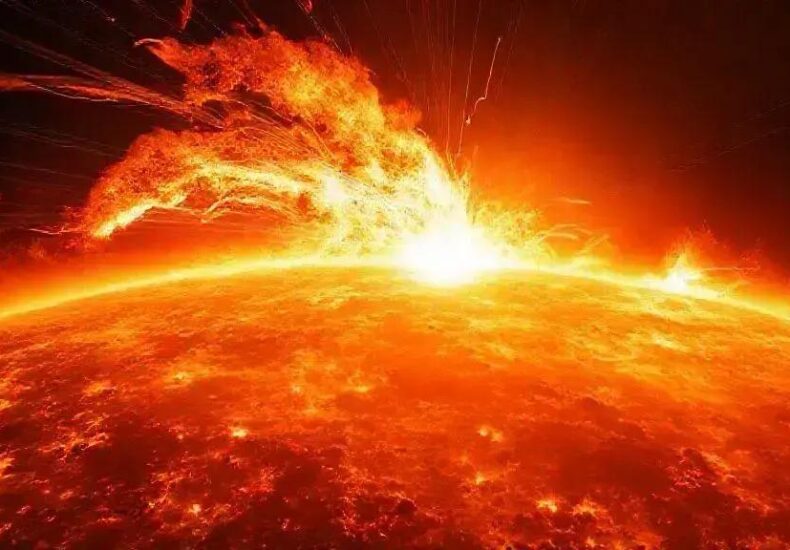
Solar flares are sudden, intense bursts of radiation coming from the sun’s surface. They happen when magnetic energy stored in the sun’s atmosphere is rapidly released. These powerful explosions send out huge amounts of energy in the form of light, heat, and energetic particles.
Why solar flares matter
Solar flares are important because they can affect space weather and impact Earth. Their radiation can disturb satellite communications, GPS signals, and even power grids. Astronauts and high-altitude flights may face increased radiation during strong flare events.
Understanding solar flares helps scientists predict space weather and protect technology on Earth. It also sheds light on the sun’s complex magnetic behavior and plasma interactions. By studying solar flares, we learn how our star influences the entire solar system.
The energy from these flares is so intense that it can heat the sun’s atmosphere millions of degrees in seconds. This extreme heating produces bright flashes visible across many wavelengths, from X-rays to radio waves.
the role of plasma in solar flare formation
Plasma plays a crucial role in the formation of solar flares. It is a hot, ionized gas made up of charged particles including electrons and ions. On the sun, plasma exists in constant motion, influenced by magnetic fields generated deep within the star.
How plasma contributes to solar flares
Solar flares occur when the magnetic energy stored in plasma dramatically changes. The sun’s plasma carries magnetic fields and twists them into complex shapes. When these magnetic field lines snap and reconnect, they release a powerful burst of energy, heating plasma to millions of degrees.
Magnetic reconnection is the key process triggered by plasma dynamics. This sudden rearrangement unleashes energy stored in the sun’s atmosphere, producing bright flashes and accelerating particles.
The behavior of plasma is influenced by its temperature, density, and magnetic environment. This makes solar flare formation a complex, highly dynamic event that researchers study using space telescopes and computer models.
magnetic reconnection: the engine behind flares
Magnetic reconnection is a fundamental process that powers solar flares. It happens when magnetic field lines that are close together suddenly break and reconnect in a new pattern. This rapid change releases a huge amount of energy stored in the sun’s magnetic field.
The process of magnetic reconnection
In the sun’s atmosphere, magnetic fields are carried by plasma and often become twisted and tangled. When these opposing magnetic field lines approach, they can snap and reconnect, converting magnetic energy into heat, light, and particle acceleration.
This energy release heats the surrounding plasma to millions of degrees and produces intense bursts of radiation across the electromagnetic spectrum. The event can also drive charged particles to near light speed, creating powerful solar energetic particles.
Magnetic reconnection is key to understanding why solar flares occur and how they evolve. It is a complex, rapid process that scientists study using satellites and advanced computer simulations to predict space weather impacts better.
energy release and radiation during solar flares
During a solar flare, an enormous amount of energy stored in the sun’s magnetic fields is suddenly released. This energy manifests as intense radiation and particle acceleration over a wide range of wavelengths, from X-rays and ultraviolet light to radio waves.
How energy is released
The energy release begins when magnetic reconnection rapidly converts magnetic energy into thermal and kinetic energy. The surrounding plasma heats up to tens of millions of degrees, producing bright bursts of light visible even in X-ray and gamma-ray bands.
This process accelerates charged particles such as electrons and protons to nearly the speed of light. These particles then collide with the sun’s atmosphere causing further radiation emissions and heating.
Types of radiation emitted
Solar flares emit radiation across the electromagnetic spectrum. X-rays and extreme ultraviolet (EUV) radiation hit Earth’s upper atmosphere and can disrupt satellite communication and GPS systems. Visible light from flares can briefly brighten the sun’s surface.
The energetic particles can escape the sun and travel through the solar system, impacting planetary magnetospheres and posing risks to astronauts.
Studying the energy release and radiation from solar flares helps scientists understand space weather and protect sensitive technology.
how solar flares affect earth’s space weather
Solar flares have a significant impact on Earth’s space weather. When these powerful bursts of energy reach our planet, they can disrupt the magnetosphere, the magnetic shield that protects Earth from harmful solar and cosmic radiation.
Impact on Earth’s magnetic field
Solar flares release radiation and charged particles that can cause geomagnetic storms. These storms disturb the natural magnetic field, leading to fluctuations that can affect satellites, communication systems, and navigation instruments like GPS.
During strong solar flares, high-energy particles penetrate the upper atmosphere, increasing ionization. This can disrupt radio signals, leading to temporary blackouts in high-frequency communication and affecting aviation routes, especially near the poles.
Effects on technology and environment
Geomagnetic storms caused by solar flares can induce electrical currents in power grids, potentially causing outages and damaging transformers. Satellites may experience malfunctions or reduced lifespans due to intense radiation exposure.
The beautiful auroras, or northern and southern lights, are a visible effect of these interactions, caused by charged particles colliding with Earth’s atmosphere.
Understanding how solar flares influence space weather is crucial for preparing and protecting our technology-dependent society from sudden disruptions.
tools and methods to study solar flare physics
Scientists use a variety of tools and methods to study solar flare physics. These include both space-based observatories and ground-based telescopes that capture data across different wavelengths such as X-rays, ultraviolet, and visible light.
Space observatories
Satellites like the Solar Dynamics Observatory (SDO) and the Solar and Heliospheric Observatory (SOHO) constantly monitor the sun’s activity. They provide high-resolution images and measurements of solar flares, allowing researchers to analyze their shape, size, and energy output.
X-ray and ultraviolet telescopes on these satellites detect the intense radiation released by solar flares, offering clues about their underlying physics.
Ground-based instruments
Observatories on Earth, such as the Daniel K. Inouye Solar Telescope, use advanced optics to observe the sun’s surface and magnetic fields. These observations help scientists study the magnetic environment where flares originate.
Computer modeling and simulations
Complex computer models simulate the sun’s magnetic field and plasma behavior. These simulations offer insights into processes like magnetic reconnection and energy release during solar flares. They help predict flare occurrences and their potential impacts.
Together, these tools and methods provide a comprehensive understanding of solar flares and enhance our ability to forecast space weather events.
recent discoveries in solar flare dynamics
Recent discoveries in solar flare dynamics have deepened our understanding of how these powerful eruptions occur. Scientists have observed that solar flares involve complex plasma motions and magnetic field changes much faster and more intricate than previously thought.
New insights into magnetic reconnection
Advanced space telescopes have captured detailed images showing multiple sites of magnetic reconnection happening almost simultaneously. This explains the rapid energy release and the varying intensity observed in solar flares.
Role of turbulence in plasma
Researchers found that turbulence within the sun’s plasma drives the acceleration of particles during flares. This turbulence creates small-scale magnetic structures that intensify the flare’s energy output.
Unexpected flare triggers
Studies have identified that solar flares can be triggered not only by magnetic twists but also by sudden injections of energy from nearby sunspots or shock waves traveling through the solar atmosphere.
These discoveries enhance space weather forecasting and help protect satellites and power grids from solar flare impacts.
challenges in predicting solar flare activity
Predicting solar flare activity remains a significant scientific challenge due to the sun’s complex and dynamic nature. The magnetic fields and plasma flows that cause flares change constantly, making it hard to forecast when and where flares will happen.
Unpredictable magnetic field behavior
The sun’s magnetic field lines twist, tangle, and reconnect in ways that are difficult to model. This unpredictable behavior complicates forecasting efforts since small changes can result in a flare or a quiet period.
Limitations of current models
Although computer simulations have improved, models still cannot capture all the fine details of plasma and magnetic interactions. This limits the accuracy and lead time of flare predictions.
Data challenges
Reliable flare prediction requires continuous, high-resolution observations. However, gaps in data, instrumental limitations, and the sun’s vast scale create hurdles for scientists.
Researchers are working to improve flare forecasting by combining satellite data, machine learning, and more advanced solar monitoring tools to better understand and predict this powerful space weather phenomenon.
applying flare physics to protect technology and astronauts
Understanding the physics of solar flares is essential for protecting both technology on Earth and astronauts in space. These powerful solar events can emit radiation and energetic particles that interfere with satellite systems and pose health risks.
Protecting satellites and communications
Solar flare physics helps engineers design better shielding for satellites, preventing damage from intense radiation. Operators can also adjust satellite orbits or switch systems into safe modes during flare events to avoid disruptions.
Safeguarding astronauts
Astronauts aboard the International Space Station or traveling beyond Earth’s protective magnetic shield face increased radiation exposure during solar flares. Understanding flare dynamics allows mission planners to forecast dangerous periods and schedule spacewalks or activities accordingly.
Improving space weather forecasting
Applying physics models of flare formation and energy release enhances the accuracy of space weather forecasts, which are vital for timely warnings. These forecasts help protect power grids, aviation, and critical infrastructure from the adverse effects of solar storms.
Through advanced research and technology, we can better prepare for and mitigate the risks posed by solar flares, ensuring safer operations both on Earth and in space.
Understanding the Importance of Solar Flare Physics
Solar flares are powerful events that affect not only our sun but also life on Earth and human activities in space. By studying the physics behind these flares, scientists can better predict when they will occur and how strong they might be.
This knowledge helps protect our technology, from satellites to power grids, and keeps astronauts safe as they explore space. Advances in research and technology continue to improve our ability to respond to these natural solar events.
Overall, understanding solar flare physics is key to safeguarding both our planet and our ventures beyond it.
FAQ – Understanding Solar Flares and Their Impact
What is a solar flare?
A solar flare is a sudden explosion of energy on the sun’s surface caused by changes in magnetic fields and plasma.
How do solar flares affect Earth?
Solar flares can disrupt satellite communications, GPS signals, and power grids by disturbing Earth’s magnetic field and atmosphere.
Why is plasma important in solar flare formation?
Plasma carries magnetic fields and its dynamic behavior leads to magnetic reconnection, which triggers solar flares.
What is magnetic reconnection?
Magnetic reconnection is a process where magnetic field lines break and reconnect, releasing energy that powers solar flares.
How do scientists study solar flares?
Scientists use space-based observatories, ground telescopes, and computer simulations to monitor and model solar flare activity.
How can understanding solar flares protect astronauts?
By forecasting solar flares and understanding their behavior, mission planners can limit astronauts’ exposure to harmful radiation during space missions.
You may also like



Leave a Reply