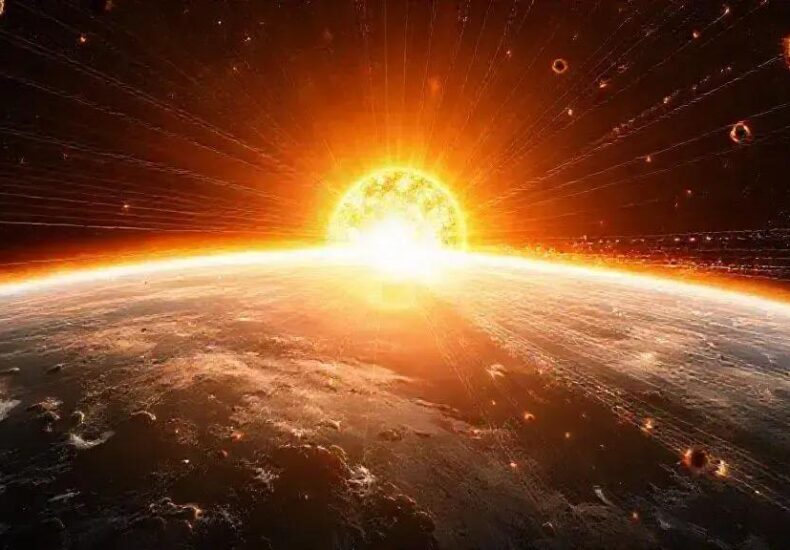
Radiation vs. Particles: Understanding Different Solar Outputs
Radiation vs Particles refers to the sun’s two main outputs: radiation as electromagnetic waves like light and UV rays, and particles as charged protons and electrons, each impacting Earth’s atmosphere, space weather, and technology in distinct ways.
Ever wondered about the difference between solar radiation and solar particles? Radiation vs Particles sheds light on these fascinating solar outputs, revealing how each plays a unique role in shaping space weather and affecting us down here on Earth.
what solar radiation is and how it affects Earth
Solar radiation is energy emitted from the sun in the form of electromagnetic waves, including visible light, ultraviolet (UV), and infrared rays. This radiation powers Earth’s climate and supports life by providing sunlight for photosynthesis. When solar radiation reaches Earth, it interacts with the atmosphere, warming the surface and influencing weather patterns.
Types of Solar Radiation
The sun emits various types of radiation, such as UV rays which can affect skin health, and infrared radiation that contributes to heat. These waves travel through space at the speed of light and penetrate Earth’s atmosphere to different extents.
Effects on Earth’s Environment
Solar radiation plays a crucial role in driving winds, ocean currents, and the water cycle. Too much exposure can lead to damage, like increased UV levels causing skin problems, while too little sunlight can result in colder climates. The balance of solar radiation is vital for maintaining life-sustaining conditions.
Monitoring Solar Radiation
Scientists use satellites and ground stations to measure solar radiation continuously. Understanding its variations helps predict climate changes and protect technology sensitive to solar activity, such as solar panels and communication systems.
understanding solar particles and their sources
Solar particles are high-energy charged particles ejected from the sun, primarily consisting of protons, electrons, and heavier ions. These particles originate from the sun’s outer layers, especially during solar flares and coronal mass ejections (CMEs). Solar particles travel through space and can interact with Earth’s magnetic field, causing phenomena like the auroras.
Sources of Solar Particles
Solar flares release bursts of particles when magnetic energy is suddenly unleashed. Coronal mass ejections involve massive clouds of charged particles erupting from the sun’s corona. Both events increase the number of particles moving through the solar system.
Types of Solar Particle Events
There are two main types: gradual events, which last several days and result from CMEs, and impulsive events, which are short bursts tied to solar flares. Each varies in intensity and impact on space weather.
Effects on Earth and Spacecraft
When solar particles penetrate Earth’s magnetosphere, they can disrupt satellite operations, GPS systems, and power grids. Astronauts in space are also exposed to increased radiation risks from these particles.
Scientists monitor solar particle events using spacecraft equipped with particle detectors to better predict space weather and protect technology and human activities in space.
differences between solar radiation and solar particles
Solar radiation and solar particles are two different types of energy emitted by the sun, and each has unique properties and effects. Solar radiation consists of electromagnetic waves, such as visible light, ultraviolet (UV), and infrared rays. These waves travel at the speed of light and carry energy that warms the Earth and drives its climate systems.
Nature of Solar Radiation
Radiation is made up of photons, which have no mass and move as waves. It can penetrate space easily and affect Earth’s atmosphere and surface by heating it and enabling processes like photosynthesis.
What Are Solar Particles?
Solar particles are high-energy charged particles, mainly protons, electrons, and ions, that are ejected from the sun during solar flares and coronal mass ejections. These particles have mass and charge and travel more slowly than radiation.
Differences in Interaction with Earth
While solar radiation continuously bathes Earth and is vital for life, solar particles interact primarily with Earth’s magnetic field, causing magnetic storms and phenomena like auroras. Solar particles can disrupt satellites and power grids, while radiation mainly impacts climate and ultraviolet exposure.
Measurement and Impact
Radiation is measured in terms of energy flux and intensity, often using radiometers, while particles are detected with particle counters on satellites. Both play critical roles in space weather but require different monitoring methods and protective strategies.
effects of solar radiation on Earth’s atmosphere
Solar radiation has a profound impact on Earth’s atmosphere by providing the energy needed to sustain weather and climate systems. When this radiation reaches Earth’s atmosphere, it is absorbed, reflected, or scattered by gases and particles, influencing temperature and atmospheric dynamics.
Absorption and Heating
The atmosphere absorbs solar radiation at different levels. The ozone layer, for example, absorbs harmful ultraviolet (UV) rays, protecting living organisms. Solar radiation heats the Earth’s surface and atmosphere, causing air to rise and form wind patterns that drive weather.
Role in the Water Cycle
Solar energy causes evaporation of water from oceans and land, which then forms clouds through condensation. This process is vital for precipitation, affecting ecosystems and human activity worldwide.
Impact on Atmospheric Layers
Solar radiation influences different layers of the atmosphere uniquely. The thermosphere, for instance, expands and heats up when it absorbs X-rays and UV radiation during intense solar activity.
Ozone Layer Interaction
The ozone layer plays a critical role by absorbing most of the sun’s UV radiation, which varies with solar activity. Changes in solar radiation can affect ozone concentration, influencing atmospheric chemistry.
Sun-Climate Connection
Fluctuations in solar radiation contribute to natural climate variability. Periods of low solar activity have been linked to cooler climates historically, demonstrating a connection between solar output and Earth’s climate.
how solar particles influence space weather
Solar particles significantly influence space weather, which affects both Earth’s near-space environment and technological systems. These high-energy charged particles, especially during solar storms, can cause geomagnetic disturbances when they interact with Earth’s magnetic field.
Geomagnetic Storms
When solar particles reach Earth, they can trigger geomagnetic storms by disturbing the magnetic field. These storms can lead to fluctuations in Earth’s magnetosphere, affecting satellite operations and navigation systems.
Auroras and Particle Interaction
The interaction of solar particles with Earth’s atmosphere causes beautiful natural light displays known as auroras. Particles funnel into polar regions, colliding with atmospheric gases and producing glowing lights in the sky.
Impact on Satellites and Communication
Solar particle events can damage satellite electronics, degrade signals, and increase drag on satellites. Communication systems that rely on radio waves may experience outages or delays due to ionospheric disturbances caused by these particles.
Radiation Risks to Astronauts
Astronauts in space are exposed to increased radiation from solar particles, especially during solar energetic particle events. This exposure poses health risks and requires spacecraft shielding and mission planning to minimize harm.
Monitoring and Prediction
Space agencies use satellites equipped with particle detectors to monitor solar particle activity. Predicting particle events helps protect technology and human activities in space by providing early warnings.
impact of solar outputs on satellites and communication
Solar outputs, including radiation and particles, have a significant impact on satellites and communication systems. High-energy solar radiation and charged particles can disturb the space environment around Earth, affecting satellite operations and signal transmission.
Satellite Damage and Malfunctions
Solar particles can cause charging and discharging on satellite surfaces, damaging electronic components and leading to malfunctions. Intense solar radiation can degrade solar panels, reducing a satellite’s power supply.
Communication Signal Disruptions
Solar storms increase ionization in Earth’s upper atmosphere, particularly the ionosphere, which affects radio wave propagation. This can cause signal fading, delays, or complete blackouts for GPS, radio, and satellite communication.
Increased Satellite Drag
Enhanced solar radiation heats and expands Earth’s upper atmosphere, increasing drag on satellites in low Earth orbit. This forces satellites to use more fuel for orbit adjustments, reducing their operational lifespan.
Preventive Measures
Operators monitor solar activity to forecast space weather and plan satellite operations accordingly. Satellites are designed with shielding to protect sensitive electronics, and mission plans include safe modes during solar storms.
measuring and monitoring solar radiation and particles
Measuring and monitoring solar radiation and particles is essential for understanding solar activity and protecting technology and life on Earth. Scientists use various instruments on satellites, ground stations, and spacecraft to observe solar outputs in real-time.
Measuring Solar Radiation
Solar radiation is tracked using radiometers and spectrometers that detect electromagnetic waves like visible light, UV, and X-rays. These instruments help quantify the energy from the sun and assess its variations.
Detecting Solar Particles
Charged solar particles are measured with particle detectors and spectrometers onboard satellites. These tools identify particle types, energies, and flux, which helps predict space weather events.
Ground-Based Observations
Ground stations use magnetometers to monitor Earth’s magnetic field changes caused by solar particles. They also deploy neutron monitors to track cosmic rays, providing indirect data on solar particle activity.
Spacecraft Monitoring
Satellites like the Solar and Heliospheric Observatory (SOHO) and the Advanced Composition Explorer (ACE) continually collect data on solar outputs. Their real-time monitoring aids in early warning systems for solar storms.
Importance of Continuous Data
Continuous observation allows scientists to understand solar cycles, predict solar storms, and minimize their impact on communications, power grids, and aviation.
historical solar events involving radiation and particles
Throughout history, several significant solar events involving radiation and particles have had profound effects on Earth and technology. These events demonstrate the powerful impact of solar activity on our planet and human systems.
The Carrington Event (1859)
The most famous solar storm on record, the Carrington Event, released massive bursts of solar radiation and particles. This caused intense geomagnetic storms, inducing strong auroras and disrupting telegraph systems around the world.
The Solar Storm of 1989
In March 1989, a powerful solar particle storm triggered a geomagnetic storm that caused a widespread blackout in Quebec, Canada. Satellites and power grids were affected due to sudden increases in solar radiation and charged particle flux.
Halloween Solar Storms (2003)
A series of solar flares and coronal mass ejections released intense radiation and particles. These storms impacted satellite communications, GPS navigation, and caused radiation hazards for astronauts.
Impact on Technology and Society
Historical solar events highlight the importance of monitoring solar radiation and particles. They teach us how vulnerable technology can be and the need for protective measures to minimize disruptions and damage.
Ongoing Research and Preparedness
Scientists study these past events to better predict future solar storms. Improved monitoring and early warning systems help prepare and protect satellites, power grids, and communications from solar activity.
protecting technology from solar radiation and particles
Protecting technology from solar radiation and particles is essential to ensure the functionality and safety of satellites, communication systems, and power grids. Solar storms can disrupt or damage sensitive electronics, so various strategies are employed to minimize these risks.
Shielding and Design
Satellites and spacecraft are equipped with radiation shielding materials that block or reduce the impact of charged particles and solar radiation. Designing electronics with robust components helps withstand solar particle effects.
Operational Procedures
Operators monitor solar activity and can place satellites into safe modes during high solar radiation events to protect systems. They may also delay launches or adjust satellite orbits to reduce exposure.
Ground Infrastructure Protection
Power grids and communication networks are protected using surge protectors, grounding methods, and real-time monitoring. Utilities can disconnect vulnerable systems during major solar storms to prevent damage.
Forecasting and Early Warning
Space weather forecasting uses data from satellites to predict solar storms. Early warnings allow operators to prepare and mitigate risks, reducing the impact on technology and infrastructure.
Future Innovations
Research continues to improve materials and technologies that resist solar radiation, including more advanced shielding and autonomous systems that respond quickly to solar events.
future research and challenges in solar output studies
Future research in solar output studies aims to better understand the complex behavior of solar radiation and particles. Scientists seek to improve models that predict solar cycles and space weather, which impact Earth’s environment and technology.
Advancements in Solar Observation
New satellites and instruments are being developed to provide higher-resolution data on solar activity. These advancements will help scientists observe smaller and more rapid solar events.
Challenges in Prediction
Predicting solar activity remains challenging due to the sun’s complex magnetic dynamics. Improving forecast accuracy requires integrating data from multiple sources and refining computational models.
Impact on Earth and Technology
Understanding solar outputs is crucial for safeguarding satellites, power grids, and communication networks. Research focuses on mitigating the effects of solar storms on technology and infrastructure.
Interdisciplinary Approaches
Future studies often combine physics, computer science, and space engineering. Collaboration across fields enhances the understanding of solar phenomena and their impact.
Education and Public Awareness
Increasing public knowledge about solar activity and its effects helps promote preparedness and support for research initiatives.
Understanding Solar Radiation and Particles
Solar radiation and particles are key components of the sun’s output that affect Earth and technology in unique ways. Both influence space weather and can impact communication systems, satellites, and power grids.
By studying these solar outputs, scientists can better predict solar storms and develop ways to protect our technology and environment. Continued research and innovation are essential to improve our understanding and safety against solar activity.
Staying informed and prepared helps us adapt to the sun’s ever-changing energy, ensuring that we can benefit from its power while minimizing disruptions.
FAQ – Understanding Solar Radiation and Particles
What is the difference between solar radiation and solar particles?
Solar radiation consists of electromagnetic waves like light and UV rays, while solar particles are charged particles such as protons and electrons ejected from the sun.
How do solar particles affect space weather?
Solar particles interact with Earth’s magnetic field causing geomagnetic storms, auroras, and can disrupt satellites and communication systems.
Why is it important to monitor solar radiation and particles?
Monitoring helps predict solar storms, protect technology like satellites and power grids, and reduce the impact of space weather on Earth.
What damage can solar radiation cause to satellites?
Solar radiation can degrade satellite solar panels and electronics, causing malfunctions and reducing satellite lifespan.
How can technology be protected from solar radiation and particles?
Protection methods include radiation shielding, operational procedures during solar storms, early warning systems, and robust satellite design.
What are the challenges in researching solar outputs?
Challenges include predicting solar activity due to complex solar dynamics and the need for improved instruments to observe rapid solar events accurately.
You may also like

Leave a Reply