
Solar Activity Surges: Effects on Satellite Operations
Satellite operations are significantly affected by solar activity surges, which disrupt communication, navigation, and hardware integrity through increased radiation and charged particles, requiring advanced monitoring, hardened technology, and adaptive strategies to maintain functionality.
Satellite Operations can feel the heat when solar activity spikes—literally. Have you ever wondered how these solar tantrums jolt communication and navigation satellites up there? Let’s unpack this cosmic drama and see what it means for technology we rely on every day.
understanding solar activity and space weather
Solar activity refers to the various phenomena on the Sun, including sunspots, solar flares, and coronal mass ejections (CMEs) that periodically increase in intensity. These events create what is called space weather, which can affect the environment in space around Earth. Understanding solar activity and space weather is crucial because they directly impact satellite operations and technology.
Sunspots are dark regions on the Sun’s surface caused by magnetic fluctuations, often linked to bursts of energy like solar flares. Solar flares release intense radiation and high-energy particles, which travel through space and can interfere with satellite electronics. Coronal mass ejections are enormous clouds of solar plasma and magnetic field ejected into space that cause geomagnetic storms when interacting with Earth’s magnetic field.
The solar cycle
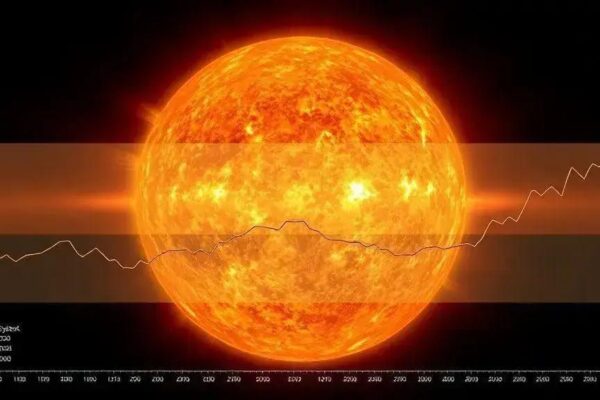
The Sun follows an approximately 11-year cycle where solar activity rises and falls. During the peak, or solar maximum, solar storms become more frequent and powerful. This cycle affects how often satellites may encounter space weather disturbances.
Why space weather matters for satellites
Space weather conditions, driven by solar activity, can cause signal disruption, damage satellite components, and alter satellite orbits due to increased atmospheric drag. Operators must monitor these events to protect satellites and maintain communication, navigation, and observation services.
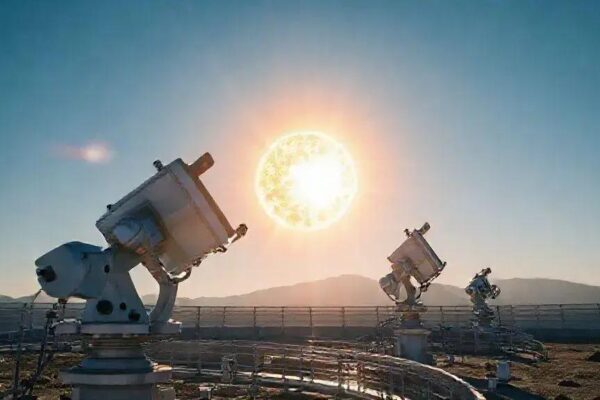
By studying solar activity through dedicated space missions and ground observatories, scientists help forecast space weather, enabling satellite operators to prepare for and mitigate potential impacts.
how solar storms impact satellite systems
Solar storms, caused by intense bursts of solar energy, impact satellite systems by disrupting their normal operations. When solar flares and coronal mass ejections reach Earth, they can create geomagnetic storms that interfere with satellite electronics and communication signals. How solar storms impact satellite systems is a critical area of study for ensuring the reliability of space technology.
Effects on satellite electronics
High-energy particles from solar storms can penetrate satellite shielding, causing temporary malfunctions or permanent damage to sensitive electronic components. This can lead to system reboots, data corruption, or even total satellite failure.
Communication signal disruption
Solar storms increase ionization in Earth’s upper atmosphere, which distorts or blocks radio signals between satellites and ground stations. This interference can cause dropped connections, reduced data transmission quality, and delays in signal reception.
Orbit and navigation challenges
During solar storms, Earth’s atmosphere expands due to heating, increasing drag on low Earth orbit satellites. This changed drag can alter satellite orbits, requiring adjustments to maintain proper positioning and avoid collisions. Navigation systems relying on satellites may also experience reduced accuracy.
Protecting satellites
Operators monitor space weather forecasts to implement preventative actions during solar storms. Protective measures include powering down non-essential systems, switching to backup hardware, or reorienting satellites to minimize exposure.
Understanding these impacts helps the satellite industry prepare and respond effectively to solar storm events, maintaining vital communication and navigation services.
effects on satellite communication reliability
Solar activity can significantly affect the reliability of satellite communication. When heightened solar events occur, they can disrupt the signals that satellites send and receive, making communication less stable and sometimes unusable.
Signal disruption and attenuation
Solar flares release bursts of electromagnetic radiation that increase free electrons in the ionosphere. This rise can cause signal scattering or absorption, leading to attenuation or total loss of satellite communication signals.
Increased noise and interference
Electromagnetic interference during solar storms adds noise to satellite communication channels. This noise decreases signal clarity, leading to errors in data transmission and reduced communication quality.
Impact on frequency bands
Different frequency bands are affected in various ways. For instance, high-frequency bands like Ka and Ku are more sensitive to solar activity than lower bands, which can result in uneven communication performance depending on the satellite system.
Temporary communication blackouts
Severe solar events may cause complete interruptions, known as radio blackouts, lasting from minutes to hours. These blackouts disrupt essential services such as TV broadcasts, internet connections via satellite, and emergency communications.
Strategies to maintain communication reliability
Operators use forecasting tools to predict solar storms and adjust satellite operations accordingly. Techniques include switching to alternate frequencies, increasing signal power, or re-routing communications through unaffected satellites.
Understanding these effects helps improve satellite communication resilience, ensuring continued connectivity even during intense solar activity.
influence on satellite navigation and gps accuracy
Solar activity can directly affect satellite navigation systems and the accuracy of GPS signals. Increased solar radiation and charged particles disturb the ionosphere, which is the layer of Earth’s atmosphere that GPS signals must pass through to reach receivers on the ground.
Ionospheres disturbance impact
When the ionosphere becomes irregular due to solar storms, the GPS signal paths change, causing delays or errors in signal timing. This leads to reduced accuracy in positioning and navigation for users relying on satellite systems.
Signal delay and error sources
Solar-induced ionospheric disturbances cause signal scintillation, rapid changes in signal strength and phase. This phenomenon can result in GPS receivers losing lock on the satellite signals, creating gaps or noisy data in navigation calculations.
Effects on critical applications
Precise GPS positioning is vital for aviation, maritime navigation, and military operations. Solar activity-related inaccuracies can jeopardize safety and operational efficiency in these fields.
Correction techniques
To mitigate these effects, satellite-based augmentation systems (SBAS) and ground-based corrections help improve accuracy by adjusting signals in real time. Additionally, multi-constellation navigation that uses signals from multiple satellite systems helps reduce errors from solar disturbances.
Understanding the influence of solar activity on satellite navigation supports the development of robust systems that maintain accuracy even during solar storms.
mitigation techniques for space weather risks
Mitigating the risks posed by space weather is essential to protect satellite operations and maintain their functionality during solar activity surges. Various techniques focus on prediction, protection, and response to minimize the impact of solar storms.
Forecasting space weather
Monitoring solar activity with satellites and ground observatories allows scientists to predict space weather events. Early warnings enable operators to prepare satellites for upcoming solar storms.
Satellite hardening
Designing satellites with radiation-hardened components and robust shielding helps protect sensitive electronics from charged particles emitted during solar storms.
Operational adjustments
Operators can power down non-essential systems, switch to safe modes, or reorient satellites to minimize exposure to solar particles during intense activity.
Redundancy and backup systems
Using multiple satellites and backup hardware ensures that if one system fails due to space weather, others can take over critical functions without disrupting service.
Software corrections
Advanced error detection and correction algorithms help satellites and ground stations identify and fix data errors caused by solar-induced interference.
Ground station coordination
Ground stations coordinate closely with satellite operators, adjusting communication schedules or frequencies to avoid periods of significant disruption.
Combining these mitigation techniques improves satellite reliability, ensuring continued operations despite challenging space weather conditions.
role of space agencies in monitoring solar activity
Space agencies around the world play a vital role in monitoring solar activity to safeguard satellite operations and other space-based technologies. They provide real-time data, forecasts, and warnings about solar storms and related space weather events.
Satellite observation and data collection
Agencies like NASA, ESA, and NOAA operate specialized satellites equipped with instruments that observe the Sun’s behavior. These satellites track sunspots, solar flares, and coronal mass ejections, providing crucial information about upcoming space weather.
Space weather forecasting centers
Dedicated centers analyze data from various sources to predict solar activity. These centers issue alerts and forecasts that help satellite operators prepare for potential disruptions caused by solar storms.
International collaboration
Monitoring solar activity is a global effort. Space agencies collaborate to share data and improve forecasting models, ensuring timely and accurate information reaches all stakeholders worldwide.
Research and development
Space agencies invest in research to better understand the mechanisms behind solar activity and develop advanced technologies to protect satellites and improve prediction methods.
Public information and education
These agencies also educate the public and industries dependent on satellite services about space weather risks and safety measures.
Thanks to the efforts of space agencies, operators of satellite systems can respond effectively to solar activity, minimizing risks and maintaining critical communication and navigation services.
technologies used to protect satellites from solar effects
Satellites are equipped with various technologies to protect them from the harmful effects of solar activity. These technologies are crucial for maintaining satellite performance and longevity during periods of intense solar storms.
Radiation-hardened components
Satellites use specially designed electronics that resist damage from high-energy particles found in space. These radiation-hardened components ensure that vital systems continue functioning during solar events.
Shielding materials
Physical shielding made from layers of metal and other materials protects satellite hardware from charged particles and radiation. This shielding reduces the risk of malfunctions caused by solar energetic particles.
Electrostatic discharge protection
Solar activity can cause electrostatic buildup, potentially damaging sensitive electronics. Satellites incorporate grounding systems and protective circuits to safely dissipate these charges.
Thermal control systems
Solar flares can affect satellite temperature. Advanced thermal systems help maintain stable temperatures, preventing damage to instruments and ensuring operational stability.
Redundant systems
Critical satellite functions often have backup systems in place. If a component fails due to solar effects, the redundant system can take over to maintain continuous operation.
Software safeguards
Satellites use error detection and correction software to monitor and fix errors caused by solar radiation, preventing data corruption and maintaining communication.
These technologies work together to shield satellites from solar threats, preserving their critical roles in communication, navigation, and data collection.
impact on satellite lifespan and hardware degradation
Solar activity accelerates satellite hardware degradation and can shorten the overall lifespan of satellites. Charged particles and radiation from solar storms wear down materials and electronic components over time, leading to reduced performance.
Radiation damage to electronics
High-energy particles penetrate satellite shielding and damage circuits. This can cause single-event upsets, permanent component failures, or erratic behavior that degrades system reliability.
Degradation of solar panels
Solar panels exposed to intense radiation lose efficiency as damage accumulates, reducing the satellite’s power supply and operational capacity.
Material erosion and thermal stress
Satellite surfaces and coatings erode from particle bombardment, while fluctuating temperatures from solar activity induce mechanical stress, weakening structural integrity.
Impact on fuel and orbital maintenance
Solar storms cause atmospheric expansion that increases drag on low Earth orbit satellites. This forces frequent course corrections, consuming more fuel and limiting the satellite lifespan.
Monitoring and maintenance strategies
Satellite operators track degradation and adjust mission plans to maximize lifespan. Software updates and hardware redundancy also help manage wear caused by solar activity.
Understanding how solar activity influences satellite lifespan and hardware degradation is key to designing more resilient space systems and planning effective satellite missions.
case studies of solar activity disrupting satellites
Several case studies have shown how solar activity can disrupt satellites and affect critical systems worldwide. These events highlight the importance of monitoring solar storms and preparing satellite operations accordingly.
1994 Anik E1 and E2 satellite failures
Solar storms caused communication disruptions by damaging onboard electronics of the Anik E1 and E2 satellites. This led to widespread satellite TV outages in North America.
2003 Halloween solar storms
A series of intense solar flares and coronal mass ejections disrupted satellite communications, navigation, and even caused temporary loss of signal in GPS systems globally.
2012 Solar storm close call
A massive solar storm narrowly missed Earth, which, if it had struck, could have damaged many satellites, power grids, and communication networks. This event emphasized the need for improved space weather preparedness.
2006 SOHO satellite safe mode
NASA’s SOHO satellite entered safe mode after a solar storm due to radiation affecting its systems. Operators had to carefully recover the spacecraft to full operation.
Lessons learned
These cases demonstrate the vulnerability of satellites to solar activity, the need for mitigation strategies, and constant monitoring to protect essential space infrastructure.
future outlook for satellite operations amid rising solar activity
The future of satellite operations amid rising solar activity involves adapting to increasing risks while leveraging new technologies to maintain reliability and performance. As solar activity is expected to grow over coming solar cycles, satellite systems must evolve accordingly.
Advanced space weather forecasting
Improved prediction models and satellites dedicated to solar monitoring will provide earlier and more accurate warnings, allowing operators to take timely protective measures.
Development of resilient satellites
Next-generation satellites will feature enhanced radiation shielding, smarter electronic components, and autonomous fault detection systems to better withstand harsh space weather conditions.
Adaptive operational strategies
Operators will increasingly use flexible mission planning, such as dynamic orbit adjustments and software updates, to mitigate the effects of solar storms in real time.
Increased collaboration and data sharing
Global cooperation among space agencies, commercial operators, and research institutions will enhance space weather data exchange, improving overall preparedness.
Role of artificial intelligence
AI-driven analytics and automation will play a critical part in detecting anomalies, predicting solar impacts, and optimizing satellite responses to solar activity.
Facing the challenges of rising solar activity, satellite operations will rely on innovation and collaboration to ensure continuous, safe, and effective space services.
Looking Ahead: Managing Solar Activity’s Impact on Satellites
Solar activity poses ongoing challenges to satellite operations, but understanding these effects helps us prepare better. Advances in technology, forecasting, and collaboration are key to protecting satellites from solar storms.
By adopting stronger hardware, smarter software, and adaptive strategies, satellite operators can keep vital services running smoothly. Staying informed and ready ensures that we continue to rely on satellites for communication, navigation, and more, even as solar activity rises.
With these efforts, the future of satellite operations looks resilient and promising despite the dynamic space environment.
FAQ – Common Questions About Solar Activity and Satellite Operations
What is solar activity and why does it matter for satellites?
Solar activity includes phenomena like solar flares and coronal mass ejections that release charged particles affecting satellite electronics and communication.
How do solar storms disrupt satellite communication?
Solar storms increase ionospheric interference and radiation, causing signal loss, delays, and interruptions in satellite communication systems.
What measures are used to protect satellites from solar effects?
Satellites use radiation-hardened components, shielding, redundant systems, and software error correction to reduce damage from solar activity.
How does solar activity impact GPS accuracy?
Solar activity disturbs the ionosphere, causing signal delays and scintillation that reduce the positioning accuracy of GPS and other navigation systems.
What role do space agencies play in monitoring solar activity?
Space agencies operate satellites and observatories to track solar events, forecast space weather, and provide warnings to help protect satellites.
How will satellite operations adapt to rising solar activity in the future?
Future satellites will use advanced shielding, AI-driven monitoring, and adaptive strategies to better withstand solar storms and maintain reliable operation.
You may also like


Leave a Reply