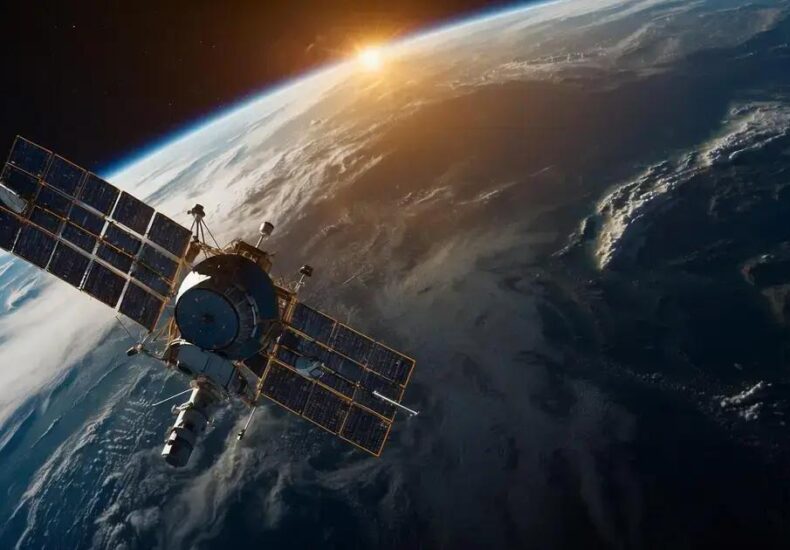
Protecting Satellites from Solar Radiation: New Methods and Challenges
Satellite Protection involves advanced materials, adaptive technologies, and international collaboration to shield satellites from harmful solar radiation, ensuring their longevity and operational stability during solar storms.
Satellite Protection faces growing challenges as solar radiation intensifies its impact on fragile space equipment. Have you ever wondered how satellites survive these harsh cosmic conditions? This article uncovers the latest insights and innovations that could redefine their resilience.
understanding solar radiation and its impact on satellites
Solar radiation consists of high-energy particles and electromagnetic waves emitted by the sun, including ultraviolet light, X-rays, and charged particles. When these particles reach satellites in orbit, they can cause various types of damage. This radiation can interfere with satellite electronics, degrade materials, and cause errors in onboard systems.
Types of Solar Radiation
The most impactful forms for satellites are solar proton events and coronal mass ejections (CMEs). These can generate intense bursts of particles that increase the radiation levels beyond normal solar wind, leading to temporary or permanent satellite malfunctions.
Impacts on Satellite Systems
High radiation can affect a satellite’s sensors, communication equipment, and onboard computers. Single-event upsets (SEUs) are common, causing bits of data to flip unexpectedly. Over time, cumulative radiation exposure also leads to material degradation, affecting solar panels and protective coatings, ultimately reducing satellite lifespan.
Orbit and Radiation Exposure
Satellites in low Earth orbit (LEO) experience less radiation than those in geostationary orbit (GEO) or beyond. However, the Earth’s magnetic field sometimes funnels charged particles into the Van Allen belts, creating zones of intense radiation that satellites may pass through, increasing risks during these periods.
traditional methods for shielding satellites
Traditional methods for shielding satellites primarily rely on physical barriers and material science to protect sensitive components from solar radiation. One common approach is using layers of aluminum shielding, which can block or reduce the impact of charged particles. This metal is lightweight and effective, making it widely used in spacecraft design.
Whipple Shields
Whipple shields are multi-layered barriers designed to absorb and dissipate the energy from high-speed particles. They typically consist of a thin outer layer that breaks up incoming micro-meteoroids and a thicker inner layer that stops debris, offering protection against radiation and space dust.
Coatings and Paints
Satellites also receive special coatings or paints that reflect harmful ultraviolet and charged particles. These coatings can help reduce surface degradation and thermal impacts caused by prolonged exposure to solar radiation.
Use of Radiation-Hardened Components
In addition to physical shields, satellites often incorporate radiation-hardened electronics. These components are specifically designed to resist damage from radiation, reducing errors and extending operational life.
Overall, traditional shielding methods combine physical materials with design strategies to manage radiation risks, but they have limitations against extreme solar events, which drives the search for more advanced solutions.
advancements in materials for radiation protection
Recent advancements in materials for radiation protection focus on creating lighter, stronger, and more adaptable solutions to shield satellites from harsh space environments. New composite materials combine metals with polymers to enhance durability while reducing weight.
Use of Nanomaterials
Nanomaterials such as carbon nanotubes and graphene offer exceptional strength and radiation resistance. These materials can be woven into protective layers that absorb and deflect harmful particles more efficiently than traditional metals.
Advanced Polymers and Coatings
Innovative polymers provide enhanced flexibility and resistance to ultraviolet radiation. When combined with reflective coatings, these materials help minimize heat absorption and surface degradation on satellites.
Self-Healing Materials
Some new materials have self-healing properties, enabling the satellite’s surface to recover from minor radiation damage automatically. This extends the operational lifespan and reduces the need for costly repairs or replacements.
Ongoing research seeks to integrate these materials into satellite designs, improving protection without compromising mission performance or adding excess weight.
adaptive technologies for dynamic solar events
Adaptive technologies are becoming crucial for protecting satellites during dynamic solar events like solar flares and coronal mass ejections. These technologies can detect changes in the solar environment and adjust shielding or operational modes in real-time to minimize damage.
Real-time Monitoring Systems
Satellites can be equipped with sensors that continuously monitor solar radiation levels. When intense activity is detected, automatic protective measures can activate, such as powering down vulnerable systems or adjusting orientation to reduce exposure.
Magnetic Shielding Techniques
Emerging technologies explore generating localized magnetic fields around satellites to deflect charged solar particles. These magnetic shields mimic Earth’s magnetosphere and provide dynamic protection against radiation bursts.
Software-Based Error Correction
Adaptive software algorithms detect and correct errors in satellite systems caused by radiation in real time. This approach reduces the impact of single-event upsets and helps maintain system stability during solar storms.
Integrating these adaptive technologies allows satellites to respond flexibly to unpredictable solar radiation, improving their resilience and operational lifespan.
challenges in predicting solar radiation spikes
Predicting solar radiation spikes remains a significant challenge due to the unpredictable nature of solar activity. Solar flares and coronal mass ejections can occur suddenly, making it difficult to provide accurate warnings.
Complex Solar Dynamics
The sun’s magnetic field is highly complex and constantly changing. This complexity affects how and when solar radiation bursts occur. Scientists use models, but solar dynamics can change rapidly, limiting prediction accuracy.
Limitations of Current Monitoring
Satellites and observatories track solar behavior, but they face limitations in real-time data processing and coverage. Gaps in data and delays in transmission can hinder timely predictions.
Impact on Satellite Operations
Because solar radiation spikes can be hard to anticipate, satellites face risks of sudden exposure. This unpredictability requires satellites to have robust shielding and adaptive systems to mitigate damage during unexpected events.
Improving prediction methods is vital for enhancing satellite safety, but challenges remain in understanding and forecasting the sun’s complex behavior.
international collaboration in satellite protection
International collaboration plays a key role in enhancing satellite protection from solar radiation. Space agencies and private companies across the globe share data and resources to better understand solar events and develop advanced protection strategies.
Global Data Sharing Networks
Collaborative efforts allow the creation of real-time monitoring networks, combining information from satellites and ground stations worldwide. This data-sharing is vital for timely alerts and improved prediction of solar radiation spikes.
Joint Research and Development
Countries often co-invest in research projects that explore new materials and technologies for satellite shielding. This joint development accelerates innovation and lowers costs, benefiting all participants.
Standardizing Protection Protocols
International bodies are working to establish common standards and protocols for satellite design and operation during solar storms. This harmonization ensures satellites from different countries maintain resilience and interoperable defenses.
These global collaborations strengthen space safety, ensuring that satellites worldwide have improved defenses against the unpredictable solar radiation environment.
case studies of satellite damage and recovery
There have been notable cases where satellites were damaged by solar radiation but managed to recover or continue functioning thanks to protective measures.
Case Study: The Galaxy 15 Satellite
In 2010, the Galaxy 15 satellite experienced a temporary failure due to increased solar activity. Despite the disruption, operators used remote commands to reboot and stabilize the satellite, highlighting the importance of adaptive recovery protocols.
Case Study: The European Space Agency’s Cluster II
This mission consists of four satellites studying Earth’s magnetosphere. They have faced multiple solar storms and relied on radiation-hardened components that allowed them to maintain operational integrity during intense solar events.
Lessons Learned
These examples show that while solar radiation can cause severe damage, a combination of robust design, real-time monitoring, and quick response can aid in satellite recovery and prolong mission life.
future trends in satellite shielding technology
Future trends in satellite shielding technology focus on making protection smarter, lighter, and more adaptive. Innovations aim to enhance satellite resilience against increasingly intense solar radiation.
Smart Materials
Researchers are developing smart materials that can change properties in response to radiation levels. These materials could become more reflective or absorbent depending on the threat, offering dynamic protection.
Active Shielding Systems
Active shielding, such as deployable electromagnetic fields, may provide an advanced defense by deflecting charged particles away from sensitive satellite components.
Integration of AI and Machine Learning
AI-driven systems will enhance the ability to predict solar events and adjust shielding instantly. This real-time adaptive response reduces risk and optimizes satellite performance during solar storms.
Continuous innovation in satellite shielding technology promises safer, longer-lasting satellites capable of handling harsh space environments.
Protecting Satellites for a Safer Future in Space
Solar radiation poses ongoing challenges to satellite functionality and safety. Through advancements in materials, adaptive technologies, and international collaboration, satellite protection continues to improve.
By investing in smart shielding systems and real-time responses, we can ensure satellites last longer and perform better, even during intense solar events. Understanding and addressing these challenges is key to maintaining the many services satellites provide us every day.
As technology evolves, so will our ability to shield satellites effectively, securing their role in communication, navigation, and scientific discovery for years to come.
FAQ – Common Questions About Satellite Protection from Solar Radiation
What types of solar radiation affect satellites the most?
Satellites are mainly affected by solar proton events and coronal mass ejections, which deliver intense bursts of high-energy particles.
How do traditional shielding methods protect satellites?
Traditional methods use aluminum layers, Whipple shields, special coatings, and radiation-hardened components to block and reduce radiation damage.
What are adaptive technologies in satellite protection?
Adaptive technologies include real-time sensors, magnetic shielding, and software error correction that help satellites respond dynamically to solar radiation spikes.
Why is international collaboration important for satellite protection?
Sharing data, research, and standards worldwide improves solar event prediction and enhances satellite shielding technologies globally.
Can satellites recover after solar radiation damage?
Yes, with robust design and adaptive protocols, some satellites can reboot, correct errors, or continue operating after solar radiation exposure.
What future trends will improve satellite radiation protection?
Smart materials, active electromagnetic shields, and AI-driven adaptive responses are key trends for more effective and flexible satellite protection.
You may also like




Leave a Reply