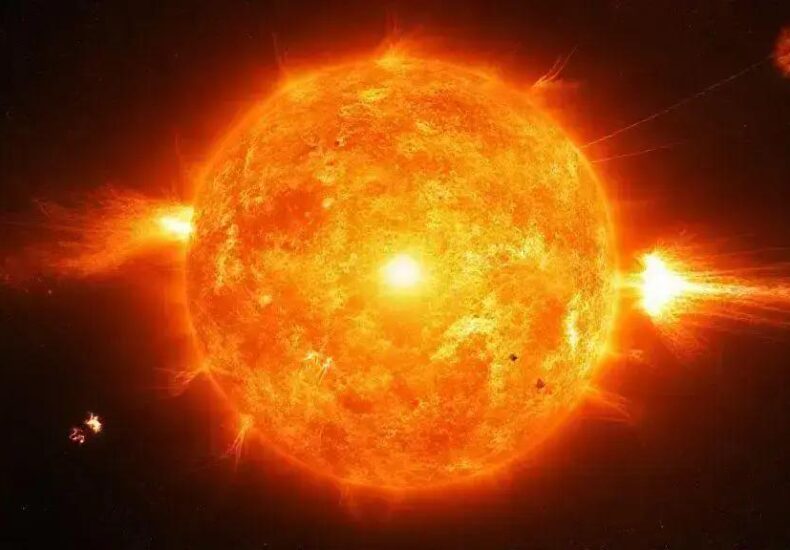
Scientists Predict Solar Storm 15 Hours Ahead of Time: A Breakthrough
Recent advancements in solar storm prediction allow warnings up to 15 hours in advance, enhancing preparedness for Earth and space impacts. The Solar Orbiter plays a key role, while improved technologies, AI, and international collaboration lead to more accurate monitoring and safety measures.
Have you ever wondered how we could get a warning before a solar storm hits Earth? Well, thanks to new advances in solar storm prediction, scientists have done just that! Let’s explore this fantastic progress.
Breakthrough in Solar Storm Prediction
Recent advances in solar storm prediction are making a big difference. Scientists can now forecast solar storms up to 15 hours in advance. This is a huge leap from previous methods, which often provided little to no warning. With better predictions, we can prepare for the impacts of these storms on Earth. Solar storms can disrupt power grids and communication systems. They can even affect satellite operations. With timely warnings, we can take action to minimize these disruptions.
So, how did we get here? The key is the Solar Orbiter spacecraft. It’s equipped with amazing tools to observe the Sun closely. This spacecraft can capture data about solar activity. It helps scientists understand when solar storms are likely to occur. As a result, we get faster and more accurate predictions. This breakthrough is exciting for space weather forecasting!
How the Solar Orbiter Made It Possible
The Solar Orbiter has changed the way we understand solar storms. This spacecraft launched in 2020. It’s built to study the Sun closely. With its advanced technology, the Solar Orbiter can capture images of solar flares and wind. These features help scientists see what’s happening on the Sun in real time.
One key tool onboard is the European Space Agency’s (ESA) instruments. They gather data about solar activity. By monitoring the Sun’s magnetic field and radiation, researchers learn how solar storms form. This information is crucial for making accurate predictions.
Another important aspect is its unique orbit. The Solar Orbiter travels close to the Sun. This allows it to observe solar phenomena from various angles. As it gets closer, the data collected gets richer and more useful. Combining this data with Earth-based observations improves our forecasting abilities.
Implications for Earth and Space Weather Preparedness
The improvements in solar storm prediction have big implications for both Earth and space weather. With better forecasts, we can prepare for solar storms ahead of time. This is essential because these storms can disrupt our daily lives. For example, they can cause power outages and affect satellite communications. Knowing when a storm is coming helps mitigate these issues.
One major concern is the impact on power grids. Solar storms can create strong magnetic fields. These fields can cause power surges or outages. Utilities can take precautions to protect the grid. They can check and reinforce infrastructure based on solar weather alerts.
There’s also a risk for astronauts and space missions. Increased solar activity can lead to harmful radiation exposure. By predicting solar storms, agencies can schedule spacewalks and missions safely. This helps keep astronauts safe while they work in space.
In short, being ready for solar storms benefits everyone. With early warnings, we can protect technology and human lives. Better preparation is key to handling any space weather challenges.
Future of Solar Storm Monitoring
The future of solar storm monitoring looks bright and promising. With new technology, we can expect even better predictions. As science advances, we’ll rely more on data from various sources. This includes satellites, ground-based stations, and new spacecraft like the Solar Orbiter.
One exciting development is the use of artificial intelligence (AI). AI can analyze huge amounts of data quickly. This means we can spot patterns in solar activity sooner. With faster analysis, scientists can issue warnings much quicker than before.
Another aspect is international cooperation. Countries around the world are working together. They share data and findings to improve solar storm forecasts. By combining resources, everyone benefits from better preparedness.
Scientists are also looking into more advanced models. These models will help predict how storms interact with Earth’s atmosphere. A clearer understanding will lead to better safety measures.
In short, the future holds many exciting possibilities for solar storm monitoring. With technology and teamwork, we can stay one step ahead of solar activity.
You may also like



Leave a Reply