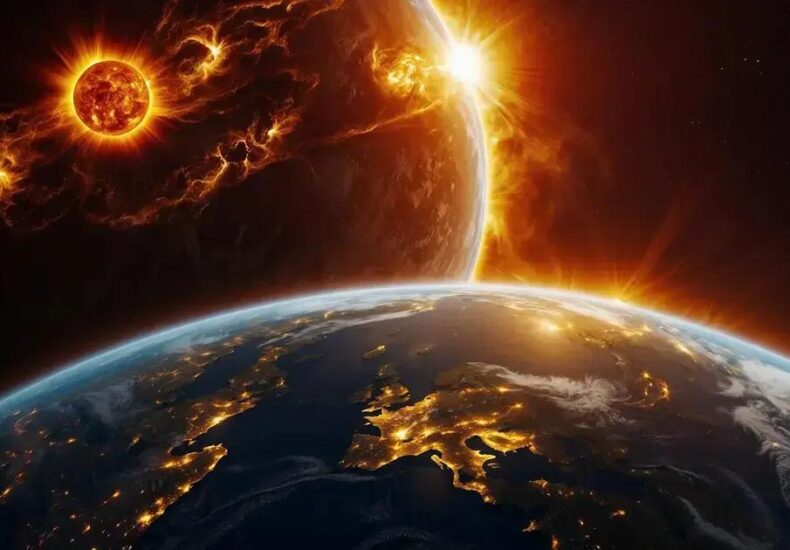
What Is a Solar Storm? Understanding the Basics
A solar storm is a burst of charged particles and electromagnetic energy from the sun that disrupts Earth’s magnetic field, impacting power grids, communication systems, and satellites.
Solar Storm might sound like science fiction, but it’s very real and can shake up our tech-dependent world. Have you ever wondered how these powerful bursts from the sun affect your smartphone or power grid? Stick around to get to know what’s happening up there and why it matters down here.
what is a solar storm and how it forms
A solar storm begins with the sun’s energetic activity, primarily through solar flares and coronal mass ejections (CMEs). These events release vast amounts of charged particles and electromagnetic energy into space. Solar flares are sudden bursts of radiation caused by magnetic energy released from sunspots, while CMEs involve massive clouds of solar plasma being ejected at high speeds.
When these particles and energy reach Earth, they interact with the planet’s magnetic field and atmosphere, causing disturbances. The sun’s complex magnetic field twists and snaps, releasing energy in the form of solar storms. This process is powered by magnetic reconnection, where magnetic field lines suddenly realign and release energy.
Typically, a solar storm forms over several minutes to hours, starting with a flare followed by a CME. The speed and impact depend on the sun’s current activity cycle, which peaks approximately every 11 years. During these peaks, solar storms become more frequent and intense.
Understanding how a solar storm forms is key to predicting its potential effects on Earth. Scientists monitor the sun’s surface using satellites to observe sunspots and flares that could trigger these storms, helping prepare for their impact on communication systems, power grids, and satellites.
types of solar storms and their characteristics
There are several main types of solar storms, each with unique characteristics and effects. The most common are solar flares, coronal mass ejections (CMEs), and geomagnetic storms.
Solar flares are intense bursts of radiation caused by the release of magnetic energy in the sun’s atmosphere. They produce high-energy X-rays and ultraviolet light that can impact Earth’s ionosphere, affecting radio communication and GPS signals.
Coronal mass ejections (CMEs) involve the ejection of large clouds of solar plasma and magnetic fields into space. CMEs travel slower than solar flares but carry more mass and energy. When they collide with Earth’s magnetic field, they can cause strong geomagnetic storms.
Geomagnetic storms occur when CMEs or high-speed solar wind streams interact with Earth’s magnetosphere. These storms can disrupt power grids, satellites, and navigation systems, and also create vivid auroras near the poles.
Other related solar phenomena include solar proton events, where high-energy protons from the sun pose a radiation risk to astronauts and high-altitude flights. Each type varies in intensity and duration, making continuous monitoring essential.
Understanding these different types of solar storms helps scientists predict possible disruptions and protect technology and infrastructure on Earth.
how solar storms affect earth’s magnetic field
Solar storms directly impact Earth’s magnetic field, also known as the magnetosphere, which protects us from harmful solar and cosmic radiation. When charged particles from the sun arrive during a solar storm, they can disturb the magnetosphere, causing it to fluctuate and become unstable.
This disturbance is called a geomagnetic storm. It happens when the solar wind compresses and moves the magnetic field lines. The energy and particles entering Earth’s space environment can cause magnetic reconnection, releasing additional energy and shaking the magnetic field.
These effects can lead to temporary changes in Earth’s magnetic field strength and orientation. Such variations may last from hours to days, depending on the storm’s size and intensity.
Strong geomagnetic storms can create spectacular auroras near the poles by exciting atmospheric particles. However, they can also induce electric currents on the ground, affecting power grids and pipelines.
Scientists monitor these changes closely to predict impacts on navigation systems, satellite operations, and communication networks, which rely on a stable magnetic environment.
impacts of solar storms on technology and daily life
Solar storms can have significant effects on modern technology and everyday life. When solar particles interact with Earth’s magnetic field, they can cause disruptions in satellite operations, affecting GPS navigation, television signals, and communication networks.
Power grids are particularly vulnerable; strong geomagnetic storms can induce electric currents in power lines, potentially leading to widespread blackouts. This risk means utilities must monitor solar activity closely and prepare mitigation strategies.
High-frequency radio communications used by airlines, ships, and emergency services can be blocked or distorted during solar storm events, impacting safety and operations. Additionally, astronauts and passengers on high-altitude flights may be exposed to increased radiation during intense solar storms.
Electronic devices relying on satellite data or wireless signals may experience temporary glitches or failures. Even pipelines can be affected as induced currents accelerate corrosion, leading to maintenance issues.
Understanding these impacts is crucial to improving technology resilience and developing early-warning systems that help minimize inconvenience and protect critical infrastructure during solar storms.
solar storms and their influence on communication systems
Solar storms have a strong influence on communication systems here on Earth. When a solar storm occurs, it releases charged particles and electromagnetic radiation that can disrupt radio signals and satellite communications.
High-frequency radio waves, which are commonly used for long-distance communication by airlines, ships, and emergency responders, can be absorbed or scattered by the ionosphere during a solar storm. This leads to signal fading or total radio blackouts, especially in polar regions.
Satellite signals can also be affected as charged particles interfere with satellite electronics and navigation systems like GPS. This interference causes inaccuracies in positioning and timing services, impacting transportation and military operations.
Communication satellites may suffer from temporary outages or degradation due to increased radiation. This can interrupt television broadcasts, internet services, and phone calls. Ground-based communication infrastructure relying on satellite links may also experience delays.
To minimize these impacts, operators monitor solar activity and implement protective measures like putting satellites into safe mode during intense storm periods. Understanding the connection between solar storms and communication helps improve the reliability of these essential systems.
preparing for solar storms: what you can do
Preparing for solar storms involves understanding their potential impact and taking practical steps to reduce risks. Since solar storms can disrupt power grids, communication, and navigation systems, being ready can help minimize inconvenience and damage.
Stay informed by following space weather forecasts from reliable sources like NOAA or NASA. These organizations provide updates that can help you anticipate solar storm activity.
For individuals, having backup power supplies, such as generators or charged power banks, is useful during possible power outages. Protect sensitive electronics by unplugging them during strong solar storm warnings to avoid damage from power surges.
Communicate with your workplace or local authorities about emergency plans that consider solar storm events, especially if you rely on GPS or radio communication for safety.
Businesses and utilities must implement protective measures such as installing surge protectors on critical infrastructure, reinforcing power grids, and developing rapid response strategies for geomagnetic storms.
By staying informed and taking precautions, you can reduce the solar storm’s impact on your daily life and infrastructure.
historical solar storms and their effects
Historical solar storms have shown just how powerful and disruptive these natural events can be. One of the most famous is the Carrington Event of 1859, the largest recorded solar storm. It caused widespread telegraph system failures, fires, and stunning auroras visible even near the equator.
In 1989, a solar storm caused a major blackout in Quebec, Canada, leaving millions without power for hours. This event highlighted the vulnerability of modern electrical grids to solar activity.
Other storms, like those in 1921 and 2003, also caused significant disruptions to radio communications and satellite operations. These historical events demonstrate that as our reliance on technology grows, the impact of solar storms can become more severe.
Studying past solar storms helps scientists improve prediction methods and prepare for future events. Understanding their effects aids in designing better protective measures for power grids, satellites, and communication systems.
monitoring solar activity: tools and techniques
Monitoring solar activity is essential for predicting solar storms and protecting Earth’s technology. Scientists use a variety of tools and techniques to watch the sun’s behavior closely.
Space-based observatories like the Solar and Heliospheric Observatory (SOHO) and the Solar Dynamics Observatory (SDO) provide continuous images and data about solar flares, sunspots, and coronal mass ejections (CMEs). These satellites capture detailed views of the sun’s surface and atmosphere.
Ground-based solar telescopes also track sunspots and other solar phenomena. Using special filters, these telescopes observe the sun’s magnetic fields and surface changes, which help predict potential solar storms.
Scientists analyze data from solar wind sensors that measure the speed, density, and magnetic properties of solar particles moving through space. This information helps forecast the timing and intensity of geomagnetic storms.
Software and modeling tools then simulate how solar activity will interact with Earth’s magnetic field. These models assist in issuing early warnings to power companies, satellite operators, and aviation authorities.
future research and challenges in solar storm prediction
Future research in solar storm prediction focuses on improving accuracy and lead time to better protect technology and infrastructure. Despite advances, predicting solar storms remains challenging due to the sun’s complex behavior and the vast space between the sun and Earth.
One key challenge is understanding the sun’s magnetic fields in greater detail. Researchers use advanced satellites and simulations to study magnetic reconnection and how solar flares and CMEs evolve.
Improving models that forecast a solar storm’s strength and arrival time is crucial. Current forecasts provide rough estimates but can be refined by integrating data from multiple satellites and ground-based observatories.
Another important area is developing better early-warning systems. These systems aim to give stakeholders, such as power utilities and satellite operators, more time to respond and mitigate damage.
Collaboration among international space agencies and continuous investment in solar research are essential to overcome these obstacles. The ultimate goal is to reduce the risks solar storms pose to modern life through more reliable and timely predictions.
Understanding solar storms and why they matter
Solar storms are powerful natural events that can affect our technology and daily life. By learning how they form, their types, and the ways they impact Earth, we can better prepare and protect ourselves.
Ongoing research and improved monitoring tools help scientists predict solar storms more accurately. This allows governments, industries, and individuals to take precautions and reduce possible damage.
Staying informed and aware of solar storm risks is key to minimizing their effects on communication, power, and navigation systems. As our dependence on technology grows, so does the importance of understanding these solar phenomena.
By working together and investing in better prediction methods, we can face the challenges of solar storms and keep our modern world safe and connected.
You may also like

Leave a Reply