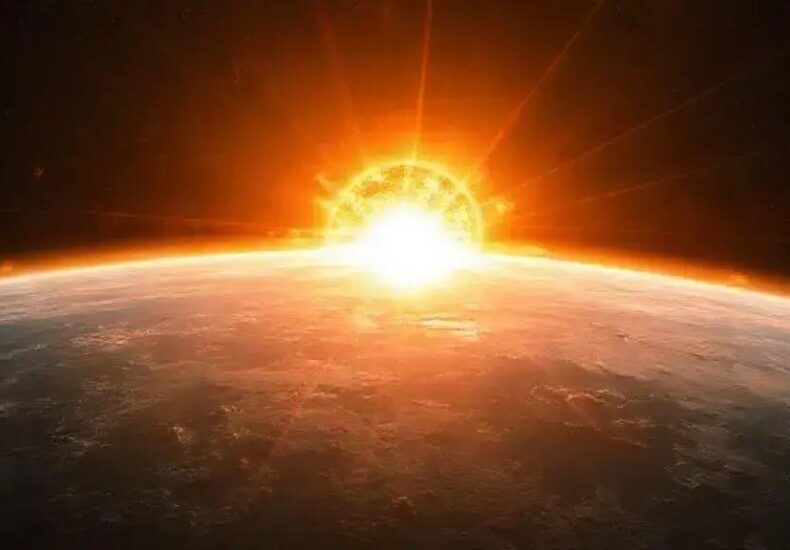
Space Weather 101: The Foundations of Solar Activity Forecasting
Space Weather 101 explains solar activity phenomena like solar flares and coronal mass ejections, and how forecasting these events protects Earth’s technology and infrastructure through advanced observation tools and predictive models.
Space Weather 101 opens the door to the fascinating world of solar activity and its effects on Earth. Ever wondered how solar storms can disrupt daily life or why scientists track the sun’s every move? Let’s dive into these rhythms from the sun and what they mean for us.
understanding space weather basics
Space weather refers to the changing environmental conditions in space caused by the sun’s activity. These conditions include solar flares, solar wind, and coronal mass ejections, which can affect the Earth’s magnetic field and atmosphere. Understanding these basics is essential because space weather can impact satellites, communication systems, and even power grids on Earth.
Key components of space weather
Solar flares are intense bursts of radiation from the sun’s surface that can disrupt radio communications. The solar wind is a continuous flow of charged particles released from the sun’s corona, which shapes the Earth’s magnetosphere. Coronal mass ejections (CMEs) are massive bursts of solar material and magnetic fields that can cause geomagnetic storms when they collide with Earth’s magnetic field.
Why space weather matters
Space weather events can damage satellite electronics, degrade GPS navigation, and increase radiation risks for astronauts and high-altitude flights. They also impact terrestrial technologies—strong geomagnetic storms can overload power systems and cause widespread outages.
By grasping the fundamentals of space weather, we gain insight into the dynamic relationship between the sun and our planet, helping us prepare for and mitigate its effects.
key solar phenomena influencing earth
The sun emits several key phenomena that directly influence the Earth’s space weather environment. Among these phenomena, solar flares, coronal mass ejections (CMEs), and solar wind are the most significant.
Solar flares
Solar flares are sudden bursts of intense radiation caused by magnetic energy released from the sun’s atmosphere. These flares emit X-rays and ultraviolet radiation that can interfere with radio signals and satellite communications on Earth.
Coronal mass ejections (CMEs)
CMEs are enormous bubbles of gas threaded with magnetic field lines ejected from the sun’s corona. When these reach Earth, they can cause geomagnetic storms that affect power grids, disrupt GPS systems, and create vivid auroras in the polar regions.
Solar wind
The solar wind is a steady flow of charged particles released from the sun’s corona. This stream of particles shapes the Earth’s magnetosphere and can intensify during solar storms, increasing the effects of geomagnetic activity.
Understanding these solar phenomena helps scientists predict space weather and mitigate its impacts on technology and daily life.
tools used for forecasting solar activity
Forecasting solar activity relies on several advanced tools designed to monitor and predict changes in the sun’s behavior. These tools help scientists understand solar dynamics and provide warnings about space weather events.
Solar observatories and satellites
Space-based observatories like the Solar and Heliospheric Observatory (SOHO) and the Solar Dynamics Observatory (SDO) continuously observe the sun in multiple wavelengths. These satellites provide real-time data on solar flares, sunspots, and coronal mass ejections.
Ground-based observatories
Observatories on Earth track solar activity patterns using specialized telescopes that observe the sun’s surface and magnetic fields. These measurements offer important data to complement space-based observations.
Magnetometers and solar wind sensors
Magnetometers measure changes in Earth’s magnetic field influenced by solar activity, while solar wind sensors aboard satellites detect the speed and density of charged particles emitted by the sun. Together, they provide key indicators of approaching solar storms.
Computer models and forecasting algorithms
Scientists use complex computer models to simulate solar activity and its effects on Earth’s magnetosphere. These models predict when solar storms might hit and their potential intensity, helping to prepare for any impacts.
These tools combined enable accurate forecasting of solar activity, which is essential for protecting technology and infrastructure on Earth.
impact of solar storms on technology
Solar storms, caused by bursts of solar energy like coronal mass ejections and solar flares, can disrupt various technologies on Earth. When charged particles from the sun hit Earth’s magnetic field, they can induce electrical currents that affect technological systems.
Effect on satellites and communications
Satellites can be damaged by high-energy particles, leading to malfunction or loss of service. This affects GPS navigation, TV broadcasts, and internet connectivity globally. Communication signals, especially radio waves, may be blocked or distorted during strong solar storms.
Risks to power grids
Power grids are vulnerable to geomagnetically induced currents caused by solar storms. These currents can overload transformers and other infrastructure, sometimes causing blackouts or permanent damage. One famous example is the 1989 Quebec blackout triggered by a severe solar storm.
Impacts on aviation and astronauts
High-altitude flights over polar regions face increased radiation levels during solar storms, posing health risks to crew and passengers. Astronauts in space are also exposed to heightened radiation, which requires special protection measures.
Understanding the impact of solar storms is critical for developing strategies to protect technology and ensure safety in our modern world.
data sources for space weather prediction
Space weather prediction relies on various data sources that provide real-time and historical information about solar activity and its effects on Earth. These sources are crucial for creating accurate forecasts and warnings.
Satellites monitoring the sun
Solar observation satellites like SOHO and SDO deliver continuous data on solar flares, sunspots, and coronal mass ejections. They capture images and measurements in different wavelengths, offering insights into the sun’s behavior.
Ground-based observatories
These observatories use telescopes and magnetometers to measure solar activity and Earth’s magnetic field changes. Their data helps verify and supplement satellite observations, improving prediction accuracy.
Space weather monitoring networks
Networks like NOAA’s Space Weather Prediction Center gather and analyze data from various instruments and satellites to provide comprehensive monitoring. They track solar wind parameters, geomagnetic activity, and radiation levels.
Historical data archives
Past records of solar cycles, flare occurrences, and geomagnetic storms contribute to understanding long-term patterns. This helps scientists develop models that predict future space weather events more reliably.
The combination of these diverse data sources enables more precise and timely space weather forecasts, essential for protecting technology and infrastructure.
challenges in predicting solar events
Predicting solar events comes with many challenges due to the sun’s complex and dynamic nature. Solar activity is influenced by magnetic fields that change unpredictably, making it difficult to forecast exact timings and intensities.
Unpredictable solar magnetic activity
The sun’s magnetic field is highly tangled and constantly shifting. This complexity makes it tough to model how and when solar flares or coronal mass ejections will occur.
Limitations of observation tools
While satellites and observatories provide valuable data, there are gaps in coverage and resolution limits. Sometimes, key events start on parts of the sun not visible from Earth, reducing forecasting accuracy.
Complex data interpretation
Interpreting solar data requires advanced models that combine physics and computer science. These models must account for many variables, leading to uncertainties in predictions.
Short warning times
Some solar events happen suddenly and can reach Earth within hours, leaving little time for preparation. This makes timely alerts a major challenge for space weather forecasting.
Ongoing research aims to improve prediction methods by enhancing observational technology and refining computer models, but uncertainties remain significant.
history of solar activity research
The study of solar activity dates back centuries, with early observations focused on sunspots and their patterns. In the 17th century, Galileo Galilei was among the first to use a telescope to document sunspots, marking the beginning of systematic solar research.
Development of sunspot cycles
Heinrich Schwabe discovered the approximately 11-year sunspot cycle in the 19th century, revealing that solar activity rises and falls over regular periods. This breakthrough helped scientists understand that solar phenomena are not random but follow predictable patterns.
Advances in solar observation technology
With the advent of spectroscopy and photography in the late 1800s and 1900s, researchers could analyze the sun’s composition and dynamics in greater detail. This led to the identification of solar flares and prominences.
Space era contributions
The launch of satellites in the mid-20th century revolutionized solar research. Space-based observatories like SOHO and SDO provide continuous, detailed data on solar activity that ground-based instruments alone cannot capture.
Ongoing research continues to unlock the mysteries of solar behavior, improving our ability to forecast space weather and protect our technological infrastructure.
practical steps to monitor space weather
Monitoring space weather requires consistent observation and the use of accessible tools to stay informed about solar activity and its potential impacts.
Using space weather websites and apps
Many organizations provide real-time space weather updates through websites and mobile apps. The NOAA Space Weather Prediction Center and NASA offer comprehensive forecasts and alerts that anyone can access.
Setting up alerts
Users can subscribe to notifications for solar flares, geomagnetic storms, and other significant solar events. These alerts help individuals and organizations prepare for possible disruptions.
Observing solar activity
Amateur astronomers and enthusiasts can track sunspots and solar flares using solar telescopes or online solar observation platforms. This hands-on approach deepens understanding of space weather phenomena.
Following official reports
Government agencies and space weather centers publish regular reports and bulletins. Keeping up with these official communications ensures access to the latest scientific data and safety recommendations.
By taking these practical steps, people can stay aware of space weather conditions and minimize the effects on technology and daily life.
future trends in solar forecasting technology
The future of solar forecasting technology is bright, driven by advances that improve the accuracy, timeliness, and scope of space weather predictions.
Artificial intelligence and machine learning
AI and machine learning are increasingly used to analyze vast amounts of solar data. These technologies help identify patterns and predict solar events faster and more accurately than traditional methods.
Enhanced space-based observatories
Next-generation satellites will carry more sensitive instruments capable of capturing detailed images and measurements of the sun’s activity. This will provide earlier warnings and better tracking of solar storms.
Integration of big data and modeling
The combination of big data analysis and sophisticated computer models will enable simulations that consider more variables and complex solar interactions. These improvements will refine forecasts and risk assessments.
Real-time global monitoring networks
Expanding networks of ground and space-based sensors will offer continuous, worldwide coverage. This will reduce blind spots and increase the reliability of space weather alerts.
Overall, these trends promise to enhance our ability to predict solar activity, helping to protect technology and human activities from space weather impacts.
Understanding and Preparing for Space Weather
Space weather has a strong effect on our technology and daily life. By learning about solar activity and using advanced forecasting tools, we can better prepare for solar storms and their impacts.
Ongoing research and new technologies are making space weather predictions more accurate and timely. This helps protect satellites, power grids, and communication systems from unexpected disruptions.
Staying informed and using practical monitoring steps empowers individuals and organizations to respond quickly to space weather events. As our world becomes more connected, understanding space weather is more important than ever.
FAQ – Space Weather 101: Solar Activity Forecasting
What is space weather?
Space weather refers to the environmental conditions in space caused by the sun’s activity, including solar flares, solar wind, and coronal mass ejections that affect Earth.
Why is forecasting solar activity important?
Forecasting solar activity helps protect satellites, power grids, communication systems, and astronauts from the harmful effects of solar storms.
What tools are used to predict solar activity?
Satellites like SOHO and SDO, ground-based observatories, magnetometers, solar wind sensors, and computer models are key tools used for forecasting solar activity.
How do solar storms impact technology on Earth?
Solar storms can disrupt satellite operations, GPS navigation, radio communications, and even cause power grid failures or blackouts.
What challenges exist in predicting solar events?
Challenges include the sun’s complex magnetic activity, limited observation coverage, difficulties in interpreting data, and short warning times for solar storms.
How can individuals monitor space weather?
People can monitor space weather using websites and apps from organizations like NOAA and NASA, subscribing to alerts, and following official reports and data sources.
You may also like

Leave a Reply