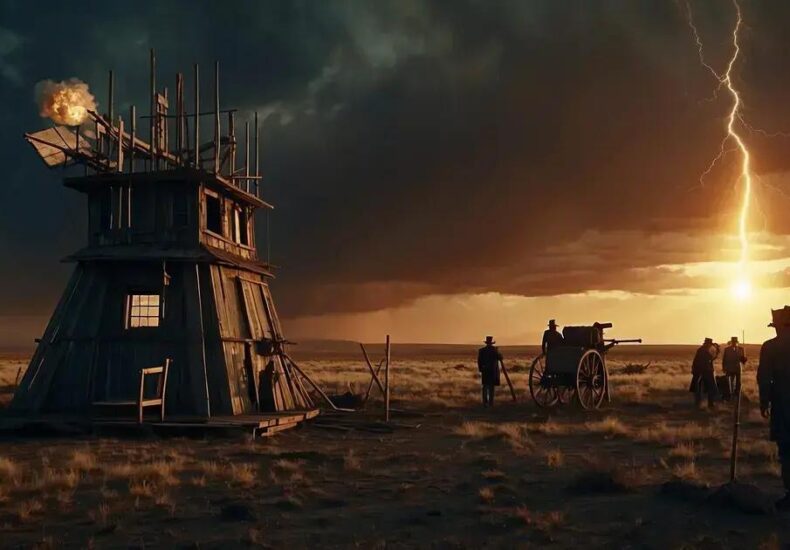
Telegraph Era Shock: Early Encounters with Solar-Induced Failures
Telegraph failures during the 19th century were caused by solar storms inducing electrical currents that disrupted communication lines, revealing early risks of space weather that still impact modern technology and communication systems today.
Telegraph Failures offer a fascinating glimpse into the early challenges faced by mankind as technology met nature’s unpredictability. Ever wondered how solar storms could literally throw the world’s first global network offline?
how the telegraph revolutionized communication
The telegraph was a groundbreaking invention that transformed communication by allowing messages to be sent over long distances almost instantly. Before the telegraph, information traveled only as fast as a horse or a ship could carry it, which could take days or even weeks. The telegraph changed this by using electrical signals transmitted through wires, enabling rapid exchanges across cities and countries.
Impact on Society and Business
The telegraph connected people and businesses in ways never seen before. News could be shared quickly, markets reacted faster, and governments communicated more efficiently. This rapid spread of information contributed to economic growth and political coordination on a global scale.
Technical Innovations
The development of Morse code was essential in the telegraph’s success. It provided a simple yet effective way to encode messages into dots and dashes, which operators could send and interpret with accuracy. Telegraph lines stretched across continents and even under oceans, laying the foundation for modern communication networks.
Challenges and Limitations
Despite its revolutionary nature, the telegraph faced challenges, such as the need for extensive infrastructure and skilled operators. It was also vulnerable to certain environmental factors, which would later be understood as solar-induced disturbances. Still, its introduction marked a significant leap forward, paving the way for technologies that followed.
understanding solar storms and their effects
Solar storms are powerful bursts of energy and particles released from the sun’s surface. When these storms reach Earth, they interact with our planet’s magnetic field, causing disturbances known as geomagnetic storms. These events can disrupt electronic systems and communication networks.
Types of Solar Storms
Solar flares are sudden flashes of brightness caused by magnetic energy release. Another major component is coronal mass ejections (CMEs), large clouds of charged particles hurled into space. Both play significant roles in creating solar storms that affect Earth.
Effects on Earth
When solar storms reach Earth, they can generate intense electric currents in power lines and telecommunication cables. This can lead to signal interference, equipment damage, and system failures. The northern and southern lights, or auroras, are visible evidence of such geomagnetic activity.
Historical Impact
In the 19th century, solar storms were not well understood but had noticeable effects on telegraph systems. Operators reported sparks and unexpected voltages, showing how solar activity could directly interfere with technology of the time.
Understanding solar storms remains crucial today for protecting our satellite systems, power grids, and communication infrastructure from similar disruptions.
notable telegraph failures linked to solar activity
During the 19th century, several unexpected telegraph failures were traced back to solar activity, revealing a surprising link between nature and technology. One of the most famous incidents occurred during the Carrington Event of 1859, the largest recorded solar storm. Telegraph systems across Europe and North America experienced severe disruptions.
The Carrington Event Impact
Operators reported telegraph wires sparking, some even receiving electric shocks, while messages were sent without batteries due to the strong induced currents from the storm. Several telegraph offices saw equipment damage and temporary system failures.
Other Recorded Failures
Smaller solar storms also caused issues like message garbling, delays, and outages. These incidents alarmed operators and scientists, who began to realize that the sun’s activity could influence earthbound technologies in unexpected ways.
Legacy on Modern Understanding
Such failures helped spark interest in studying solar-terrestrial interactions. They showed early on that solar storms can induce electrical currents in long metal wires, disrupting communication. This understanding paved the way for better designing resilient technology systems.
These historical events remain key examples of how natural phenomena directly affected human inventions, and they remind us of ongoing risks solar storms pose to our modern electronic infrastructure.
scientific insights gained from these early failures
The early telegraph failures caused by solar storms provided valuable scientific insights into the relationship between the sun and Earth’s magnetic environment. Researchers began to understand that solar activity could induce strong electrical currents in long conductors like telegraph wires, leading to system disruptions.
Discovery of Geomagnetic Storms
These failures helped scientists realize the existence of geomagnetic storms, which occur when solar wind disturbs Earth’s magnetic field. Tracking these storms showed a direct connection between solar flares and technological effects on Earth.
Development of Space Weather Science
The study of telegraph failures laid the groundwork for the modern field of space weather. Scientists started monitoring solar activity to predict its impacts, aiming to safeguard electrical and communication systems. This early research also influenced how engineers designed more resilient infrastructure.
Improved Understanding of Electrical Currents
The incidents revealed how induced currents could flow through grounded systems, providing a better grasp of electromagnetic induction. This knowledge enhanced the design of cables and systems to reduce vulnerability to natural electrical disturbances.
Overall, these early lessons from solar-induced telegraph failures were key in recognizing the sun as an active force impacting Earth’s technology and environment.
lessons learned shaping modern technology resilience
The early telegraph failures from solar storms taught important lessons that have shaped how modern technologies are designed to handle extreme conditions. Engineers learned that long cables and electronic systems are vulnerable to natural electrical disturbances like geomagnetic storms.
Designing for resilience
Modern communication networks incorporate measures such as shielding, grounding, and surge protectors to minimize damage from induced currents. These principles trace back to observations made during telegraph disruptions in the 1800s.
Monitoring Space Weather
Today, space weather forecasting is a critical part of protecting power grids and satellites. By predicting solar storms, organizations can take preventive action—like temporarily shutting down vulnerable systems—to reduce risks.
Backup Systems and Redundancy
Redundancy in networks ensures communication continues even if some components fail. Redundant power supplies, alternative routing paths, and robust materials are strategies inspired by early technology failures.
These lessons emphasize the need to blend innovation with caution, ensuring our technology remains reliable despite nature’s unpredictable power.
how solar events still impact communication today
Solar events continue to impact communication systems in many ways today. Despite advances in technology, powerful solar storms can still disrupt satellite signals, GPS navigation, and radio communications. These effects emphasize the ongoing vulnerability of our modern infrastructure.
Effects on Satellites and GPS
Solar radiation can cause disturbances in satellites’ electronics, leading to errors or temporary outages. GPS accuracy may degrade during intense solar activity, affecting navigation for planes, ships, and even smartphones.
Radio Communication Disruptions
Solar flares can create sudden ionospheric disturbances, which block or degrade high-frequency radio waves. This interference affects aviation, emergency services, and maritime communications that rely on radio signals.
Power Grid Risks
Geomagnetic storms induced by solar activity can create strong electric currents in power lines, risking blackouts or equipment damage. Many power companies now monitor space weather closely to take preventive measures.
Understanding these impacts encourages continuous improvements in technology and preparedness, ensuring more reliable communication and energy systems despite the sun’s powerful influence.
Understanding the lasting impact of solar storms on communication
The history of telegraph failures linked to solar storms teaches us how natural events can disrupt even the most advanced technology. As we’ve seen, these early challenges helped shape the way we build resilient communication systems today.
By studying these events, scientists and engineers continue to improve how we protect our satellites, power grids, and networks from solar impacts. Awareness and preparation are key to minimizing future disruptions.
In a world that relies on constant connectivity, recognizing the power of the sun reminds us to stay vigilant and keep innovating to ensure reliable communication no matter the solar weather.
FAQ – Common questions about telegraph failures and solar-induced communication disruptions
What caused early telegraph failures during solar storms?
Early telegraph failures were caused by strong electrical currents induced by solar storms, which disrupted the telegraph wires and equipment.
How do solar storms affect modern communication systems?
Solar storms can interfere with satellites, GPS signals, and radio communications by disrupting electronic systems and causing signal loss or outages.
What is a geomagnetic storm?
A geomagnetic storm is a disturbance in Earth’s magnetic field caused by solar wind and solar flares, which can induce electrical currents affecting power and communication systems.
How did telegraph failures contribute to science?
Telegraph failures led to the discovery of geomagnetic storms and helped develop the field of space weather, improving our understanding of solar impacts on technology.
What measures protect modern technology from solar storms?
Modern technology incorporates shielding, grounding, surge protectors, and space weather monitoring to reduce damage from solar-induced electrical currents.
Can solar storms cause power outages today?
Yes, strong geomagnetic storms can create currents in power grids that may lead to equipment damage and blackouts, which is why utilities monitor space weather closely.
You may also like




Leave a Reply