Three Major Solar Outbursts Prompt Exciting Aurora Forecast for the U.S.
Auroras are stunning natural light displays caused by interactions between solar wind particles and Earth’s atmosphere. These phenomena can be viewed in places like Alaska and Canada, especially during winter months when the skies are darkest and clearest.
Recent solar activity has scientists buzzing! Auroras are expected to light up the skies across the US due to three significant solar outbursts. Curious about how this happens? Let’s dive in!
Overview of Solar Outbursts and Their Effects
Solar outbursts, also known as solar flares, are sudden bursts of energy from the sun. They happen when magnetic energy that has built up in the solar atmosphere is released. This release can produce a lot of energy; it’s like a huge explosion!
These outbursts can send streams of particles toward Earth. When these particles hit our atmosphere, they can cause geomagnetic storms. These storms mess with our planet’s magnetic field, which can create beautiful displays of light known as auroras.
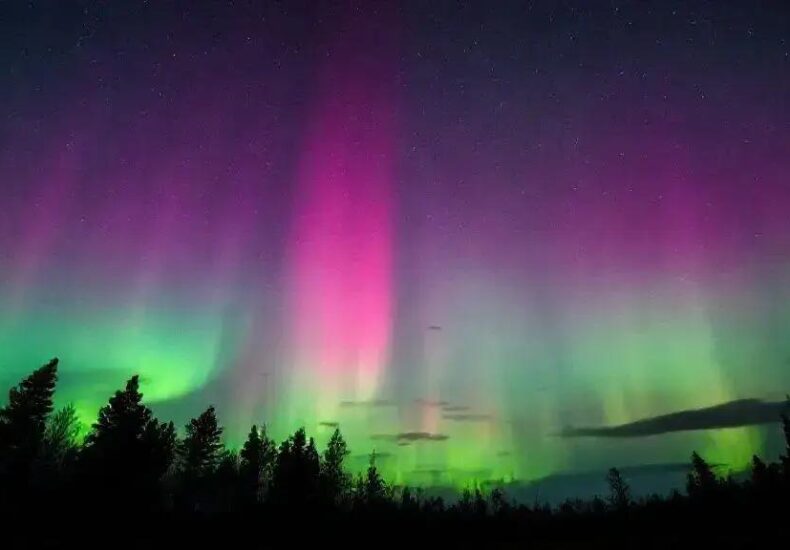
Auroras usually occur near the North and South Poles. However, strong solar outbursts can make them visible much farther away. Imagine seeing a bright green or pink sky in places where such sights are rare.
Solar outbursts also affect technology. For instance, they can disrupt radio signals and even power grids. This is why scientists monitor solar activity closely. They do this to warn us about potential impacts on our daily lives.
So, understanding solar outbursts is important. They not only provide stunning views of nature but also remind us of the sun’s power. Staying informed helps us enjoy the beauty of auroras while staying safe from any disruptions.
Understanding Geomagnetic Storms
Geomagnetic storms are disturbances in Earth’s magnetic field. They occur due to the solar wind. This wind is a flow of charged particles from the sun. When there’s a solar outburst, the solar wind becomes stronger and can reach Earth faster.
As the solar wind hits our planet, it interacts with the magnetic field. This can cause electrical currents in the atmosphere. These currents can lead to changes in the magnetic field, which we call geomagnetic storms. They can vary in size and intensity.
Geomagnetic storms can create beautiful auroras. The particles from the solar wind collide with gases in the atmosphere. This collision lights up the sky with stunning colors. However, these storms can also affect technology.
Radio communications and GPS signals can get disrupted during a storm. Power grids may face unexpected issues, too. That’s why scientists keep a close watch on solar activity. They want to provide warnings to help protect our technology and safety.
Understanding geomagnetic storms helps us appreciate the power of the sun. It also helps us prepare for any disruptions that might occur. Staying informed means we can enjoy the beauty of auroras while being mindful of their effects.
The Science Behind Auroras
Auroras are magical light displays that occur near the polar regions. These colorful lights are caused by the interaction of charged particles from the sun with the Earth’s atmosphere. When a solar storm happens, a burst of these particles races toward Earth.
As these particles enter our atmosphere, they collide with gases like oxygen and nitrogen. These collisions release energy, and that’s what makes the stunning colors we see. Oxygen can produce greens and reds, while nitrogen creates blues and purples.
The auroras usually dance in waves or curtains. They can move and change shapes quickly, making them mesmerizing to watch. Auroras happen most often during winter months when the nights are longer and darker.
To see auroras, you need to be in the right place at the right time. The best spots are usually high up north or down south, like Alaska or Norway. However, during strong solar storms, auroras can be visible further south.
The science behind auroras helps us learn about Earth’s magnetic field and atmosphere. By studying these lights, scientists can understand more about solar activity and protect technology from its effects.
How to View the Aurora in Different States
If you want to see the aurora, timing and location are key. The best time to view auroras is during the winter months. This is when nights are longer and darker, offering better visibility.
Here are some places where you can catch a glimpse of these stunning lights:
- Alaska: Many people head to Fairbanks, known for its clear skies and frequent auroras.
- Canada: The Yukon Territory and cities like Yellowknife are fantastic locations.
- Norway: Tromsø is famous for its breathtaking auroral displays.
- Montana: The northern parts of this state can also be good spots, especially around Glacier National Park.
When planning your trip, check the weather forecast. You want clear skies to see the auroras. Also, keep an eye on solar activity reports. Websites and apps offer alerts for aurora forecasts based on solar storms.
Once you’re there, get away from city lights. Find a dark location where you can see the sky clearly. Instead of just staring up, relax and enjoy the moment. The auroras often move and change, so take your time and soak it all in.
Viewing the aurora is an unforgettable experience. With the right planning and some luck, you might just witness this natural wonder!
You may also like




Leave a Reply